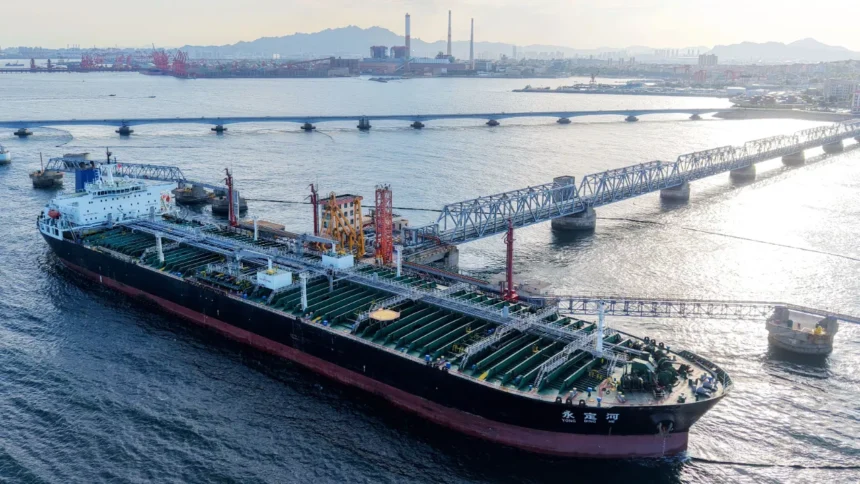
Saudi Aramco has informed Indian refiners that it will not supply crude until further notice following attacks that shut Saudi Arabia’s critical East-West pipeline. The suspension is adding pressure on Indian refiners already facing elevated crude prices, higher tanker costs and disrupted Gulf supply routes.
Saudi Aramco Suspends Crude Supplies to India
Saudi Aramco has suspended crude supplies to Indian refiners until further notice, according to people familiar with the matter cited by The Economic Times. The decision follows the shutdown of Saudi Arabia’s East-West pipeline after attacks on the infrastructure.
The development is significant for India because Saudi Arabia remains an important source of crude for the country. Aramco had supplied around 9% of India’s crude imports since the beginning of the current regional conflict, according to reports.
The immediate concern for Indian refiners is not necessarily the physical availability of replacement crude. Refiners can source oil from other producers. The bigger issue is cost.
Alternative barrels are becoming more expensive as international crude prices remain elevated and tanker freight rates have climbed. This creates additional pressure for companies that need to maintain refinery operations while navigating increasingly disrupted supply routes.
East-West Pipeline Attack Disrupts Saudi Oil Routes
Saudi Arabia’s East-West pipeline is a roughly 1,200-kilometre system designed to transport crude from the kingdom’s eastern oil fields towards the Red Sea port of Yanbu. Its strategic importance has increased because it provides an alternative route to shipping oil through the Strait of Hormuz.
Saudi authorities reported that the pipeline was temporarily shut following attacks in September. Reuters reported that three pumping stations along the pipeline were damaged, based on satellite imagery and industry sources. The shutdown has affected a route capable of moving roughly 4 million to 5 million barrels of oil per day.
The pipeline has become particularly important during the disruption around the Strait of Hormuz. When the maritime route is difficult to use, the East-West pipeline offers Saudi Arabia an overland alternative for reaching export terminals on the Red Sea.
Its closure therefore reduces the kingdom’s flexibility at a time when several Middle Eastern energy routes are already under pressure.
Indian Refiners Face Higher Replacement Costs
The supply suspension does not mean Indian refiners have suddenly run out of crude.
The issue is that replacement oil may have to be purchased under less favourable conditions. Refiners generally plan crude procurement well in advance through term contracts, while spot-market purchases can expose buyers to changing prices, availability and freight costs.
The Economic Times reported that Saudi Arabia has sold some spot cargoes to traders that could eventually reach Indian refiners. However, these shipments are not equivalent to the regular term supplies that refiners normally receive from Aramco.
The difference matters because term contracts can provide greater predictability around volumes, grades and delivery schedules. When those arrangements are disrupted, refiners may need to compete with other buyers for available cargoes.
Recent reporting has also pointed to significantly higher replacement costs for some Indian refiners. NDTV Profit reported that some oil companies were paying substantially more for prompt crude cargoes as competition intensified for barrels that could be delivered quickly.
Crude Prices Remain Above $100 a Barrel
The Saudi supply disruption comes as international oil markets remain highly volatile.
Brent crude had climbed above $100 per barrel during the recent supply shock. On September 18, however, oil prices declined for a third consecutive session as concerns about the scale of the Saudi disruption eased. Reuters reported that Brent fell by 79 cents to around $104 a barrel, while US West Texas Intermediate declined by 70 cents to about $101.20.
The decline followed reports that Saudi Arabia was working to restore part of the East-West pipeline and increase crude shipments to Asia through Oman.
That easing in oil prices provides some relief, but it does not eliminate the problem facing Indian refiners. Replacement crude can still carry higher premiums and transportation costs even when the headline benchmark price declines.
For Indian buyers, the delivered cost of crude is therefore more important than Brent alone.
Saudi Arabia Looks for Alternative Routes
Saudi Arabia has already been working on alternative ways to move crude to Asian customers.
Reuters reported that Aramco offered additional crude loadings to Asian refiners through ship-to-ship transfers off Oman’s Sohar port. The arrangements included Saudi grades such as Arab Light, Arab Medium and Arab Heavy.
The use of Oman provides an alternative logistical route outside the most affected sections of the regional shipping network.
Saudi Arabia is also working to restore at least part of the East-West pipeline’s capacity. Reuters reported on September 18 that efforts to restore half of the pipeline’s capacity had helped reduce market concerns about a prolonged supply shock.
The speed of repairs will therefore remain important for both Saudi exports and Indian refiners.
A faster restoration could reduce the need for expensive replacement cargoes. A prolonged outage would keep pressure on alternative supply arrangements and shipping costs.
India Already Faces a Difficult Crude Market
The Saudi disruption comes at a difficult time for India’s oil procurement strategy.
Indian refiners have been dealing with disruptions affecting multiple supply routes and producers. Russia remains a major supplier, but Indian companies are also facing uncertainty over future Russian crude purchases because of new US sanctions legislation targeting buyers of Russian energy.
This matters because Russian crude has been an important part of India’s import basket, particularly because refiners have often been able to buy it at attractive discounts.
Replacing large volumes of Russian crude with supplies from other producers is not straightforward. Refiners need crude with specifications that fit their processing systems, while availability, shipping distance and pricing all influence procurement decisions.
The Saudi supply suspension adds another layer to that challenge.
Instead of dealing with a single disrupted supplier, Indian refiners are navigating a market where several traditional routes are facing geopolitical or logistical pressure.
Higher Freight Costs Add to Refinery Pressure
Shipping costs are another major concern.
When conventional oil routes become unavailable or risky, tankers have to travel longer distances or use alternative loading and transfer arrangements. This can raise freight rates and increase the delivered cost of crude.
Reuters has reported that tanker demand has surged as oil buyers and producers reroute supplies around disrupted Middle Eastern shipping routes.
For Indian refiners, higher freight costs can be particularly important because crude is purchased internationally and transported over long distances.
The combination of a higher crude price and higher transportation cost can squeeze refining margins. Refiners then have to determine how much of the increased cost can be absorbed and how much can ultimately be reflected in product prices.
That does not mean petrol or diesel prices will automatically rise immediately. Domestic fuel pricing depends on several factors, including international product prices, taxes, refining margins, currency movements and government policy.
What the Aramco Halt Means for India
The reported suspension of Saudi crude supplies creates a fresh procurement challenge for Indian refiners, but it does not amount to an immediate nationwide crude shortage.
India has a diversified import network and refiners source crude from multiple countries. The bigger issue is the price and logistics of replacing Saudi barrels while several global supply routes remain disrupted.
Saudi Arabia is also looking for alternative ways to keep crude moving. Spot cargoes, Oman-based transfers and efforts to restore the East-West pipeline could reduce the pressure if they provide sufficient volumes.
The situation remains fluid. Friday’s fall in Brent crude suggests markets have already responded to signs that Saudi supply disruptions may be contained. But the continued weakness of key shipping routes means the risk has not disappeared.
For Indian refiners, the next major variables will be the speed of pipeline repairs, the availability of alternative Saudi cargoes, tanker rates and the direction of global crude prices.
Indian Oil Costs Could Stay Under Pressure
If Saudi supplies remain suspended for an extended period, Indian refiners could face higher procurement costs even if replacement crude remains available.
That could affect refining margins and increase the cost of maintaining inventories. It could also push companies to source more barrels from Iraq, the UAE, Russia and other suppliers, depending on price, availability and crude quality.
The broader impact on consumers will depend on how long the disruption lasts and how much of the additional cost is absorbed across the oil supply chain.
For now, the key distinction is between availability and affordability. India can find alternative crude, but securing those barrels at the same commercial terms as regular Saudi supplies could prove more difficult.
The Aramco suspension has therefore become another important test for India’s crude procurement resilience as global energy markets remain exposed to geopolitical disruptions.
Key Takeaways
- Saudi Aramco has informed Indian refiners that it will not supply crude until further notice following attacks that shut the East-West pipeline.
- India can seek alternative crude supplies, but higher oil prices, premiums and tanker freight costs could increase procurement expenses.
- Saudi Arabia is exploring alternative routes through Oman while working to restore part of the East-West pipeline’s capacity.
- The impact on Indian fuel prices will depend on the duration of the disruption, international crude prices, refining margins, freight costs and domestic pricing factors.
FAQ
Why has Saudi Aramco stopped crude supplies to Indian refiners?
According to people familiar with the matter cited by The Economic Times, Aramco suspended supplies after attacks disrupted Saudi Arabia’s East-West pipeline, limiting the kingdom’s ability to move crude through its western export route.
Will India run out of crude because of the Aramco suspension?
There is no indication of an immediate nationwide crude shortage. Indian refiners have multiple international suppliers and can seek replacement cargoes. The bigger concern is that alternative supplies may cost more and involve higher transportation expenses.
How important is Saudi crude to India?
Saudi Arabia is a significant crude supplier to India. Aramco accounted for around 9% of India’s crude imports since the beginning of the current conflict, according to reports. The exact share can vary over time depending on monthly procurement patterns.
Could the Aramco supply halt increase petrol and diesel prices?
It could add cost pressure to India’s oil supply chain, but a direct increase in retail petrol or diesel prices is not automatic. Domestic fuel prices also depend on international product prices, taxes, refining margins, the rupee-dollar exchange rate and pricing decisions by oil marketing companies.
(Internal keyword suggestions: Saudi Aramco India, Saudi Aramco crude supply, Saudi crude oil India, Indian refiners, Saudi East-West pipeline, Saudi pipeline attack, India crude oil imports, Brent crude price, Saudi oil supply disruption, Indian oil prices, Aramco India crude halt)