
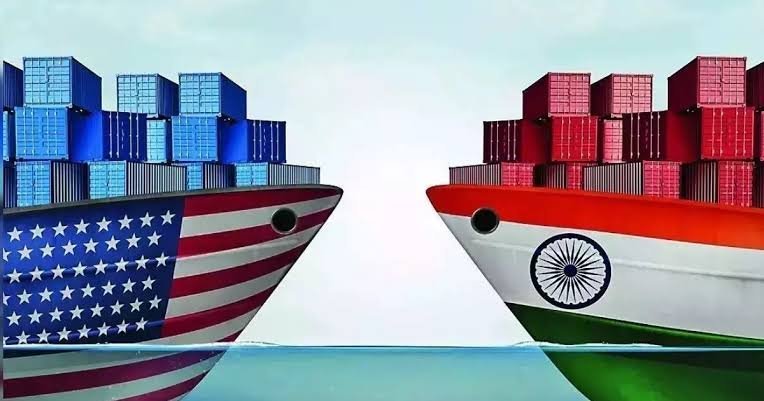
The United States is preparing a fresh round of tariffs targeting India and 15 other major trading partners over concerns about excess industrial capacity and government support for manufacturing. The proposed duties could complicate ongoing India-US trade negotiations and create fresh uncertainty for Indian exporters.
US Tariff Investigation Targets 16 Trading Partners
The Donald Trump administration is preparing to announce new import duties on goods from India, China, the European Union and 13 other economies. The proposed measures follow a months-long investigation by the Office of the United States Trade Representative (USTR) into alleged excess industrial capacity and manufacturing subsidies among major US trading partners.
According to reports published on November 24 and 25, the US government is expected to release the investigation’s findings shortly. The countries covered include India, China, Japan, South Korea, Mexico, Vietnam, Taiwan, Thailand, Malaysia, Indonesia, Switzerland, Norway, Singapore, Bangladesh and Cambodia, along with the European Union.
The proposed tariffs would be additional to duties already imposed under separate trade measures. However, the exact rates, product categories and implementation timeline have not yet been officially confirmed.
Why Washington Is Considering Fresh Import Duties
The US administration argues that some trading partners maintain manufacturing capacity beyond domestic demand, supported partly by government subsidies. According to Washington, this can result in large volumes of relatively inexpensive goods entering international markets and putting American manufacturers at a disadvantage.
The investigation focuses on whether these practices create unfair competition for US businesses. Industries associated with excess global production, including steel, aluminium, electric vehicles, solar products, appliances and other manufactured goods, have attracted particular attention in the broader debate.
The investigation has been conducted under Section 301 of the Trade Act of 1974. This provision gives the US government authority to investigate foreign trade practices considered unfair or harmful to American commerce and to take action, including imposing tariffs, where the legal requirements are met.
The administration’s approach signals that it intends to use trade duties as a tool to address manufacturing and industrial policy concerns beyond conventional trade barriers.
How Much Could the New US Tariffs Increase?
One of the biggest uncertainties is the rate at which the proposed duties could be imposed. The US administration has not publicly confirmed a final tariff schedule for the investigation.
Reuters reported that a former senior US Commerce Department official expected possible tariff remedies in the range of 15% to 25% for countries and sectors considered to have excess capacity. These figures represent an estimate of possible proposals, not an announced tariff rate for India.
The measures could also differ across countries. Washington is expected to consider existing trade arrangements and tariff commitments while determining the final structure. Some economies may receive different treatment depending on their agreements with the United States.
The proposed duties are also part of a wider effort by the Trump administration to rebuild its tariff framework after the US Supreme Court struck down broad tariffs imposed earlier under emergency powers. The administration has since pursued other legal routes to maintain pressure on trading partners.
For Indian businesses, the absence of confirmed rates makes it difficult to calculate the potential impact on export prices, contracts and future orders.
India-US Trade Deal Faces Another Challenge
The tariff development comes at a sensitive time for India and the United States, which have been negotiating a bilateral trade agreement. Both countries have been working towards an interim arrangement covering merchandise trade, customs procedures and other market-access issues.
New Delhi is seeking a tariff structure that gives Indian exporters a competitive position against suppliers from countries such as China and Vietnam. A senior Indian government official had indicated earlier in November that Washington had assured India of a comparative tariff advantage under the proposed trade agreement.
However, the extent of that advantage would depend on the final US tariff framework and the outcome of the investigation into excess industrial capacity.
The two sides have continued discussions, but uncertainty over Washington’s tariff policy remains an important issue. If additional duties are imposed before the trade agreement is finalised, negotiators may have to address their impact on the commitments being discussed.
India has also maintained that it reserves the right to review its concessions if future US tariffs exceed the commitments agreed under a trade arrangement.
What Fresh Tariffs Could Mean for Indian Exporters
The impact on India will depend on the final tariff rates, the products covered and whether exemptions or country-specific arrangements are introduced.
Higher import duties generally make goods more expensive for buyers in the destination market. If Indian products become costlier in the United States, American importers could consider alternative suppliers, negotiate lower prices with Indian manufacturers or reduce orders.
Export-oriented sectors that depend on access to the US market could therefore face pressure if their products are included in the new measures. Manufacturers may also have to reconsider pricing strategies, supply-chain arrangements and the markets they prioritise.
Smaller exporters could face particular difficulties because they may have less room to absorb additional costs or negotiate with overseas buyers. Businesses operating on tight margins could find it harder to maintain their competitiveness if tariff expenses rise.
At the same time, the actual consequences should not be assumed before the US publishes its final decisions. Country-specific rates, product exclusions and any negotiated concessions could significantly change the outcome.
India’s Response and the Road Ahead
India has previously confirmed that it remains engaged with the United States on Section 301 proceedings and the broader framework agreement. In a June 2026 statement, the Ministry of Commerce and Industry said discussions with Washington were continuing alongside efforts to finalise the trade arrangement.
The latest investigation adds another layer to those negotiations. India will need clarity on the proposed duties before assessing their effect on export competitiveness and the terms of a possible agreement.
For Washington, the measures are being presented as a response to manufacturing practices that it considers harmful to American businesses. For India, the priority will be to protect export interests while keeping trade discussions on track.
The next important development will be the USTR’s findings and the specific tariff proposals that follow. Until those details are released, Indian exporters and businesses will have to prepare for uncertainty rather than assume that higher duties are already in force.
Key Takeaways
- The US is preparing fresh tariffs targeting India and 15 other trading partners over alleged excess industrial capacity and manufacturing subsidies.
- The investigation is being conducted under Section 301 of the Trade Act of 1974.
- Final tariff rates, product coverage and implementation dates for the proposed measures have not been confirmed.
- The development could complicate India-US trade negotiations and create uncertainty for Indian exporters.
Frequently Asked Questions
1. Is the US imposing fresh tariffs on India?
The Trump administration is preparing new tariff proposals following an investigation into alleged excess industrial capacity. As of November 25, 2026, the final rates and implementation details have not been officially confirmed.
2. Why is India being targeted by the US tariff investigation?
The investigation examines alleged excess manufacturing capacity and government support among major trading partners. Washington argues that subsidised production can create unfair competition for American manufacturers.
3. Which other countries could face fresh US tariffs?
The investigation covers China, Japan, South Korea, Mexico, Vietnam, Taiwan, Thailand, Malaysia, Indonesia, Switzerland, Norway, Singapore, Bangladesh and Cambodia, as well as the European Union.
4. How could the proposed tariffs affect Indian businesses?
If additional duties cover Indian exports, products could become more expensive for US buyers. This may affect demand, pricing, profit margins and the competitiveness of Indian exporters, depending on the final tariff structure.
(Internal keywords: US tariffs on India 2026, India US trade tensions, Trump tariff plans, Section 301 investigation, India US trade deal, Indian exports to the US, US import duties, global trade policy)