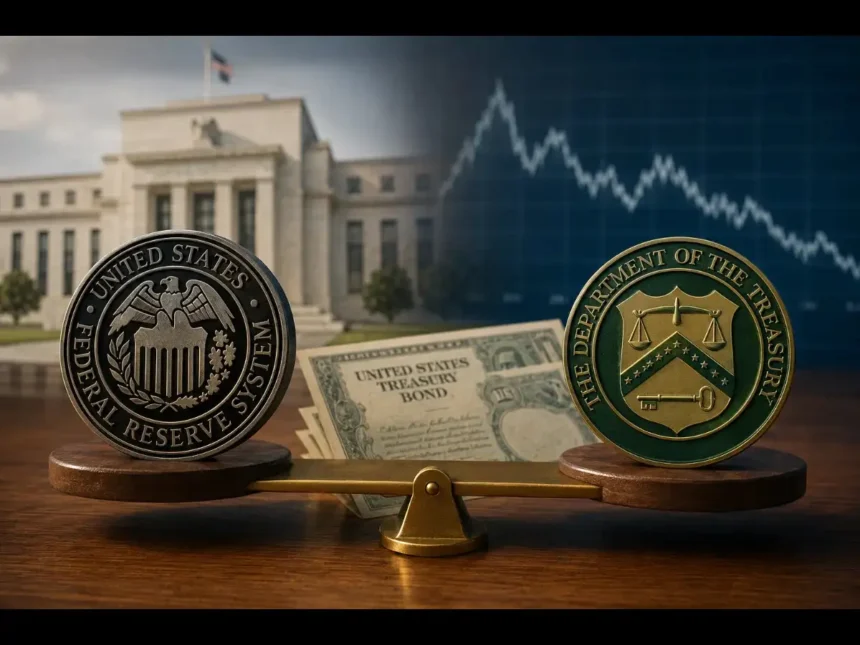
The US Treasury’s decision to double its long-term bond buyback operations briefly eased pressure in government debt markets, but the relief quickly faded. Rising yields returned as investors remained focused on inflation, heavy borrowing needs and concerns about the outlook for US government debt.
Treasury Doubles Long-Term Bond Buybacks
The US Treasury announced on August 19 that it would at least double the size of its liquidity-support buyback operations for longer-dated Treasury securities from $2 billion to at least $4 billion per operation.
The expanded operations will cover nominal Treasury securities in the 10-to-20-year and 20-to-30-year maturity sectors. The change is scheduled to take effect on September 9 and remain in place through November 4, the end of the current refunding quarter.
The announcement initially produced the response Treasury officials were looking for. Bond prices rose and long-term yields declined, with the 30-year yield falling sharply from levels close to a 19-year high.
But that improvement did not last.
By Thursday, investors had resumed selling longer-dated US government bonds. The 10-year yield moved back toward 4.7%, while the 30-year yield returned to around 5.2%, reversing much of the decline that followed the Treasury announcement.
Long-Term Treasury Yields Quickly Reverse Gains
The sharp reversal is significant because Treasury yields influence borrowing costs across the wider US economy.
The 10-year Treasury yield is closely watched by investors and financial institutions because it serves as an important reference point for mortgages, corporate borrowing and other long-term credit. Higher yields can therefore tighten financial conditions even when the Federal Reserve’s short-term policy rate remains unchanged.
The 30-year yield has been under particularly heavy pressure. It recently reached levels not seen since 2007, reflecting growing concern about the supply of government debt and the compensation investors are demanding for holding longer-maturity securities.
The Treasury buyback announcement temporarily changed market sentiment, but investors quickly returned to the issues that had pushed yields higher in the first place.
That suggests the problem is larger than liquidity alone.
Inflation and US Debt Keep Bond Investors Cautious
One of the central concerns in the Treasury market is the combination of persistent inflation risks and the growing amount of government borrowing.
Investors purchasing long-term government bonds are exposed to inflation over many years. If they expect inflation to remain elevated, they may demand higher yields to compensate for the potential loss in purchasing power.
The market is also dealing with the sheer scale of US government debt. The country’s sovereign debt recently crossed the $40 trillion mark, increasing attention on future Treasury issuance and the government’s borrowing requirements.
Higher borrowing needs can require the Treasury to issue more securities into the market. If investor demand does not increase at the same pace, yields can come under additional pressure.
This is why a relatively small increase in Treasury buybacks may not be enough to fundamentally change the direction of long-term yields.
Treasury Buyback Is Mainly a Liquidity Tool
Treasury officials have presented the buyback programme primarily as a measure to support market liquidity rather than an attempt to directly control interest rates.
The programme allows the Treasury to repurchase older, less-liquid securities from investors. By doing so, it can help improve trading conditions and provide another source of demand in parts of the Treasury market experiencing stress.
The latest increase means the maximum size of individual long-end operations will rise to at least $4 billion. Treasury has also indicated that the amount could potentially be increased further depending on market conditions.
However, the overall Treasury market is vastly larger than the buyback operations.
That scale difference explains why investors may view the programme as useful for market functioning without seeing it as a solution to the broader fiscal and inflation concerns driving long-term yields.
Why Investors Are Not Convinced Yet
The immediate market reaction shows the limits of policy measures that address liquidity without changing the underlying supply and demand dynamics.
Treasury Secretary Scott Bessent has argued that some long-term yields do not fully reflect underlying economic fundamentals and has indicated that the department is prepared to use its available tools to improve market conditions.
Investors, however, are looking beyond the mechanics of individual buyback operations.
They are watching the US government’s future borrowing requirements, inflation data, Federal Reserve policy, corporate debt issuance and demand from domestic and international buyers.
Another factor is the competition for capital from the private sector. Large-scale investment in artificial intelligence infrastructure, including data centres and related projects, is creating substantial financing demand. That can add to competition for investor capital at a time when the US government is also issuing large quantities of debt.
Federal Reserve Policy Adds Another Market Risk
The Treasury’s move is also unfolding against a complicated Federal Reserve policy outlook.
Recent Federal Reserve discussions have kept inflation firmly in focus. While softer inflation and employment data have affected expectations for future rate moves, policymakers remain concerned about keeping inflation under control.
That matters for long-term Treasury yields because investors price bonds based not only on current interest rates but also on expectations for future inflation and monetary policy.
If markets begin to believe that inflation will remain above the Federal Reserve’s target for longer, long-term yields can remain elevated even if expectations for short-term rate cuts improve.
This creates a difficult environment for the Treasury. Its buyback programme can support liquidity, but monetary policy and inflation expectations remain outside the department’s direct control.
Higher Yields Could Keep Borrowing Costs Elevated
The return of higher Treasury yields has implications beyond government bond investors.
Mortgage rates and corporate borrowing costs can respond to movements in longer-term Treasury yields. Companies that need to refinance debt or fund new projects may face higher financing expenses when benchmark yields rise.
Higher borrowing costs can also affect investment decisions. Businesses may delay projects if financing becomes more expensive, while households can face higher costs for long-term loans.
For financial markets, persistent increases in long-term yields can also change how investors value stocks and other assets. Higher bond yields can make fixed-income securities more attractive relative to riskier investments and can increase the discount rate used to value future corporate earnings.
That makes the Treasury market an important signal for the broader financial system.
What Happens Next for US Treasury Yields
The next phase will depend on whether the Treasury’s larger buybacks can improve liquidity enough to attract stronger demand for longer-dated securities.
The expanded programme begins in September, so the market has not yet seen the full effect of the larger operations.
For now, however, the reaction has been cautious. Long-term yields quickly recovered after their initial decline, showing that investors remain focused on deeper questions surrounding US debt, inflation and the supply of government bonds.
The Treasury’s next challenge will be convincing investors that its actions can improve market conditions without creating expectations that the government is attempting to influence borrowing costs directly.
For bond markets, the key question is therefore no longer simply whether Treasury can buy more bonds. It is whether stronger demand can emerge while inflation risks, government borrowing and competing capital needs remain elevated.
US Treasury Buyback: Key Takeaways
- Treasury doubled planned long-term bond buybacks to at least $4 billion per operation.
- The initial decline in long-term Treasury yields quickly reversed as investors resumed selling bonds.
- Inflation, government borrowing needs and Treasury supply remain major concerns for investors.
- Higher long-term yields can influence mortgages, corporate borrowing, asset valuations and broader financial conditions.
FAQ: US Treasury Buyback and Bond Yields
Why did the US Treasury increase bond buybacks?
The Treasury increased liquidity-support buybacks to provide greater support to trading conditions in longer-dated Treasury securities, particularly in the 10-to-20-year and 20-to-30-year segments.
Did the Treasury buyback reduce long-term yields?
It initially pushed yields lower, but the decline was short-lived. Long-term yields moved higher again the following day as investors continued to focus on inflation, government debt and market supply concerns.
When will the larger Treasury buybacks begin?
The increased buyback size is scheduled to take effect on September 9, 2026, and continue through November 4, 2026.
Why are higher US Treasury yields important?
Long-term Treasury yields influence borrowing costs across the economy, including mortgages, corporate debt and other long-term financing. They can also affect stock valuations and broader investor decisions.