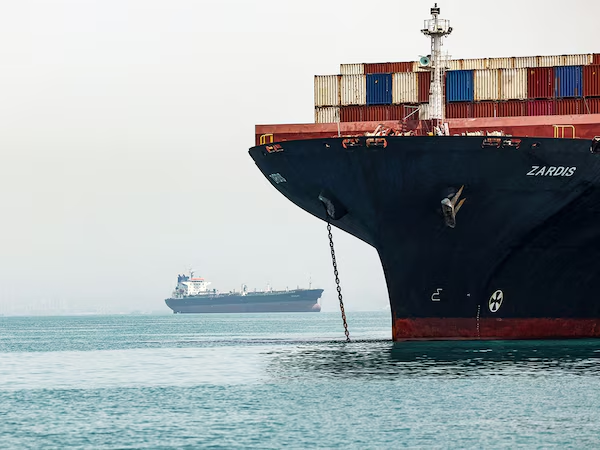
India’s exporters are preparing for higher logistics costs as continuing uncertainty in West Asia affects global shipping routes, freight rates, and supply chain planning. Businesses across multiple sectors are reassessing export strategies as transportation expenses become an increasingly important factor in international trade.
Indian Exporters Face Fresh Logistics Challenges
India’s exporters are once again dealing with rising logistics costs as geopolitical tensions and security concerns in West Asia continue to impact maritime trade. The region serves as a crucial link between Asia and Europe, making any disruption a concern for exporters dependent on global shipping networks.
Many Indian companies ship goods through routes connected to the Red Sea and surrounding waterways. When uncertainty increases in these regions, shipping companies often alter routes, deploy additional security measures, or face delays that eventually raise operating costs.
Exporters in sectors such as engineering goods, textiles, chemicals, pharmaceuticals, and consumer products are among those closely monitoring developments. For businesses operating on thin profit margins, even modest increases in freight charges can significantly affect competitiveness in overseas markets.
Industry participants say that logistics planning has become more complex as companies seek to manage costs while maintaining delivery commitments.
Freight Rates and Shipping Costs Remain Under Pressure
One of the most immediate consequences of regional instability is pressure on freight rates. Shipping companies facing longer routes or additional risk management requirements often pass higher costs on to customers.
Container shipping costs have historically reacted quickly to disruptions in major trade corridors. When vessels are forced to take alternative routes, transit times increase and fuel consumption rises. Insurance premiums can also climb as shipping operators factor in geopolitical risks.
For Indian exporters, these developments create uncertainty in contract pricing and supply chain management. Companies negotiating long-term export agreements must account for possible fluctuations in transportation expenses.
Smaller exporters may face greater challenges because they generally have less bargaining power with logistics providers compared to larger multinational firms.
Impact on India’s Export Competitiveness
India has been actively working to expand exports through manufacturing growth, trade agreements, and production-linked incentive programs. However, logistics costs remain a critical component of international competitiveness.
When transportation expenses increase, exporters may struggle to maintain attractive pricing for overseas buyers. In highly competitive markets, even a small increase in final product costs can influence purchasing decisions.
Export-oriented industries often compete with suppliers from countries across Asia, Europe, and Latin America. If logistics costs rise disproportionately, Indian companies may face pressure on both margins and market share.
At the same time, many businesses have become more resilient since the supply chain disruptions experienced during and after the pandemic. Companies are increasingly diversifying shipping routes, building stronger supplier networks, and using digital tools to improve logistics planning.
These adaptations may help reduce some of the impact, although they cannot fully eliminate external risks.
West Asia’s Strategic Importance for Global Trade
West Asia remains one of the world’s most strategically important regions for trade and energy transportation. A substantial share of global maritime commerce passes through routes connected to the region, linking major manufacturing and consumer markets.
For India, the region is important not only as a trade corridor but also as a major export destination. Countries across the Gulf Cooperation Council import a wide range of Indian products, including food items, engineering goods, machinery, construction materials, and consumer goods.
The region also plays a significant role in energy supplies, which can indirectly influence transportation costs worldwide. Rising fuel prices often contribute to higher shipping expenses, affecting exporters across industries.
As a result, developments in West Asia are closely monitored by governments, logistics firms, shipping companies, and businesses involved in international trade.
How Exporters Are Responding
Many exporters are adopting proactive measures to manage the risk of rising logistics costs. Some companies are renegotiating shipping contracts, while others are building additional inventory to account for potential delays.
Businesses are also exploring alternative trade routes where feasible and increasing coordination with freight partners to improve visibility across supply chains. Larger exporters are using data analytics and forecasting tools to better anticipate disruptions.
Industry associations have urged policymakers to continue supporting export competitiveness through infrastructure improvements, trade facilitation measures, and efficient access to export finance.
While uncertainty remains, most exporters are focusing on adaptability rather than waiting for conditions to stabilize. The ability to respond quickly to changing trade dynamics has become an important competitive advantage in today’s global economy.
Key Takeaways
• Indian exporters are facing higher logistics costs due to continuing uncertainty in West Asia.
• Shipping routes, freight rates, insurance costs, and transit times remain under pressure.
• Rising transportation expenses could affect export competitiveness across several sectors.
• Many businesses are adopting alternative logistics strategies to manage risks and control costs.
FAQs
Why does West Asia affect Indian exports?
West Asia is a major trade corridor connecting Asia with Europe and other global markets. Disruptions in the region can impact shipping routes, costs, and delivery schedules.
Which industries are most affected by higher logistics costs?
Engineering goods, textiles, pharmaceuticals, chemicals, agriculture, and consumer goods exporters are among the sectors most exposed to transportation cost increases.
How do higher freight rates impact exporters?
Higher freight rates increase overall export costs, potentially reducing profit margins and affecting pricing competitiveness in international markets.
What are exporters doing to reduce logistics risks?
Many companies are diversifying shipping routes, strengthening supply chain planning, negotiating freight contracts, and using technology to improve logistics visibility.
(india exporters, logistics costs india, west asia trade, freight rates, shipping costs, export competitiveness, supply chain disruption, red sea shipping, indian exports, global trade logistics)