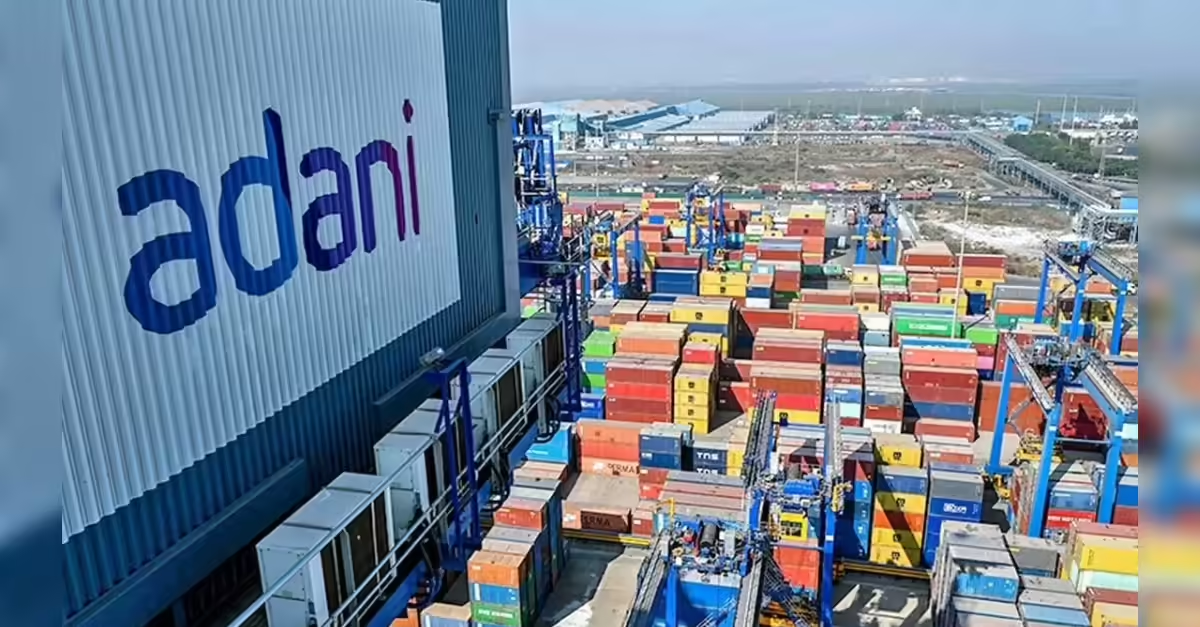
Summary: Adani Ports has reported a notable surge in cargo volumes, pointing to a strong opening trend for FY26. The growth reflects improving trade activity, operational efficiency, and continued expansion across key port assets in India.
Adani Ports cargo growth has gained attention as the company reports a sharp rise in handled volumes, indicating a strong start to FY26. The performance reflects both domestic economic activity and steady recovery in global trade flows, positioning the ports business for sustained momentum.
The company, which operates a network of ports and logistics assets across India, has seen increased cargo movement across segments such as containers, dry bulk, and liquid cargo. This diversified growth profile is helping stabilize revenue streams and reduce dependence on any single commodity category.
Cargo Volume Growth Driven by Trade and Infrastructure Expansion
The surge in Adani Ports cargo growth is closely linked to rising trade activity and infrastructure improvements. As India’s economy continues to expand, demand for imports and exports has strengthened, directly supporting port throughput.
Container volumes have shown consistent growth due to increased manufacturing output and export demand. Dry bulk cargo, including coal and minerals, has also contributed significantly, driven by energy and industrial requirements.
Infrastructure investments across ports have played a key role. Improved connectivity, faster turnaround times, and expanded capacity have enhanced operational efficiency. These factors enable higher cargo handling without proportionate increases in cost, supporting margins.
Strong FY26 Opening Trend Reflects Business Momentum
The strong FY26 opening trend for Adani Ports suggests that the company is entering the new financial year with solid momentum. Early performance indicators often set the tone for the rest of the year, making this growth particularly significant.
Operational metrics such as vessel turnaround time, berth productivity, and logistics integration have shown improvement. These enhancements not only increase throughput but also improve customer experience for shipping lines and cargo operators.
The company’s integrated business model, which combines ports, logistics, and supply chain services, allows it to capture value across multiple stages of cargo movement. This provides resilience during periods of market volatility.
Sectoral Demand Patterns Support Port Growth
Different sectors are contributing to the cargo growth seen by Adani Ports. Energy demand continues to drive coal imports, while infrastructure development supports movement of construction materials and bulk commodities.
Agricultural exports and industrial goods are also adding to container traffic. As global demand stabilizes, Indian exporters are benefiting from improved market access, which translates into higher port activity.
The diversification of cargo types reduces risk and ensures that fluctuations in one segment do not significantly impact overall performance. This balanced mix is a key strength in maintaining steady growth.
Competitive Position and Industry Outlook
Adani Ports holds a leading position in India’s port sector, and its recent cargo growth reinforces its competitive advantage. The company’s scale, geographic spread, and integrated services differentiate it from smaller operators.
The broader port industry in India is also witnessing growth, supported by government initiatives aimed at improving logistics efficiency and reducing turnaround times. Programs focused on port modernization and connectivity are expected to further enhance capacity.
However, competition remains active, with both public and private players expanding their capabilities. Maintaining growth will depend on continued investment, operational efficiency, and the ability to adapt to changing trade patterns.
Global Trade Trends and External Factors
Adani Ports cargo growth is also influenced by global trade conditions. Fluctuations in commodity prices, geopolitical developments, and shipping costs can impact cargo volumes.
Recent signs of stabilization in global trade have supported port activity, but uncertainties remain. Changes in international demand, supply chain disruptions, or shifts in trade policies can affect throughput.
The company’s diversified cargo base and strong domestic demand provide some insulation against global volatility. This balance is crucial for sustaining performance in an uncertain environment.
Outlook for Adani Ports in FY26
Looking ahead, the outlook for Adani Ports remains positive, supported by strong initial growth and favorable demand conditions. Continued investment in infrastructure and technology is expected to enhance capacity and efficiency.
The company is likely to focus on expanding its logistics network, improving multimodal connectivity, and strengthening its presence in high growth cargo segments. These initiatives can support long term growth and profitability.
While external risks remain, the strong FY26 opening trend provides a solid foundation. If current momentum continues, Adani Ports could deliver another year of robust performance in India’s evolving logistics landscape.
Takeaways
- Adani Ports has reported strong cargo growth at the start of FY26
- Growth is driven by trade activity, infrastructure upgrades, and sector demand
- Diversified cargo mix supports stable and resilient performance
- Outlook remains positive with continued investment and expansion
FAQ
What is driving Adani Ports cargo growth
Rising trade activity, improved infrastructure, and diversified cargo segments are key drivers.
Why is the FY26 opening trend important
Early performance sets the tone for the financial year and indicates business momentum.
Which cargo segments are contributing the most
Containers, dry bulk such as coal, and liquid cargo are all contributing to growth.
How does global trade impact port performance
Changes in global demand, commodity prices, and shipping conditions can influence cargo volumes.