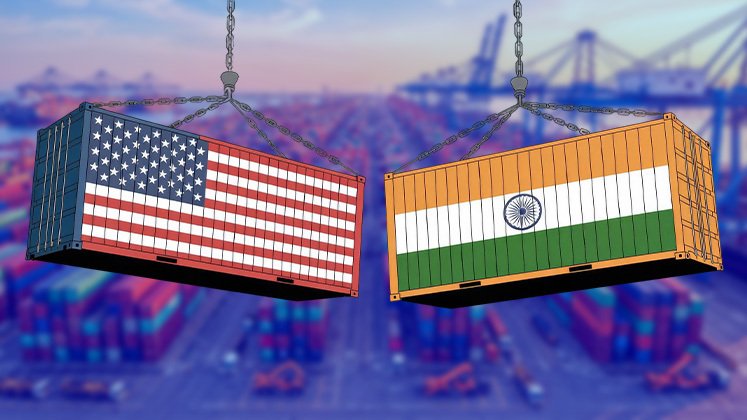
Export-focused Indian manufacturers are preparing for fresh uncertainty in US trade policy as election season rhetoric intensifies around tariffs, domestic production, and supply chain protection. Businesses across textiles, engineering, chemicals, and electronics are closely monitoring possible policy shifts that could impact export competitiveness.
Export-focused Indian manufacturers are bracing for growing uncertainty around US trade policy as political rhetoric ahead of the American election season increasingly focuses on tariffs, domestic manufacturing protection, and supply chain restructuring. Companies across sectors including textiles, auto components, pharmaceuticals, chemicals, electronics, and industrial goods are assessing potential risks linked to future trade restrictions or changes in import policies.
The United States remains one of India’s largest export destinations, making any shift in trade strategy highly significant for Indian businesses. Exporters are particularly concerned about the possibility of higher tariffs, stricter sourcing rules, or renewed protectionist policies that could affect global trade flows and manufacturing competitiveness.
While no major policy changes have yet been formally implemented, industry leaders say uncertainty itself is enough to influence investment decisions, supply chain planning, and export strategies.
US Election Rhetoric Revives Trade Protection Concerns
Trade and manufacturing policies often become central political issues during US election cycles, especially when discussions involve domestic jobs, industrial competitiveness, and dependence on foreign supply chains.
Recent political messaging in the United States has once again highlighted concerns around imports, trade deficits, and strategic manufacturing sectors. This has increased anxiety among exporters worldwide, including Indian manufacturers heavily dependent on US market demand.
Indian companies remember earlier periods of tariff tensions and trade disputes that affected sectors such as steel, aluminum, textiles, and industrial products. Businesses now fear that renewed protectionist measures could disrupt global trade stability again.
Analysts believe election-driven rhetoric does not always translate directly into immediate policy action. However, companies involved in export-oriented manufacturing cannot ignore the possibility of future trade restrictions or regulatory shifts.
For many Indian exporters, the challenge lies in preparing for multiple scenarios without disrupting ongoing operations and international client relationships.
Export-Oriented Manufacturing Sectors Monitor Risks Closely
Several Indian manufacturing sectors are particularly exposed to shifts in US trade policy because of their strong export dependence. Engineering goods, pharmaceuticals, chemicals, electronics, apparel, and automotive components are among the industries watching developments closely.
The United States remains a major buyer of Indian pharmaceutical products and technology-related manufacturing exports. Indian textile exporters are also sensitive to tariff structures because pricing competitiveness plays a critical role in global apparel markets.
Electronics manufacturers and auto component suppliers are especially focused on supply chain-related policy changes. Many global manufacturers are restructuring sourcing networks as geopolitical tensions and industrial policy shifts reshape international trade patterns.
Industry groups say exporters are increasingly diversifying markets to reduce excessive dependence on any single geography. Companies are exploring opportunities in Europe, the Middle East, Southeast Asia, and Africa while maintaining strong US business relationships.
However, the scale of the American market means Indian exporters cannot easily reduce exposure entirely.
Supply Chain Diversification Creates Both Risks and Opportunities
The global manufacturing environment is already undergoing major changes because of geopolitical tensions, supply chain disruptions, and industrial policy competition among major economies.
Interestingly, some Indian manufacturers also see opportunity within the uncertainty. As multinational companies reduce overdependence on China-based supply chains, India is increasingly positioned as an alternative manufacturing destination under broader “China Plus One” diversification strategies.
This trend has helped sectors such as electronics manufacturing, specialty chemicals, and industrial goods attract global attention. Indian firms hope supply chain diversification could partially offset risks linked to future trade tensions.
At the same time, companies remain cautious because aggressive tariff policies could increase global costs and reduce export demand across multiple industries.
Currency fluctuations, shipping costs, commodity price volatility, and oil market uncertainty are adding further complexity to export planning for manufacturers already navigating a difficult international environment.
Government and Industry Focus on Trade Resilience
Indian policymakers continue working to strengthen export competitiveness through trade agreements, manufacturing incentives, logistics improvements, and production-linked incentive schemes.
The government has been actively promoting domestic manufacturing growth while expanding export-oriented sectors. Infrastructure investments, semiconductor initiatives, electronics production expansion, and renewable energy manufacturing are part of broader industrial policy efforts aimed at improving global competitiveness.
Industry associations are also encouraging exporters to improve operational resilience by diversifying supply chains, strengthening compliance standards, and investing in automation technologies.
Many exporters believe India’s growing strategic importance in global manufacturing could provide long-term advantages even if short-term trade volatility increases.
Analysts note that global companies are increasingly looking for politically stable manufacturing partners capable of supporting diversified sourcing strategies. India’s large labor force, domestic market size, and expanding industrial ecosystem continue to attract international business interest.
Still, exporters acknowledge that uncertainty around US trade policy could create near-term hesitation in global procurement decisions.
Indian Manufacturers Adapt to a More Uncertain Trade Environment
The current situation reflects how deeply global politics and economic policy are now influencing manufacturing and trade decisions worldwide. Indian exporters are no longer responding only to market demand or pricing trends. They must also navigate geopolitical tensions, industrial subsidies, election-driven policy debates, and supply chain realignments.
For export-focused manufacturers, adaptability is becoming increasingly important. Companies are investing in automation, expanding market access strategies, improving product quality, and strengthening compliance systems to remain competitive in uncertain conditions.
The coming months may determine whether election-season rhetoric in the United States translates into meaningful policy changes or remains largely political positioning.
Until then, Indian exporters are likely to remain cautious while continuing to prepare for a more fragmented and competitive global trade environment.
Takeaways
- Indian exporters are closely monitoring possible US trade policy changes ahead of election season
- Manufacturing sectors including textiles, engineering, and electronics are especially exposed
- Supply chain diversification away from China is creating both opportunities and risks for India
- Exporters are focusing on market diversification and operational resilience strategies
FAQ
Why are Indian manufacturers worried about US trade policy?
Potential tariffs, sourcing restrictions, or protectionist policies could affect export competitiveness and supply chain stability.
Which Indian sectors are most exposed to US trade uncertainty?
Textiles, pharmaceuticals, engineering goods, chemicals, electronics, and automotive components are among the most affected sectors.
Can India benefit from global supply chain shifts?
Yes. Many companies are diversifying manufacturing beyond China, creating opportunities for Indian exporters and manufacturers.
Are new US tariffs already implemented?
No major new trade measures have been officially introduced yet, but election-season rhetoric is increasing market uncertainty.