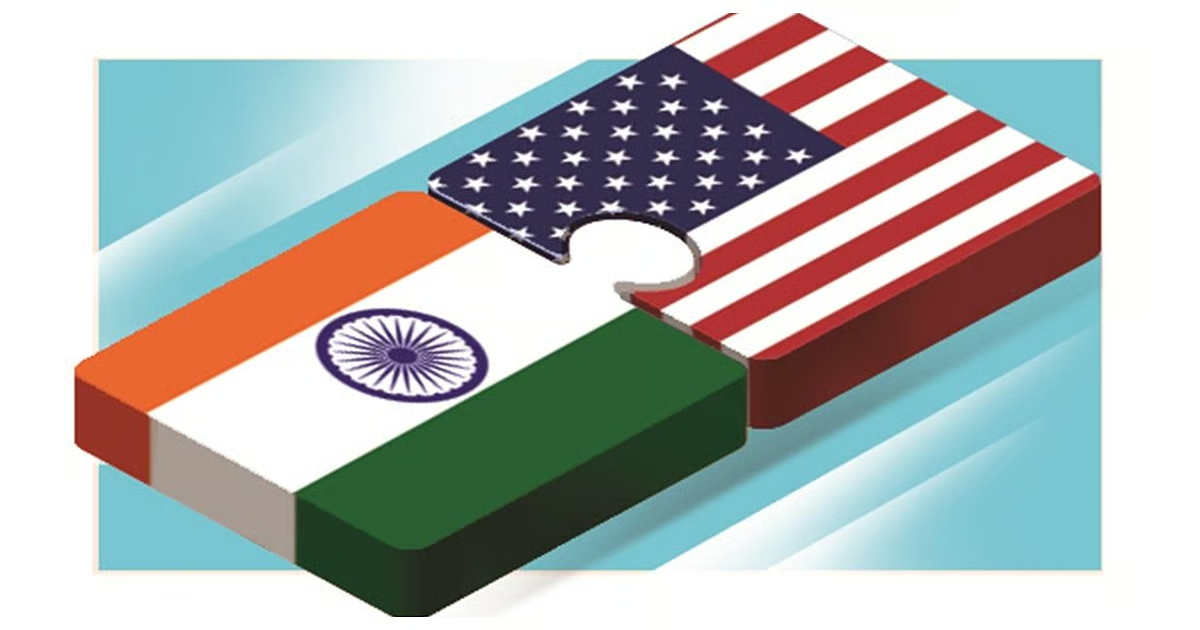
India and the United States appear to be moving closer to a trade agreement after senior US officials indicated significant progress in ongoing negotiations. The development could strengthen bilateral economic ties, improve market access, and reshape trade flows between two of the world’s largest economies.
India-US Trade Talks Enter a Crucial Phase
India-US trade talks have gained fresh momentum after US officials signaled that both sides are nearing a breakthrough in negotiations. The discussions come at a critical time as governments worldwide seek to strengthen economic partnerships, secure supply chains, and reduce trade uncertainties.
The proposed agreement is expected to address several long-standing issues involving tariffs, market access, investment opportunities, and regulatory cooperation. While details are still under negotiation, the positive signals from Washington have raised expectations among businesses and investors.
India has been actively pursuing trade agreements with major economies to boost exports and attract investment. A stronger trade relationship with the United States would complement India’s broader economic strategy while helping American businesses gain better access to one of the world’s fastest-growing consumer markets.
Why the Trade Negotiations Matter
The United States remains one of India’s largest trading partners. Bilateral trade between the two countries has expanded significantly over the past decade, covering sectors such as technology, pharmaceuticals, engineering goods, energy, agriculture, and services.
A successful agreement could help remove barriers that have occasionally created friction between the two nations. Businesses on both sides have long sought greater clarity regarding tariffs, customs procedures, standards, and regulatory requirements.
Trade experts believe a breakthrough could create a more predictable environment for exporters and investors. This is particularly important as companies look to diversify manufacturing and sourcing strategies beyond traditional supply chain hubs.
For India, improved access to the American market could support export growth. For the United States, stronger engagement with India aligns with efforts to deepen economic cooperation in the Indo-Pacific region.
Strategic Edge for India in a Changing Global Economy
Beyond trade benefits, the negotiations carry significant strategic value. Global supply chains have undergone major shifts in recent years due to geopolitical tensions, technological competition, and changing investment patterns.
India has increasingly positioned itself as a manufacturing, technology, and investment destination. Government initiatives focused on infrastructure, production-linked incentives, and digital transformation have strengthened the country’s attractiveness to global businesses.
A deeper trade arrangement with the United States could reinforce India’s role in sectors such as electronics manufacturing, semiconductors, renewable energy, defense production, and advanced technology.
The timing is also important. As multinational corporations seek alternative production locations, India is competing with several Asian economies to attract long-term investments. Enhanced trade cooperation with the US may improve investor confidence and support India’s ambitions to become a larger part of global value chains.
Key Areas Likely to Shape the Agreement
Several sectors are expected to play a central role in the negotiations. Technology remains a major area of cooperation, particularly as both countries seek closer collaboration in artificial intelligence, semiconductors, cybersecurity, and digital infrastructure.
Agriculture is another important area, although it has historically been one of the more complex subjects in trade discussions. Both sides are expected to continue balancing domestic interests with market access objectives.
Pharmaceuticals and healthcare products may benefit from greater regulatory cooperation and streamlined trade processes. India’s pharmaceutical industry already supplies a substantial share of generic medicines to global markets, including the United States.
Manufacturing and clean energy investments could also receive attention as governments prioritize economic resilience and sustainability goals. Businesses across these sectors are closely watching developments for signs of new commercial opportunities.
Challenges Still Remain Before Final Agreement
Despite the positive signals, several issues still require negotiation before any agreement can be finalized. Trade deals often involve complex discussions on tariffs, standards, intellectual property protections, and market access commitments.
Both governments will need to balance economic interests with domestic political considerations. Certain sectors may seek safeguards while others push for greater liberalization.
Analysts caution that trade negotiations can be unpredictable, and final outcomes often differ from initial expectations. However, the recent statements from US officials suggest that progress has been substantial enough to raise confidence about a potential agreement.
If negotiations continue on their current trajectory, the deal could become one of the most important economic developments in India-US relations in recent years.
Takeaways
• India and the United States are reportedly moving closer to a breakthrough in trade negotiations.
• The proposed agreement could improve market access, investment flows, and export opportunities.
• Strategic sectors such as technology, manufacturing, healthcare, and clean energy may benefit.
• A successful deal could strengthen India’s position in global supply chains and economic partnerships.
FAQ
Q1. Why are India-US trade talks important?
The talks aim to improve economic cooperation, reduce trade barriers, increase market access, and strengthen business opportunities between the two countries.
Q2. Which sectors could benefit the most?
Technology, manufacturing, pharmaceuticals, clean energy, agriculture, and engineering goods are among the sectors likely to gain from a potential agreement.
Q3. Has a final trade deal been signed?
No. Negotiations are ongoing, although recent comments from US officials suggest meaningful progress toward an agreement.
Q4. How could the agreement affect India’s economy?
A successful deal could support exports, attract investment, improve supply chain integration, and strengthen India’s role in global trade networks.