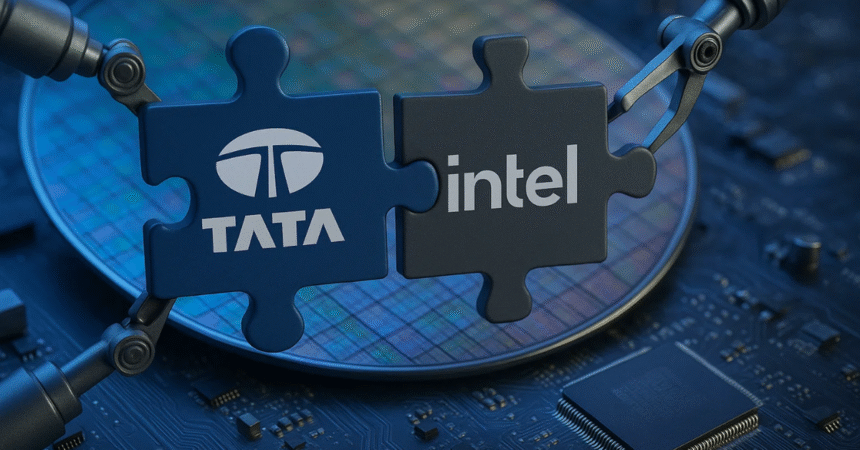
Summary: Tata Group is stepping up its semiconductor ambitions with fresh developments in India’s chip fabrication roadmap. The move reflects growing urgency to build domestic capacity as global supply chains shift and demand for chips continues to expand.
Tata Group semiconductor push is gaining momentum as new updates emerge around India’s chip fabrication roadmap. The conglomerate is positioning itself at the center of the country’s efforts to establish a domestic semiconductor ecosystem, a sector that has become critical for economic and technological growth.
India has long relied on imports for semiconductor requirements, especially from regions like East Asia. The latest developments indicate that Tata Group is moving beyond initial announcements toward execution, aligning with government incentives and policy support aimed at building fabrication capacity within the country.
Semiconductor Manufacturing India Gains Strategic Importance
Semiconductor manufacturing in India is now seen as a strategic priority, not just an industrial initiative. Chips power everything from smartphones and automobiles to defense systems and data infrastructure. The recent global chip shortages exposed vulnerabilities in supply chains, prompting countries to rethink their dependencies.
Tata Group’s involvement comes at a time when India is actively encouraging private sector participation in semiconductor fabrication. The government has rolled out incentive schemes to attract investment, reduce risks, and accelerate project timelines. Tata’s entry adds credibility and scale to these efforts.
The group is exploring both fabrication and assembly operations, including outsourced semiconductor assembly and testing. This dual approach can help India build capabilities across different segments of the semiconductor value chain rather than focusing only on fabrication plants.
Tata Semiconductor Plans and Investment Signals
Tata semiconductor plans include setting up large scale chip fabrication facilities, often referred to as fabs, which require significant capital investment and advanced technology partnerships. These projects typically involve collaboration with global technology providers to ensure access to cutting edge manufacturing processes.
Reports and industry signals suggest that Tata Group is evaluating multiple locations and partnership models. Factors such as infrastructure, water availability, skilled workforce, and policy incentives play a crucial role in determining where fabs are established.
The investment required for semiconductor fabs runs into billions of dollars, making it one of the most capital intensive sectors. However, the long term benefits include technology transfer, job creation, and reduced import dependence.
India Chip Fabrication Roadmap and Policy Support
India’s chip fabrication roadmap is being shaped by a combination of government policy and private investment. Incentive schemes aim to cover a portion of project costs, making it more viable for companies to enter this high risk industry.
Tata Group’s push fits into a broader national strategy that includes attracting global semiconductor firms, developing local talent, and building supporting infrastructure such as supply chains and research facilities.
The roadmap also emphasizes the importance of ecosystem development. Semiconductor manufacturing is not just about fabs but also involves design, packaging, testing, and materials supply. A coordinated approach is necessary to ensure long term sustainability.
Industry Impact and Global Positioning
Tata Group semiconductor push could have far reaching implications for India’s position in the global technology landscape. If successful, it would mark a significant step toward reducing reliance on imports and increasing self sufficiency in critical technologies.
For the domestic industry, this move can stimulate growth across sectors such as electronics manufacturing, automotive production, and telecommunications. Companies that depend on semiconductor supply could benefit from more stable and potentially cost effective sourcing.
On the global stage, India is competing with established semiconductor hubs like Taiwan, South Korea, and the United States. While catching up will take time, early investments by large groups like Tata can help lay the foundation for long term competitiveness.
Challenges in Semiconductor Manufacturing Execution
Despite strong intent and policy backing, semiconductor manufacturing remains a complex and challenging sector. High capital requirements, long gestation periods, and rapid technological changes make execution difficult.
Access to advanced technology is another critical factor. Partnerships with global leaders are essential to ensure that fabs operate at competitive nodes. Without this, facilities risk becoming outdated quickly.
There are also operational challenges such as maintaining consistent power supply, ensuring water availability, and developing a skilled workforce. Addressing these issues will be key to the success of India’s semiconductor ambitions.
Outlook for Tata and India’s Semiconductor Future
The outlook for Tata Group semiconductor push appears promising but will depend heavily on execution timelines and strategic partnerships. The next few years will be crucial in determining whether India can establish itself as a reliable player in semiconductor manufacturing.
If projects move forward as planned, Tata Group could emerge as a cornerstone of India’s semiconductor ecosystem. This would not only strengthen the group’s industrial portfolio but also contribute significantly to national economic goals.
India’s chip fabrication journey is still in its early stages, but momentum is building. With continued policy support and private investment, the country has the potential to create a robust semiconductor industry over time.
Takeaways
- Tata Group is accelerating its semiconductor push with focus on chip fabrication
- India aims to reduce import dependence through domestic manufacturing
- Government incentives are playing a key role in attracting investments
- Execution challenges remain due to high costs and technological complexity
FAQ
Why is Tata Group investing in semiconductors
The sector is critical for future technologies, and domestic manufacturing reduces dependence on global supply chains.
What is India’s chip fabrication roadmap
It is a government backed plan to build semiconductor manufacturing capabilities through incentives and private investment.
How will this impact India’s economy
It can boost industrial growth, create jobs, and strengthen technological self reliance.
What challenges does semiconductor manufacturing face
High capital costs, need for advanced technology, and infrastructure requirements are major challenges.