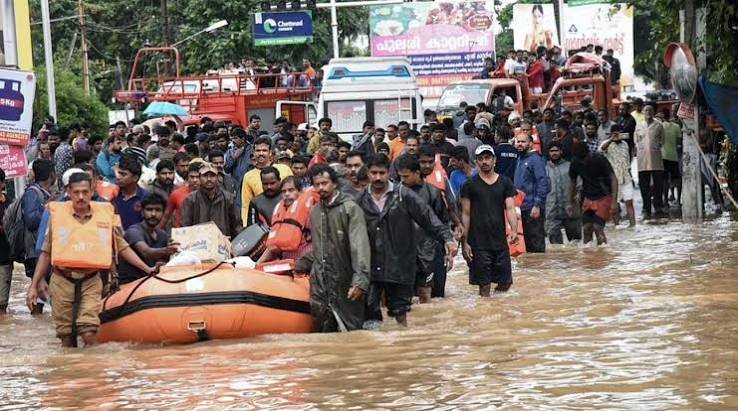
Floods can cause severe damage to homes, crops, businesses, and personal belongings. This guide explains how to apply for government flood relief and compensation in India, the documents typically required, and the steps families should follow to receive assistance from state authorities.
The topic is evergreen with seasonal relevance. While flood relief announcements and compensation amounts vary by state and disaster, the application process follows standard government procedures across India. This article is educational and not tied to a specific flood event.
How to Apply for Government Flood Relief and Compensation in Your State
Knowing how to apply for government flood relief and compensation is important for families affected by floods in India. Every year, heavy rainfall and overflowing rivers cause damage to homes, farmland, shops, livestock, and public infrastructure across several states. After a flood, both state governments and district administrations provide financial assistance to eligible victims under disaster relief guidelines. Although the amount and eligibility criteria differ from one state to another, the overall process remains similar. Understanding the application procedure can help affected families submit their claims correctly and avoid unnecessary delays.
Understand Which Government Provides Flood Relief
Flood compensation in India is primarily managed by state governments with financial support available through disaster relief mechanisms such as the State Disaster Response Fund (SDRF) and, in major disasters, the National Disaster Response Fund (NDRF). District administrations assess losses and distribute eligible assistance according to government-approved norms.
The type of assistance depends on the nature of the damage. Compensation may be available for partially or fully damaged houses, crop losses, livestock deaths, damaged fishing equipment, small business losses in some cases, and loss of essential household items. Relief measures can also include temporary shelter, food supplies, drinking water, medical support, and emergency cash assistance.
Since each state issues its own notifications after floods, applicants should always refer to their district administration or state disaster management authority for the latest instructions.
Report the Damage Immediately
One of the most important steps after a flood is reporting the damage as soon as conditions become safe.
Residents should inform their village panchayat, municipal office, ward office, tehsil office, or local revenue official about the losses. In many rural areas, officials such as the Village Administrative Officer, Talathi, Patwari, or Revenue Inspector prepare the initial damage assessment.
Government survey teams generally visit affected locations to inspect damaged houses, farmland, livestock, or businesses. Delaying the report may make it difficult to include the property in the official assessment.
If possible, take clear photographs and videos of the damage before beginning repairs. These records may help during verification if requested by authorities.
Keep Essential Documents Ready
Submitting complete documentation improves the chances of faster processing.
Although requirements differ between states, applicants are generally asked to provide:
Aadhaar Card or another government-issued identity proof
Proof of residence
Bank account details linked with Aadhaar wherever applicable
Photographs showing flood damage
Land ownership or tenancy records for agricultural compensation
Property-related documents for house damage claims
Livestock ownership records if animals have been lost
Death certificates or medical documents in applicable cases
Applicants should carry both original documents and photocopies when visiting government offices.
Complete the Application Process
Some states allow online applications through official disaster management or revenue department portals, while others continue to accept applications through district offices or local administrative bodies.
Applicants should carefully fill in personal details, property information, type of damage suffered, and supporting documents. Providing inaccurate information can delay verification or result in rejection.
After submission, authorities usually issue an acknowledgment or application reference number. Applicants should keep this safely until the process is completed.
If online tracking is available, the application status can be monitored through the respective government portal.
How Damage Assessment and Verification Are Conducted
Government compensation is released only after official verification.
Revenue officials, engineers, agricultural officers, or disaster management teams inspect affected properties to estimate losses. Their reports determine whether compensation is payable and the amount that can be sanctioned under applicable government norms.
Assessment generally considers factors such as structural damage to houses, crop area affected, livestock losses, extent of flooding, and supporting evidence submitted by the applicant.
The final decision depends on official verification rather than self-declared estimates of loss.
How Compensation Is Paid
Once the claim is approved, compensation is generally transferred directly to the beneficiary’s bank account through Direct Benefit Transfer (DBT).
Processing times vary depending on the severity of the disaster, the number of applications received, and administrative verification. Large-scale floods often require extensive surveys, which can increase the time needed for payment.
Applicants should regularly check updates issued by their district administration instead of relying on unofficial messages circulating on social media.
If there are delays, they may contact the district collector’s office, tehsil office, municipal authorities, or disaster management control room for updates.
Common Mistakes That Delay Compensation
Many applications are delayed because of incomplete documentation or incorrect information.
Applicants should avoid submitting unclear photographs, incorrect bank account details, unsigned forms, or duplicate claims for the same damage. Starting major reconstruction before the official inspection may also make verification more difficult in some cases.
Families should preserve damaged items until authorities complete their assessment whenever practical and safe to do so.
Following official instructions carefully helps ensure smoother processing.
Stay Updated Through Official Government Channels
During flood emergencies, state governments regularly publish updates regarding relief camps, compensation announcements, application deadlines, and helpline numbers.
Residents should rely only on official websites of state governments, district administrations, state disaster management authorities, and verified government social media accounts for accurate information.
Avoid forwarding unverified compensation messages or fake application links that may circulate during disasters. Government assistance is announced through official channels, and applicants should always verify information before sharing personal details.
Takeaways
- Report flood damage to local authorities immediately after it is safe to do so.
- Keep identity proof, bank details, property documents, and damage photographs ready.
- Government officials conduct field verification before compensation is approved.
- Follow only official state and district government announcements for application updates and payment information.
Frequently Asked Questions
1. Who is eligible for government flood compensation in India?
Eligibility depends on state government rules and the verified extent of damage. Assistance is generally available for affected households, farmers, livestock owners, and others who qualify under disaster relief guidelines.
2. Can I apply for flood compensation online?
Some states provide online application facilities, while others require applications through district offices, local revenue officials, or municipal authorities. The process varies by state.
3. How long does it take to receive flood compensation?
There is no fixed timeline. Payments depend on damage assessment, document verification, government approvals, and the number of claims being processed after the disaster.
4. What should I do if my application is delayed?
Contact your district collector’s office, tehsil office, municipal authority, or disaster management office using the acknowledgment number provided during application. They can provide the latest status of your claim.