
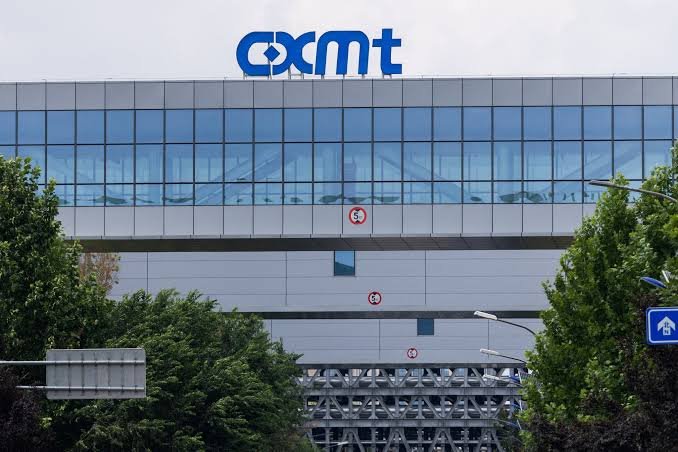
China’s memory chipmaker ChangXin Memory Technologies (CXMT) is advancing next-generation DRAM technology as it prepares to introduce a denser server-memory design. Its planned 4F² architecture could intensify competition with Samsung Electronics, SK Hynix and Micron, particularly as demand for memory used in artificial intelligence infrastructure continues to grow.
CXMT Targets Next-Generation DRAM With 4F² Architecture
China’s ChangXin Memory Technologies is stepping up its efforts to compete with established global memory chipmakers through a new DRAM cell architecture designed to increase storage density.
On October 10, 2026, CXMT president Cao Kanyu outlined progress on the company’s 4F² DRAM technology at an integrated circuits and chiplet industry conference in Shanghai. The company plans to introduce a server-grade DDR5 registered dual in-line memory module, commonly known as an RDIMM, using the architecture by the end of 2026.
The proposed design represents a shift from the widely used 6F² memory-cell architecture. By reducing the footprint of individual memory cells, manufacturers could potentially fit more memory cells into the same silicon area.
However, the announcement does not mean CXMT has already achieved large-scale commercial production of the new 4F² server memory. Publicly reported specifications, including final operating speeds and capacities, have not yet been disclosed.
The development nevertheless places CXMT more directly in the competitive landscape for advanced server memory, a market increasingly important to artificial intelligence and data centre operators. <Cite refs={[“turn338210search0″,”turn338210search4″,”turn338210search5”]}/>
How 4F² DRAM Technology Could Increase Memory Density
DRAM, or dynamic random-access memory, is a type of semiconductor memory used to store data that computers and electronic devices need to access quickly. It is found in personal computers, smartphones, servers and other computing systems.
The 4F² designation describes the approximate area occupied by a memory cell in relation to a technology’s minimum feature dimension, represented by F. In a conventional 6F² arrangement, the cell occupies approximately six times the square of that dimension. A 4F² layout reduces the theoretical footprint to four times the square of the minimum feature size.
In principle, the smaller layout could allow more memory cells to be placed on a wafer, increasing density and potentially improving manufacturing economics.
The engineering challenge is considerable. As memory cells become smaller, manufacturers must manage electrical leakage, signal reliability, manufacturing variation and the physical limits of semiconductor structures.
CXMT has discussed the use of vertical surrounding-gate transistors to address challenges associated with the proposed architecture. Such designs seek to improve control over the transistor channel, helping manufacturers manage leakage as cell dimensions shrink.
The technology’s commercial success will depend on more than cell density alone. Manufacturers must also demonstrate acceptable yields, reliability, performance and production costs before a new architecture can compete at scale. <Cite refs={[“turn338210search3″,”turn338210search4″,”turn338210search5”]}/>
Server DDR5 Memory Opens a New Competitive Front
CXMT’s decision to target server DDR5 RDIMMs is significant because server memory serves a different market from the memory chips commonly used in consumer electronics.
Registered DIMMs are designed for server systems that require substantial memory capacity and reliable operation. A register helps manage electrical loading between the memory controller and memory modules, supporting the use of larger memory configurations.
These products are used in enterprise servers and data centre infrastructure, where operators need dependable memory for databases, cloud computing, virtualisation and AI-related workloads.
The market is technically demanding. Server memory must meet strict requirements for compatibility, reliability and sustained operation. Manufacturers also need to establish relationships with server makers and qualify their products for use in commercial systems.
CXMT has historically concentrated more heavily on memory products for consumer electronics, including smartphones. Its efforts to expand server-memory operations could diversify its customer base and increase its exposure to higher-value enterprise applications.
However, announcing a product does not guarantee immediate adoption by major server manufacturers. Customer qualification, production capacity and the ability to deliver consistent quality will influence whether CXMT can establish a meaningful position in this market. <Cite refs={[“turn338210search0″,”turn338210news36”]}/>
Samsung, SK Hynix and Micron Face Greater Competition
The global DRAM market is dominated by three major suppliers: Samsung Electronics of South Korea, SK Hynix of South Korea and Micron Technology of the United States.
These companies have invested heavily in advanced memory manufacturing and compete on density, performance, power efficiency, reliability and cost. Their products serve a wide range of customers, from smartphone manufacturers and personal computer makers to hyperscale cloud operators.
CXMT’s progress matters because a capable additional supplier could alter the balance of competition, especially in conventional DRAM and server memory.
Reports about the company’s 4F² development contributed to pressure on semiconductor stocks in October. Investors became concerned that the entry of another technology competitor could eventually weaken pricing power in parts of the memory market.
However, CXMT’s proposed architecture should not be confused with proof that it has already matched the commercial capabilities of the established manufacturers. The latter have extensive experience producing memory at scale, supplying international customers and developing advanced products for demanding applications.
The competitive outcome will depend on whether CXMT can turn its research progress into reliable, commercially available products at competitive prices. <Cite refs={[“turn338210news28″,”turn338210news29″,”turn338210search8”]}/>
AI Data Centres Increase Demand for Advanced Memory
Artificial intelligence has become an important driver of investment in computing infrastructure. Training and operating large AI models requires substantial processing power, memory capacity and high-speed data movement.
DRAM plays a critical role because processors need rapid access to the information used during computation. In AI servers, memory performance and capacity can influence how efficiently systems handle large workloads.
High-bandwidth memory, or HBM, is especially important for many advanced AI accelerators. It offers very high bandwidth through specialised packaging and integration techniques. Conventional server DDR5 memory serves a different role, supporting system memory requirements across a broader range of server configurations.
This distinction matters when assessing CXMT’s plans. Its proposed 4F² DDR5 RDIMM could strengthen its position in server memory, but it does not automatically establish competitiveness in HBM or the most advanced AI accelerator memory systems.
The broader market opportunity is still substantial. Data centre operators need a range of memory products, and suppliers that can deliver reliable products at attractive prices may gain business as infrastructure expands.
At the same time, demand growth does not guarantee uninterrupted profits for chipmakers. Prices depend on supply, production capacity, customer inventories and the pace of new investment. Increased competition could benefit buyers while putting pressure on manufacturers’ margins. <Cite refs={[“turn338210news29″,”turn338210news32”]}/>
China’s Semiconductor Push Gains Momentum
CXMT’s 4F² development forms part of China’s wider effort to strengthen domestic semiconductor manufacturing and reduce dependence on foreign technology suppliers.
The company announced in September 2026 that its fifth-generation DRAM technology platform had entered mass production. It also introduced new LPDDR5X memory products based on that platform.
CXMT said the platform achieved an active-area half-pitch of 11.95 nanometres using a quadruple-patterning process. The company presented the milestone as progress towards more advanced domestic memory manufacturing.
The September announcement and the October 4F² development are separate milestones. The G5 platform has been announced as being in mass production, while the proposed 4F² server-memory product is targeted for introduction by the end of the year.
This distinction is important when evaluating China’s progress. Advancements in one generation of DRAM can strengthen manufacturing capabilities without proving that every subsequent architecture is ready for mass production.
China’s semiconductor ambitions also face challenges related to equipment access, manufacturing yields, technical expertise and international export restrictions. Progress by CXMT demonstrates growing domestic capability, but the size of the remaining gap will depend on product-by-product performance and commercial results. <Cite refs={[“turn338210search2″,”turn338210search1″,”turn338210search4”]}/>
What CXMT’s Technology Could Mean for Memory Prices
If CXMT successfully develops and commercialises competitive 4F² server memory, the additional supply could increase competitive pressure on established manufacturers.
For server makers and data centre operators, more suppliers may create additional sourcing options. Greater competition can potentially improve negotiating power, reduce dependence on a small number of manufacturers and help moderate prices over time.
The effects will depend on how quickly CXMT can expand production and whether its products meet the performance and reliability requirements of major customers. Limited initial volumes would have a smaller effect on global supply than sustained production at commercially meaningful scale.
For Samsung, SK Hynix and Micron, the development adds another reason to continue investing in manufacturing technology, product development and production efficiency.
Investors should also separate short-term stock market reactions from long-term changes in market share. Semiconductor shares can move sharply when new technology announcements alter expectations, even before a product reaches customers.
The key milestones to watch are the launch of CXMT’s server DDR5 product, the disclosure of specifications, customer qualification and evidence of production at scale. These developments will provide a clearer indication of whether the technology represents a significant commercial challenge or remains an early-stage engineering advance.
Key Takeaways
- CXMT is developing a 4F² DRAM architecture designed to increase memory-cell density and plans to introduce a server DDR5 RDIMM using the technology by the end of 2026.
- The proposed architecture could intensify competition with Samsung Electronics, SK Hynix and Micron, but its commercial performance remains unproven.
- CXMT’s fifth-generation DRAM platform entered mass production in September 2026, a separate milestone from the planned 4F² server-memory launch.
- AI infrastructure is increasing demand for memory, but CXMT’s planned DDR5 product should not be confused with high-bandwidth memory used in advanced AI accelerators.
Frequently Asked Questions
1. What is CXMT?
ChangXin Memory Technologies is a Chinese semiconductor manufacturer specialising in DRAM memory chips. It is expanding its technology and product portfolio as China seeks to strengthen its domestic semiconductor industry.
2. What is 4F² DRAM technology?
It is a memory-cell architecture designed to reduce the area occupied by each cell compared with conventional 6F² layouts. The smaller footprint could increase memory density, although commercial results depend on manufacturing yields, reliability and performance.
3. Will CXMT compete directly with Samsung, SK Hynix and Micron?
CXMT is seeking to compete more directly in the DRAM market, including server memory. Its ability to challenge established suppliers will depend on product quality, production scale, pricing and customer adoption.
4. Does CXMT’s new technology mean memory prices will fall?
Not necessarily. Additional supply could put pressure on prices if production scales successfully, but the outcome will depend on demand, manufacturing capacity, product specifications and the balance between supply and consumption.