
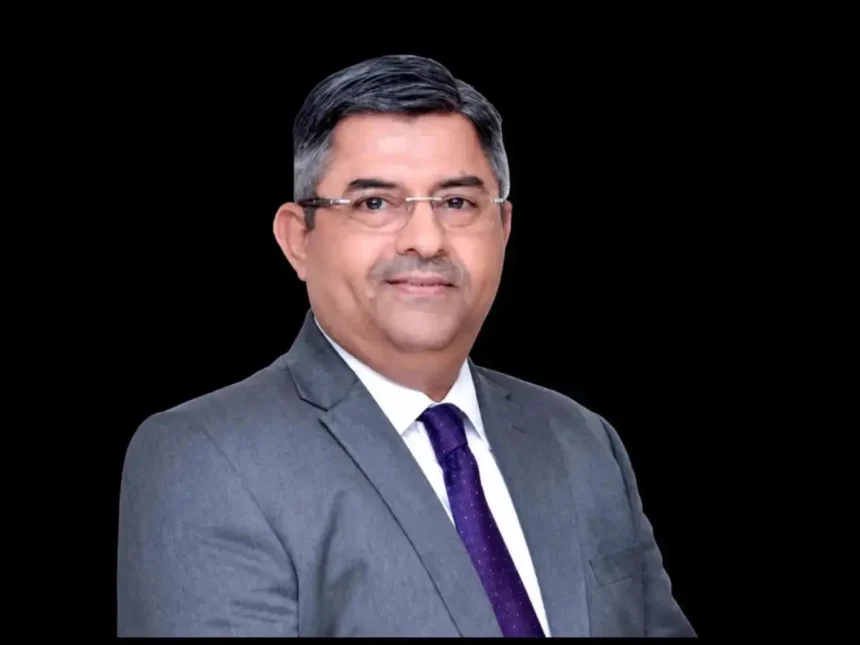
HDFC Bank Deputy Managing Director Kaizad Bharucha has decided to step down from the country’s largest private-sector lender, bringing his long association with the institution to a close on December 31, 2026. His departure comes as the bank prepares for a change at the top, with Anup Bagchi set to take over as managing director and chief executive officer later this month.
Kaizad Bharucha to Leave HDFC Bank on December 31
HDFC Bank disclosed Bharucha’s decision in a regulatory filing on October 17, 2026. The senior banker requested cessation from the bank’s service with effect from the close of business hours on December 31.
The bank’s Governance, Nomination and Remuneration Committee and board of directors considered and accepted his request at meetings held on October 16 and October 17, respectively. The decision remains subject to approval from the Reserve Bank of India (RBI).
Bharucha’s exit marks a significant change in the leadership of a financial institution that has built its position through decades of expansion across retail banking, corporate lending, digital services and other financial products.
The bank acknowledged his contribution to its development, particularly his role in establishing and strengthening its credit architecture. The announcement did not publicly establish a specific reason for his departure beyond his request to leave the organisation.
Three Decades of Experience at India’s Largest Private Bank
Bharucha joined HDFC Bank in October 1995, when the institution was still in the early stages of its growth as a private-sector lender. Over the following three decades, he held responsibilities across several important banking operations.
His experience included corporate lending, wholesale banking and selected retail banking operations. He was also associated with the bank’s broader asset franchise, which includes lending products for individuals, businesses and other borrowers.
In April 2023, Bharucha was elevated to the position of Deputy Managing Director. His responsibilities covered areas including retail assets, rural banking, small and medium enterprises, corporate banking and healthcare finance.
The bank’s regulatory disclosures have also highlighted his involvement in developing its credit architecture. This framework is central to how a lender evaluates borrowers, assesses repayment capacity, manages credit exposure and maintains the quality of its loan portfolio.
Bharucha’s long tenure provides continuity to a period in which HDFC Bank expanded its operations and strengthened its position in India’s banking sector. His departure will therefore be an important transition for teams that have worked under his leadership.
Anup Bagchi to Take Over as MD and CEO
Bharucha’s decision comes shortly before another major change in HDFC Bank’s executive leadership. The RBI has approved Anup Bagchi’s appointment as managing director and chief executive officer for a three-year term beginning October 27, 2026.
Bagchi comes from the ICICI Group and was serving as chief executive officer of ICICI Prudential Life Insurance. His appointment follows the bank’s succession process to identify a replacement for outgoing MD and CEO Sashidhar Jagdishan.
Bharucha had been among the senior executives considered for the bank’s top position. However, the RBI approved Bagchi for the role.
The appointment represents a significant leadership transition for HDFC Bank, particularly because Bagchi is an external appointment from another major financial services group.
His priorities will include maintaining the bank’s growth momentum, managing profitability, strengthening customer relationships and ensuring that its lending and deposit businesses remain competitive.
The transition also raises questions about how the incoming leadership will organise responsibilities among senior executives. The bank has not announced a complete leadership structure for the period following Bharucha’s departure.
HDFC Bank’s Financial Performance Adds Context to the Transition
The leadership changes come as HDFC Bank reports its financial performance for the July to September quarter of the 2026-27 financial year.
According to the bank’s reported results, standalone net profit increased by approximately 4.7% year on year to ₹19,509.96 crore. Net interest income, which represents the difference between interest earned on loans and interest paid on borrowings and deposits, rose by 9.7% to ₹34,619 crore.
The bank also recorded growth in lending and deposits. Loans increased by approximately 16.3% year on year, while deposits grew by 18.8%.
However, the quarterly performance was not uniformly strong. Lower treasury trading gains and higher provisions for bad loans affected profitability. Treasury income can fluctuate depending on market movements, making it an important factor in understanding changes in a bank’s quarterly earnings.
The gross non-performing asset ratio stood at 1.11%, compared with 1.17% in the previous quarter, indicating a modest improvement in the reported measure of asset quality.
These figures provide context for the incoming leadership, which will need to balance lending growth, deposit mobilisation, margins and credit risk. They do not, by themselves, establish any connection between the bank’s financial performance and Bharucha’s decision to leave.
What Bharucha’s Exit Means for HDFC Bank
The departure of a senior executive with more than 30 years of institutional experience can have implications for management continuity, especially when it coincides with a change in the chief executive’s office.
Bharucha’s responsibilities covered important parts of HDFC Bank’s lending operations. A smooth transition will require the bank to ensure that oversight of corporate credit, retail assets and other business segments continues without disruption.
For customers, the leadership announcement does not automatically mean changes to existing accounts, loans, deposits or banking services. Such products continue under the bank’s existing terms and policies unless the institution announces specific changes.
For investors, the more important questions concern the bank’s future operating performance and the direction set by its incoming leadership. Deposit growth, loan expansion, net interest margins, asset quality and capital management are likely to remain important indicators.
The market may also watch for further announcements regarding senior management appointments and the distribution of responsibilities after the leadership transition.
HDFC Bank has not disclosed a detailed succession arrangement specifically for all of Bharucha’s existing responsibilities. The final organisational structure will help clarify how the bank plans to maintain continuity across its business segments.
Key Takeaways
- Kaizad Bharucha has requested to leave HDFC Bank effective December 31, 2026, after joining the lender in October 1995.
- The bank’s board accepted his request, subject to approval from the Reserve Bank of India.
- Anup Bagchi is scheduled to become HDFC Bank’s MD and CEO on October 27, 2026, for a three-year term.
- HDFC Bank reported a 4.7% year-on-year increase in standalone net profit to ₹19,509.96 crore for the September 2026 quarter.
Frequently Asked Questions
1. Why is Kaizad Bharucha leaving HDFC Bank?
Bharucha has requested cessation from the bank’s service effective December 31, 2026. The bank has not publicly confirmed a specific reason for his decision.
2. When did Kaizad Bharucha join HDFC Bank?
Bharucha joined HDFC Bank in October 1995. He subsequently held senior responsibilities across corporate lending, wholesale banking and other business operations before becoming Deputy Managing Director in April 2023.
3. Who will become the next MD and CEO of HDFC Bank?
Anup Bagchi, formerly associated with the ICICI Group and CEO of ICICI Prudential Life Insurance, is scheduled to take over as HDFC Bank’s managing director and chief executive officer on October 27, 2026, for a three-year term.
4. Will Bharucha’s departure immediately affect HDFC Bank customers?
The announcement does not indicate any immediate change to customers’ accounts, loans or deposits. Any future changes to banking products or services would depend on separate decisions and announcements by the bank.