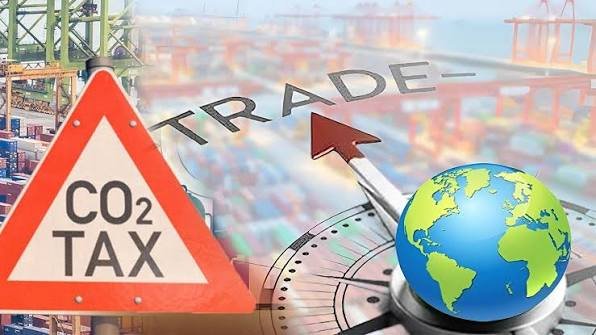
India faces fresh export cost pressure as the European Union’s Carbon Border Adjustment Mechanism enters its first full year of operation, requiring importers to account for embedded carbon emissions in covered goods. Indian steel, aluminium and other carbon-intensive exporters are now adjusting to the new compliance and pricing environment.
EU CBAM Enters Its Definitive Phase
The European Union’s Carbon Border Adjustment Mechanism, or CBAM, became fully operational on January 1, 2026, after a transitional reporting period that ran from 2023 through 2025. Under the definitive regime, EU importers of covered goods must meet CBAM obligations and purchase certificates linked to the embedded carbon emissions of those imports.
The mechanism currently covers selected products from sectors including iron and steel, aluminium, cement, fertilisers, electricity and hydrogen. The EU says the system is designed to ensure that imported goods face a carbon cost comparable with production inside the bloc and to reduce the risk of carbon leakage.
For Indian exporters, the change matters because the additional carbon-related cost can influence the final economics of selling into the European market.
The impact is particularly relevant for industries where production involves high levels of greenhouse gas emissions.
Indian Steel Exporters Face Significant Exposure
Steel is one of the sectors attracting the most attention because India is a major steel producer and supplier to European markets. A 2026 study published in Nature Climate Change found early evidence that CBAM reporting has already affected the behaviour of Indian steel exporters.
The study examined shipment-level data from Indian steel companies and found differences between relatively high-emission and lower-emission producers. During the reporting period, higher-emission firms experienced additional declines in monthly export quantities and revenues compared with lower-emission firms.
The findings do not mean that India’s overall steel exports to Europe have collapsed. Instead, they point to an emerging differentiation between producers based on their emissions intensity.
That distinction could become more important as the definitive CBAM regime develops and European buyers increasingly assess the carbon profile of their supply chains.
Carbon Costs Now Become Part of Export Economics
Under CBAM, the carbon content of covered imports becomes a commercial consideration rather than simply an environmental reporting issue.
EU importers are responsible for buying CBAM certificates corresponding to the embedded emissions of covered goods. The mechanism also allows consideration of a carbon price already paid in the country of origin, subject to the EU’s rules.
This creates a direct connection between a manufacturer’s production process and the cost of accessing the European market.
For Indian companies, the implications can extend beyond the certificate itself. Exporters need reliable emissions data, verification processes and documentation that allow European importers to establish the carbon content of their purchases.
Companies with more emissions-intensive production may therefore face greater commercial pressure than competitors that can demonstrate lower emissions.
India Steps Up CBAM Compliance Preparations
Indian authorities and industry groups have been working on ways to help exporters respond to the European rules.
The Indian government has set up a committee involving ministries, regulators and industry representatives to strengthen the country’s preparedness for CBAM. Recent reports also indicate that Indian emissions-verification agencies are seeking faster approval and access to the EU’s systems.
The issue is not limited to large steel companies. Smaller exporters can also face difficulties because measuring and independently verifying emissions can require technical expertise and additional resources.
The Confederation of Indian Industry has also highlighted carbon pricing and emissions tracking as important areas for protecting the competitiveness of Indian exports under CBAM.
The broader challenge is to build systems that allow Indian companies to measure emissions accurately enough for international trade requirements.
New EU Trade Access Comes With Carbon Obligations
The timing is significant because India and the European Union have also moved toward greater market access for Indian steel.
Under the recently established India-EU trade agreement, India secured an annual steel export opportunity of up to 1.64 million metric tonnes to the European market. However, Indian steel exports remain subject to EU carbon-related requirements.
This creates two developments moving in opposite directions.
On one side, improved market access can create opportunities for Indian exporters. On the other, carbon compliance can increase the cost of serving that market.
For companies planning European expansion, tariffs are therefore no longer the only trade-cost consideration. Environmental regulations, emissions intensity and verification requirements are increasingly becoming part of the export calculation.
Cleaner Producers Could Gain a Competitive Edge
The emerging evidence suggests that CBAM may affect Indian producers differently depending on their emissions profile.
The Nature Climate Change study found that relatively lower-emission Indian steel producers maintained export quantities during the reporting period, while higher-emission producers recorded additional declines in EU-bound quantities and revenues. The researchers described these as early and short-term adjustments rather than evidence of the full long-term effect of CBAM.
This distinction is important.
CBAM does not impose the same economic impact on every exporter simply because they operate in the same country or sector. The emissions associated with individual goods and production facilities matter.
As European buyers become more attentive to the carbon intensity of their supply chains, companies investing in cleaner production could find it easier to maintain access to the market.
Smaller Exporters Could Face Higher Compliance Burden
Large Indian manufacturers generally have more resources to establish emissions-monitoring systems, hire specialists and invest in cleaner production technologies.
For smaller businesses, the cost of compliance can be more difficult to absorb.
The challenge includes collecting accurate production data, calculating embedded emissions, working with accredited verification systems and providing information required by European importers.
Industry bodies have therefore called for greater support for smaller businesses exposed to CBAM. An IISD guide published in 2026 also highlights the importance of verified emissions reporting and understanding how carbon prices paid in the country of origin can affect CBAM liability.
For Indian MSMEs supplying larger exporters or European buyers, the new rules could increasingly influence supplier selection and contract negotiations.
India’s Domestic Carbon Market Becomes More Relevant
The CBAM debate is also pushing attention toward India’s own carbon-pricing and emissions-monitoring framework.
India has been developing a domestic carbon market as part of its broader efforts to reduce emissions and create market-based incentives for cleaner industrial production. For exporters, the development could become important because internationally recognised carbon pricing and reliable emissions data may influence the amount of carbon cost ultimately associated with exports.
However, domestic carbon-market development does not automatically remove CBAM obligations. The EU’s framework has specific rules governing which carbon prices and emissions calculations can be recognised.
Indian businesses therefore still need to meet the EU’s requirements when exporting covered products to European customers.
What Indian Exporters Are Watching Now
The immediate focus for Indian exporters is shifting from understanding CBAM in theory to managing it in day-to-day business.
Companies need to know the emissions profile of their products, establish reliable measurement systems and work with verification mechanisms accepted under the European framework.
The European Commission continues to update CBAM legislation, default values and benchmarks. In August 2026, the Commission published corrected default values for the definitive period, highlighting that the technical details of implementation remain an important area for exporters to monitor.
For Indian businesses, this means carbon compliance is becoming part of export planning alongside tariffs, logistics, currency movements and demand.
The long-term effect will depend on how quickly companies reduce emissions, how European buyers respond and how India’s domestic carbon-market infrastructure develops.
For now, CBAM is creating a new cost and compliance layer for Indian exporters, with the strongest pressure concentrated in carbon-intensive sectors such as steel and aluminium.
Key Takeaways
- The EU’s CBAM definitive regime has been operational since January 1, 2026.
- Indian steel and other carbon-intensive exporters face additional carbon-related compliance and cost pressures.
- Early research shows higher-emission Indian steel producers have experienced weaker EU-bound export performance than lower-emission producers.
- India’s emissions tracking, verification and domestic carbon-pricing systems are becoming increasingly important for maintaining export competitiveness.
FAQ
What is CBAM?
CBAM stands for Carbon Border Adjustment Mechanism. It is an EU system that places a carbon-related cost on the embedded emissions of certain imported goods, with the aim of aligning the carbon cost of imports with production inside the EU.
Which Indian exports are most affected by CBAM?
The most directly exposed sectors include iron and steel, aluminium, cement, fertilisers, electricity and hydrogen. Among Indian exports, steel has received particular attention because of its significant emissions intensity and importance in EU-India trade.
Does CBAM apply directly to Indian exporters?
The formal CBAM obligations are placed on EU importers or their authorised representatives. However, Indian exporters are affected because importers need emissions information about covered products and the resulting carbon cost can influence purchasing decisions, prices and competitiveness.
Can Indian companies reduce their CBAM-related exposure?
Reducing the emissions intensity of production can lower the embedded emissions associated with covered goods. Accurate emissions measurement, independent verification and recognition of eligible carbon pricing in India can also affect how CBAM liabilities are calculated under EU rules.