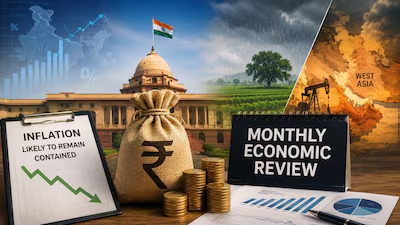
India’s Finance Ministry has said easing crude oil prices and improving global supply chains are helping reduce external risks to the economy. The latest assessment indicates stronger macroeconomic stability even as policymakers remain watchful of geopolitical developments and global market volatility.
The Finance Ministry’s assessment on India’s economy suggests that external risks have moderated as international crude oil prices ease and global supply chains continue to normalize. In its latest monthly economic review, the ministry said these developments are likely to support India’s macroeconomic outlook by reducing imported inflation, lowering logistics costs, and improving trade conditions. However, it also cautioned that geopolitical tensions and global financial uncertainties still require close monitoring.
Lower Crude Oil Prices Ease Pressure on India’s Economy
A decline in global crude oil prices is particularly significant for India because the country imports more than 85 percent of its crude oil requirements. When international oil prices soften, India’s import bill falls, easing pressure on the current account deficit and supporting the value of the rupee.
Lower energy prices also help contain inflation by reducing transportation and production costs across sectors. Industries such as manufacturing, aviation, logistics, and consumer goods often benefit when fuel costs stabilize. The Finance Ministry noted that the recent moderation in oil prices could reduce exposure to external shocks and strengthen overall economic resilience. Recent government estimates also indicate that easing commodity prices may help keep inflation contained over the coming months.
Improving Global Supply Chains Strengthen Trade Outlook
The recovery of global supply chains has become another important positive factor for India’s economy.
During the pandemic and subsequent geopolitical disruptions, businesses worldwide faced shortages of raw materials, shipping delays, and sharply higher freight costs. These disruptions affected manufacturing, exports, and industrial production across multiple sectors.
According to the Finance Ministry, improving logistics networks and smoother international trade flows are now reducing these pressures. Better availability of components and raw materials enables Indian manufacturers to plan production more efficiently while helping exporters meet delivery schedules.
Industries such as automobiles, electronics, engineering goods, pharmaceuticals, and consumer products are expected to benefit from more reliable global supply networks, supporting both domestic production and export competitiveness.
Domestic Economic Fundamentals Continue to Support Growth
While external conditions are improving, the ministry emphasized that India’s economic growth continues to be supported by strong domestic fundamentals.
Healthy tax collections, sustained infrastructure spending, resilient services activity, expanding digital payments, and improving manufacturing output have all contributed to economic stability. Strong foreign exchange reserves also provide an important buffer against global financial volatility.
India has continued to attract long-term investment despite international uncertainties. Stable domestic demand, combined with ongoing government capital expenditure, has helped cushion the economy from external disruptions over the past several years.
These factors collectively position India to manage global headwinds more effectively than many emerging economies, even though external risks have not disappeared entirely.
Geopolitical and Global Risks Still Remain
Although the Finance Ministry’s outlook has become more optimistic, policymakers continue to monitor several external developments that could alter the economic landscape.
Geopolitical tensions remain capable of disrupting global energy markets. Any sharp increase in crude oil prices could once again raise import costs and inflationary pressures. Slower growth in major economies such as the United States, Europe, or China could also affect India’s exports and investment flows.
Global interest rate decisions, currency movements, and financial market volatility remain important variables for emerging economies. The ministry therefore views the current improvement as a reduction in external risks rather than their complete elimination.
Maintaining fiscal discipline, monitoring inflation, and preserving financial stability remain central priorities as global conditions continue to evolve.
What the Latest Assessment Means for Businesses and Investors
For businesses, lower oil prices and improving supply chains can translate into lower operating costs, better inventory management, and more predictable production schedules. Companies dependent on imported raw materials may experience improved margins if commodity prices remain stable.
Investors are also likely to view easing external risks positively. Stable inflation, manageable import costs, and resilient domestic demand improve confidence in India’s macroeconomic outlook. Sectors such as aviation, logistics, manufacturing, automobiles, and consumer goods could benefit if the current trend in energy prices continues.
At the same time, economists caution that developments in global commodity markets can change rapidly. Businesses and investors are therefore expected to continue tracking geopolitical events, energy markets, and monetary policy decisions from major central banks alongside domestic economic indicators.
Key Takeaways
- The Finance Ministry says easing crude oil prices are reducing external risks for India’s economy.
- Improving global supply chains are helping manufacturers, exporters, and importers operate more efficiently.
- Lower commodity prices could support inflation control and improve India’s macroeconomic stability.
- Policymakers remain alert to geopolitical tensions, global growth risks, and energy market volatility.
Frequently Asked Questions
Q1. Why are lower crude oil prices important for India?
India imports most of its crude oil. Lower global prices reduce import costs, ease inflationary pressure, and improve the country’s current account balance.
Q2. How do better supply chains benefit the economy?
Improved supply chains reduce shipping delays, lower logistics costs, improve manufacturing efficiency, and support exports.
Q3. Does this mean India’s economy faces no external risks?
No. Risks from geopolitical conflicts, global economic slowdowns, and financial market volatility continue to require close monitoring.
Q4. Which sectors benefit the most from these developments?
Manufacturing, aviation, logistics, automobiles, consumer goods, pharmaceuticals, and export-oriented industries are among the sectors that may benefit from lower input and transportation costs.
(Internal Keyword Suggestions: Finance Ministry India economy, crude oil prices India, external risks India, global supply chains, India economic outlook, imported inflation, current account deficit, macroeconomic stability, oil imports India, business news India)