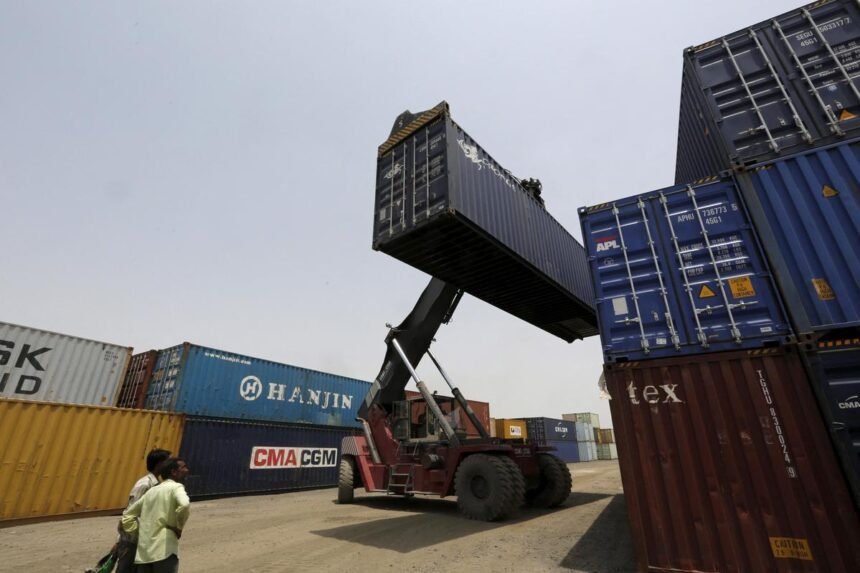
India’s export diversification strategy helped Indian products enter 1,821 new global market-product combinations in FY26, reflecting a broader push to reduce dependence on a few countries and strengthen the nation’s position in international trade.
India’s Export Diversification Strategy Gains Momentum in FY26
India’s export diversification strategy has delivered a notable milestone in FY26, with Indian exporters successfully accessing 1,821 new market-product combinations across the world. The development highlights the government’s ongoing efforts to broaden export destinations and reduce vulnerability to regional slowdowns or geopolitical disruptions.
The achievement comes as India seeks to maintain export growth despite global economic uncertainty, fluctuating commodity prices, and slower demand in some developed economies.
By expanding into new markets, India is building a more resilient trade ecosystem and creating fresh opportunities for manufacturers, farmers, and service providers.
What the 1,821 New Market Openings Mean
The figure refers to new combinations of products and countries where India recorded export activity during FY26.
For example, if India began exporting a particular pharmaceutical ingredient to a country where it had not previously sold that product, it would count as a new market-product entry.
These additions are significant because they show Indian exporters are not just increasing volumes, but also reaching buyers in previously untapped destinations.
This trend reduces overdependence on major markets such as the United States, the European Union, and the Middle East.
Government Push to Expand India’s Global Trade Footprint
The export diversification strategy is being driven by the Ministry of Commerce and Industry under the leadership of Commerce Minister Piyush Goyal.
Key initiatives include:
- Export promotion through Indian embassies
- Product-specific market intelligence
- Free trade agreement negotiations
- Production-linked incentive schemes
- Support for districts as export hubs
The government has also focused on reducing logistics costs and simplifying export documentation to help Indian companies compete more effectively.
Sectors Leading India’s Export Expansion
Several industries have contributed to India’s widening export footprint.
Leading sectors include:
- Pharmaceuticals and medical supplies
- Engineering goods
- Chemicals
- Agricultural products
- Electronics
- Textiles and garments
- Auto components
India’s pharmaceutical and engineering sectors have been particularly successful in entering new markets because of competitive pricing and compliance with international standards.
The rapid growth of electronics manufacturing has also added momentum, especially in smartphones and components.
Why Export Diversification Matters for India
Export diversification is critical for long-term economic stability.
When exports are concentrated in a few countries, any slowdown, tariff hike, or geopolitical conflict can hurt revenues. A broader export base spreads risk and improves resilience.
For India, diversification also supports:
- Higher foreign exchange earnings
- Job creation in manufacturing and services
- Growth in MSMEs
- Stronger global supply chain integration
- Reduced trade vulnerability
This strategy aligns with India’s ambition to become a major global manufacturing hub.
Free Trade Agreements and Market Access
India has been actively negotiating trade agreements to improve market access for domestic exporters.
The country has already signed agreements with the UAE and Australia and continues discussions with the United Kingdom, European Union, and other partners.
These agreements reduce tariffs, simplify regulatory procedures, and open opportunities for Indian products in competitive global markets.
As more agreements are finalized, exporters are likely to benefit from easier entry into new regions.
Challenges Indian Exporters Still Face
Despite progress, exporters continue to deal with several challenges.
These include:
- High freight costs
- Currency volatility
- Non-tariff barriers
- Quality certification requirements
- Slower global demand
Small and medium businesses often face the greatest hurdles due to limited resources and market knowledge.
Continued policy support will be essential to sustain diversification gains.
Outlook for India’s Export Growth
India’s performance in FY26 suggests that the country’s export strategy is becoming more targeted and data-driven.
Rather than relying solely on traditional markets, India is steadily identifying niche opportunities across multiple regions and product categories.
If this momentum continues, export diversification could help India strengthen trade performance, support domestic manufacturing, and move closer to its long-term goal of becoming a $1 trillion goods exporter.
Key Takeaways
- India entered 1,821 new market-product combinations in FY26.
- The strategy reduces dependence on a limited number of export destinations.
- Pharmaceuticals, engineering goods, electronics, and agriculture led the expansion.
- Export diversification strengthens resilience and supports economic growth.
FAQ
What does 1,821 new global markets mean?
It refers to new product-country combinations where India recorded exports during FY26.
Why is export diversification important?
It reduces dependence on a few markets and protects exporters from regional disruptions.
Which sectors drove India’s export expansion?
Pharmaceuticals, engineering goods, chemicals, electronics, and agricultural products.
How do free trade agreements help exports?
They lower tariffs and improve market access for Indian products.