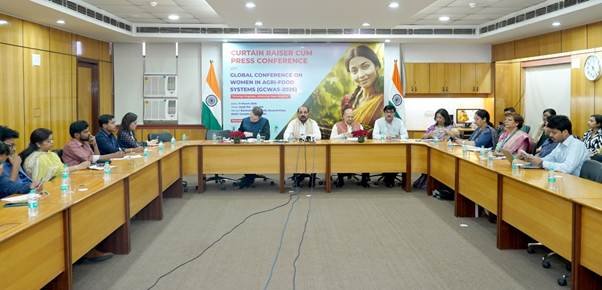
India is hosting a global conference in New Delhi focused on strengthening the role of women in agri food systems. The event brings policymakers, researchers, and development organizations together to address gender gaps in agriculture and food value chains.
India hosting the Global Conference on Women in Agri Food Systems highlights the growing international focus on gender inclusion in agriculture. The conference in New Delhi aims to strengthen policies, investments, and partnerships that empower women across farming, food production, and rural supply chains.
Global conference on women in agri food systems begins in New Delhi
The Global Conference on Women in Agri Food Systems has brought together representatives from governments, international organizations, research institutions, and development agencies. The discussions center on improving opportunities for women across agriculture, food processing, and rural entrepreneurship.
Women play a crucial role in global food production. In many developing economies, they contribute significantly to farming activities, livestock management, post harvest processing, and local food distribution. Despite their participation, women often face barriers such as limited access to land ownership, financing, agricultural technology, and training.
The conference aims to address these structural challenges by encouraging collaborative solutions. Policy experts are discussing how governments can integrate gender responsive policies into agricultural programs while improving women’s access to markets and financial services.
The gathering in New Delhi also reflects India’s effort to position itself as a key participant in global discussions on agricultural sustainability and inclusive development.
Women’s role in agriculture and food value chains
Women in agri food systems contribute to nearly every stage of the agricultural value chain. Their work includes crop cultivation, seed selection, irrigation management, livestock care, food processing, and local trading.
In several regions of India and other developing countries, women make up a substantial portion of the agricultural workforce. However, they frequently lack formal recognition as farmers. This limits their access to agricultural subsidies, training programs, and institutional credit.
Experts at the conference are emphasizing the need to strengthen women’s participation in agricultural decision making. Expanding access to digital farming tools, climate resilient farming practices, and financial inclusion initiatives can significantly improve productivity.
Addressing these gaps is also critical for global food security. Studies have shown that improving access to agricultural resources for women farmers can increase farm output and strengthen rural economies.
Policy discussions on gender equality in agriculture
One major focus of the conference involves policy frameworks designed to improve gender equality in agriculture. Governments are exploring measures that help women gain stronger property rights, improved access to agricultural inputs, and greater representation in farmer cooperatives.
Digital platforms and agricultural extension services are also being discussed as tools to expand knowledge sharing. Mobile technology and digital advisory platforms can help women farmers access weather data, crop management guidance, and market price information.
Financial inclusion remains another priority. Many women involved in farming and food processing rely on informal credit sources due to barriers in accessing formal banking systems. Expanding microfinance programs and rural banking initiatives could help women invest in better agricultural equipment and technologies.
The conference also highlights successful case studies where women led agricultural cooperatives have improved productivity and income generation in rural communities.
Importance of women entrepreneurs in food systems
Beyond farming, women entrepreneurs are playing an increasing role in food processing, packaging, and agricultural supply chains. Small scale food businesses led by women often operate in rural and semi urban regions, contributing to employment generation and local economic activity.
Supporting women entrepreneurs in the agri food sector can strengthen rural value chains while promoting economic diversification. Governments and development agencies are exploring programs that provide training in business management, marketing, and digital commerce.
In India, several initiatives have encouraged women’s self help groups to participate in food processing and agri based enterprises. These groups often produce packaged foods, dairy products, spices, and processed agricultural goods that are sold through local markets or online platforms.
Expanding these opportunities can improve income levels for rural households while increasing women’s participation in the broader agricultural economy.
Strengthening global collaboration for inclusive agriculture
The conference also provides an opportunity for countries to exchange best practices and policy ideas. International organizations and research institutions are presenting data on how gender inclusive agricultural policies can strengthen food systems and rural livelihoods.
Global cooperation is important because agricultural challenges often cross national boundaries. Climate change, food security concerns, and supply chain disruptions affect multiple countries simultaneously.
Promoting women’s leadership in agriculture can contribute to more resilient food systems. When women farmers gain access to resources and training, communities often experience improvements in nutrition, education, and household income.
India hosting the conference reflects the country’s growing engagement in international agricultural dialogue and its efforts to promote inclusive rural development strategies.
Takeaways
India is hosting a global conference in New Delhi focused on women in agri food systems
The event highlights the role of women in agriculture and rural food value chains
Policy discussions focus on improving access to land, finance, and technology
Empowering women farmers can strengthen food security and rural economies
FAQs
What is the Global Conference on Women in Agri Food Systems?
It is an international event that brings together policymakers, researchers, and development organizations to discuss ways to improve the participation of women in agriculture and food systems.
Why are women important in agriculture?
Women contribute significantly to farming, food processing, and rural supply chains, making them essential to food production and rural economic activity.
What challenges do women farmers face?
Common challenges include limited access to land ownership, financing, agricultural training, and market opportunities.
How can empowering women improve food systems?
Providing women farmers with better resources and training can increase agricultural productivity, strengthen rural livelihoods, and improve food security.