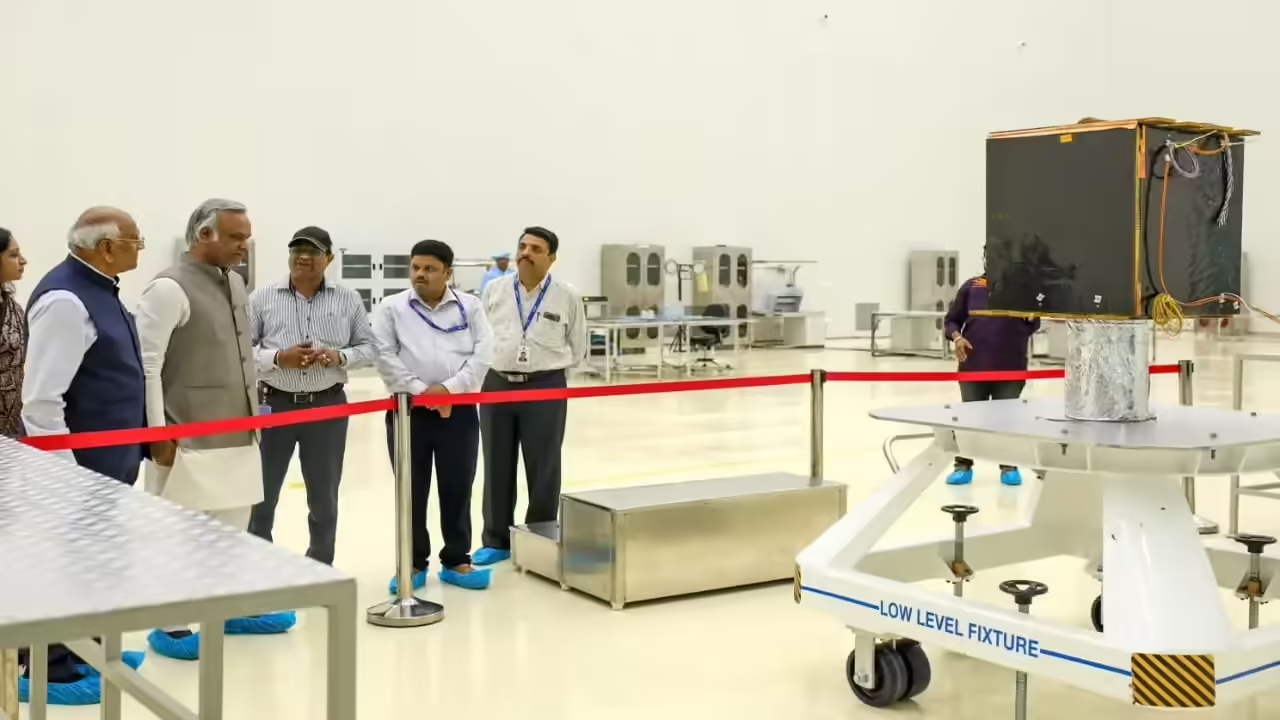
Karnataka has launched India’s first state backed spacetech centre in Bengaluru, marking a major push into the country’s growing private space ecosystem. The initiative aims to accelerate innovation, support startups, and strengthen India’s position in the global space economy.
State backed spacetech centre signals policy push into space sector
Karnataka launches India’s first state backed spacetech centre in Bengaluru at a time when the country’s private space sector is expanding rapidly. This is a time sensitive development and reflects ongoing policy efforts to support space startups after regulatory reforms in recent years.
The centre is designed to act as a hub for research, incubation, and collaboration between startups, academic institutions, and industry players. Bengaluru, already home to the Indian space ecosystem, offers the right mix of talent, infrastructure, and institutional support.
This move aligns with India’s broader strategy to open up the space sector to private participation, following the establishment of regulatory frameworks that allow startups to build and launch space technologies with government support.
Bengaluru strengthens position as India’s spacetech capital
With the launch of the spacetech centre, Bengaluru further cements its position as the country’s leading hub for space innovation. The city hosts key institutions such as Indian Space Research Organisation and has seen a rise in private startups working on satellites, launch systems, and space data applications.
The new centre is expected to provide infrastructure support, technical mentorship, and access to testing facilities for emerging companies. This reduces entry barriers for startups that often struggle with high capital requirements and limited access to specialized resources.
Karnataka’s policy framework has consistently supported deep tech sectors, and spacetech is now emerging as a priority area alongside artificial intelligence and semiconductor development.
Private space startups to benefit from infrastructure and funding support
India’s spacetech startups have gained momentum in recent years, with companies focusing on satellite manufacturing, launch services, and downstream applications such as geospatial analytics.
The state backed centre is expected to bridge gaps in funding, infrastructure, and regulatory navigation. Early stage startups often face challenges in accessing capital due to the long gestation periods associated with space technology projects.
By providing incubation and industry partnerships, the centre aims to de risk early innovation and attract both domestic and global investors. It also creates opportunities for collaboration between startups and established players in aerospace and defence.
This initiative could help accelerate commercialization of space technologies, making Indian startups more competitive in global markets.
Policy reforms and global demand drive spacetech growth
The launch of the centre comes after significant policy reforms that have opened India’s space sector to private players. Regulatory bodies now facilitate approvals for satellite launches, data usage, and international collaborations.
Globally, the space economy is witnessing strong growth driven by demand for satellite communication, earth observation, and navigation services. India aims to capture a larger share of this market by supporting innovation at the grassroots level.
Karnataka’s move reflects a growing recognition among state governments that deep tech sectors require long term investment and policy backing. By creating dedicated infrastructure, the state is positioning itself to attract global partnerships and investments.
The initiative also complements national level efforts to build a robust space ecosystem that includes startups, research institutions, and government agencies.
What this means for India’s space economy
The establishment of a state backed spacetech centre marks a shift toward decentralized innovation in India’s space sector. Instead of relying solely on central institutions, states are now playing an active role in nurturing technology ecosystems.
For startups, this means improved access to resources, mentorship, and funding opportunities. For investors, it signals a more structured and supportive environment for deploying capital in deep tech ventures.
In the long term, such initiatives could help India scale its space capabilities beyond government missions and into commercial markets. This includes satellite services, launch capabilities, and data driven applications across industries.
The Bengaluru centre is likely to serve as a model for other states looking to build similar ecosystems in emerging technology sectors.
Takeaways
- Karnataka has launched India’s first state backed spacetech centre in Bengaluru
- The initiative aims to support startups with infrastructure, funding, and mentorship
- Bengaluru strengthens its position as India’s leading spacetech hub
- The move aligns with national efforts to expand private participation in space
FAQs
Q1. What is the purpose of the spacetech centre in Bengaluru?
The centre aims to support space startups through incubation, infrastructure, and collaboration with industry and research institutions.
Q2. Why is Bengaluru chosen for this initiative?
Bengaluru already hosts major space institutions and a growing startup ecosystem, making it a natural hub for spacetech development.
Q3. How will startups benefit from this centre?
Startups will gain access to funding support, testing facilities, mentorship, and industry partnerships.
Q4. What does this mean for India’s space sector?
It strengthens private participation and helps India compete in the global space economy.