
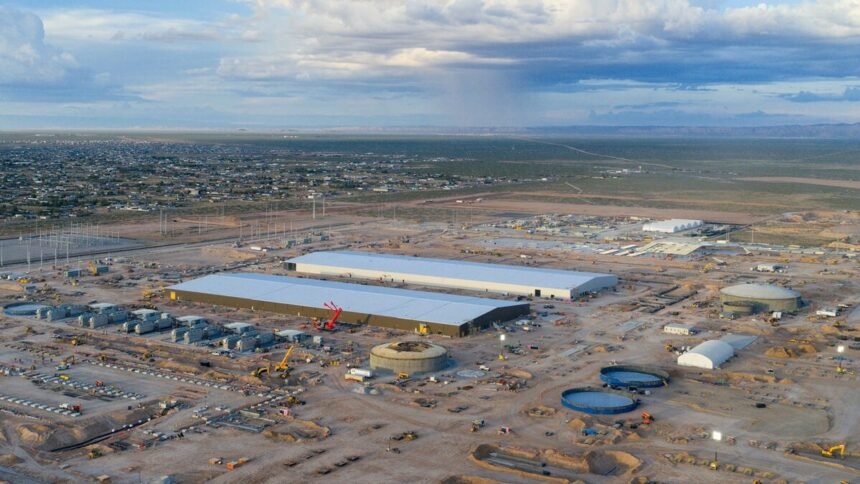
Meta is reconsidering its 2030 net-zero emissions timeline as the rapid expansion of artificial intelligence infrastructure increases its environmental footprint. The company’s latest sustainability report reveals a 45% rise in net emissions during 2025, highlighting the growing conflict between AI investment and corporate climate commitments.
Meta Reviews 2030 Climate Commitment Amid AI Expansion
Meta Platforms, the parent company of Facebook, Instagram and WhatsApp, is reassessing its target of achieving net-zero greenhouse gas emissions across its value chain by 2030.
The announcement appeared in the company’s 2026 Sustainability Report, published on November 19. Meta executives Rachel Peterson, Vice President of Data Centers, and Blair Swedeen, Global Head of Net Zero and Sustainability, said the company was reviewing its timelines, sequencing and interim milestones.
The review includes the original 2030 net-zero deadline and its near-term emissions-intensity targets.
Meta explained that its original climate commitment was based on expectations of steady business growth, falling clean-energy costs and improvements in the wider energy system. However, demand for AI infrastructure has expanded much faster than anticipated.
The company said its long-term environmental ambitions remain unchanged, but the route towards achieving them may need to evolve.
Importantly, Meta has not announced a replacement deadline or formally withdrawn its net-zero commitment. It is reviewing how the target can be achieved under current operating conditions.
Meta’s Carbon Emissions Increase 45% in 2025
The latest sustainability report highlights the scale of Meta’s environmental challenge.
The company’s net greenhouse gas emissions increased approximately 45% in 2025, reaching around 11.8 million metric tonnes of carbon dioxide equivalent, compared with approximately 8.1 million tonnes in 2024.
Its broader location-based emissions inventory also increased significantly, rising from approximately 15.6 million metric tonnes in 2024 to more than 21.7 million metric tonnes in 2025.
The difference between these figures is important. Net emissions account for the company’s reported climate accounting measures and reductions, while location-based figures reflect emissions associated with the electricity grids and other activities connected to its operations.
A major contributor to the increase was Scope 3 emissions, which cover indirect emissions throughout a company’s value chain.
For Meta, this includes the manufacturing and transportation of servers, data centre equipment, construction materials and other infrastructure required to expand its computing capacity.
The figures show that the environmental impact of AI infrastructure extends beyond the electricity consumed by operational data centres.
AI Data Centre Expansion Drives Infrastructure Emissions
Meta’s growing investment in artificial intelligence is a central reason behind the increase in its environmental footprint.
Training and operating advanced AI models requires large amounts of computing power. Companies need specialised processors, servers, networking equipment and extensive data centre facilities to support these systems.
Building this infrastructure also creates emissions before a data centre becomes operational. Manufacturing servers and electronic components requires energy and raw materials, while constructing facilities involves steel, concrete and other carbon-intensive materials.
Meta identified capital goods, including servers and data centre equipment, as a major source of its supply-chain emissions.
This highlights a challenge for technology companies. Even if they purchase renewable electricity to operate their facilities, emissions generated during the production and construction of infrastructure can remain substantial.
The rapid pace of AI development is adding to this pressure. Companies are competing to build computing capacity quickly, while suppliers must manufacture and deliver equipment at a scale that was not anticipated when many existing climate targets were established.
Electricity Consumption Rises as Data Centres Grow
Meta’s electricity consumption also increased sharply in 2025.
According to its sustainability report, the company’s total electricity use rose approximately 35% year-on-year to 24.85 million megawatt-hours. Data centres accounted for nearly all of this consumption, using approximately 24.52 million megawatt-hours.
The increase reflects the growing energy requirements of AI computing and Meta’s expanding digital infrastructure.
Large data centres require continuous electricity to operate servers, cooling systems, networking equipment and supporting facilities. AI workloads can be particularly demanding because they involve processing large volumes of information through specialised hardware.
Meta has been investing in renewable energy agreements to match its electricity consumption with clean-energy purchases. However, the availability of renewable power does not always match the speed at which new data centres need to become operational.
The company has pointed to long grid-connection queues, slow transmission expansion and lengthy permitting processes as major obstacles.
These challenges are becoming increasingly important for technology companies planning large-scale AI infrastructure projects.
Meta Has Contracted More Than 30 Gigawatts of Clean Energy
Despite the rise in emissions, Meta continues to invest in clean-energy procurement.
The company says it has contracted more than 30 gigawatts of clean and renewable energy capacity, including projects involving solar, nuclear and geothermal power.
Since 2020, Meta has matched 100% of its annual electricity consumption with clean and renewable energy purchases through long-term agreements and utility partnerships.
However, contracted capacity is not the same as electricity already being generated and supplied to its facilities. Reports indicate that less than half of the contracted capacity is currently operational.
This difference helps explain why renewable-energy commitments do not automatically resolve the immediate power requirements of expanding data centres.
New renewable projects need permits, grid connections and transmission infrastructure before they can supply electricity at scale.
Meta is also exploring low-carbon energy technologies, including advanced nuclear power and geothermal energy. These options could provide additional sources of electricity as demand for AI computing continues to grow.
Natural Gas Raises Further Questions About Meta’s Climate Plans
One of the more significant concerns surrounding Meta’s infrastructure expansion is its potential reliance on natural gas.
The company has indicated that it may use behind-the-meter gas generation if utility providers cannot supply electricity within the timelines required for its business.
Behind-the-meter generation refers to power produced directly at or near a facility rather than supplied entirely through the conventional electricity grid.
Natural gas can provide reliable electricity, but burning it produces carbon dioxide emissions. Its use could therefore make it more difficult for Meta to reduce its overall greenhouse gas footprint.
The issue is already visible in some of the company’s large infrastructure plans.
Meta announced an expansion of its Richland Parish data centre project in Louisiana to a planned computing capacity of five gigawatts. The project is also associated with plans to fund seven new natural gas power plants.
Several other data centre projects in the United States are also expected to rely partly on natural gas.
The company faces a difficult operational decision: wait for grid and renewable-energy infrastructure to become available or secure more immediate power through on-site generation.
The choice could influence both the cost and environmental impact of its AI expansion.
Water Consumption Adds Another Environmental Challenge
Electricity and greenhouse gas emissions are not the only environmental concerns linked to large AI data centres. Water consumption is also attracting attention.
Data centres use water for cooling in certain facility designs. Power plants that generate electricity can also consume significant quantities of water, creating an indirect impact that is not always visible in a data centre’s own water-use figures.
Meta reported that its direct facility water consumption declined from 825 million gallons in 2024 to 790 million gallons in 2025.
However, water consumption associated with areas experiencing water stress increased from 198 million gallons to 246 million gallons.
The company also reported a rise in water consumption connected to purchased electricity, from approximately 19 billion gallons in 2024 to more than 26 billion gallons in 2025.
These figures show why the environmental impact of AI infrastructure needs to be assessed beyond the physical boundaries of individual data centres.
For communities near large facilities, the availability of water, electricity and other essential resources can become an important issue as technology companies expand.
Meta’s Climate Review Reflects a Wider Big Tech Challenge
Meta is not the only major technology company facing rising emissions as AI infrastructure expands.
Other large technology companies have also reported increases in their greenhouse gas footprints.
For 2025, Microsoft reported an approximately 25% increase in overall emissions, while Google reported an 18% rise and Amazon reported a 16% increase under their respective reporting methodologies.
Although these companies use different accounting approaches and reporting boundaries, the figures indicate that the expansion of cloud computing and AI infrastructure is creating significant sustainability challenges across the technology industry.
The issue is particularly important because major technology companies have made long-term climate commitments while simultaneously increasing investment in energy-intensive computing facilities.
The industry must now demonstrate how it can expand AI capacity without allowing emissions, electricity consumption and water use to grow at an unsustainable pace.
What Meta’s Decision Means for the Future of AI and Sustainability
Meta’s review of its 2030 net-zero timeline highlights a difficult question for the technology industry: how can companies continue expanding artificial intelligence while meeting their environmental commitments?
AI infrastructure is becoming a major part of the global technology economy. Data centres support generative AI applications, cloud services, recommendation systems and automated tools used by businesses and consumers.
However, the environmental costs are becoming more visible. Manufacturing computing equipment, constructing data centres and securing reliable electricity all contribute to the industry’s overall footprint.
Meta’s next steps will be important for investors, policymakers, environmental groups and communities located near its infrastructure projects.
The company has said it will share the outcome of its review, but it has not yet provided a revised net-zero date.
For now, the central challenge is balancing the commercial importance of AI expansion with measurable reductions in emissions and resource consumption. Meta’s ability to manage this balance could influence how other major technology companies approach their own climate commitments.
Key Takeaways
- Meta is reviewing its 2030 net-zero deadline and interim climate targets, but has not abandoned its long-term environmental ambition.
- Its net greenhouse gas emissions increased approximately 45% in 2025 to around 11.8 million metric tonnes of carbon dioxide equivalent.
- Electricity consumption increased 35% as the company expanded its AI and data centre infrastructure.
- Meta has contracted more than 30 gigawatts of clean energy but faces challenges involving grid connections, renewable-energy availability and infrastructure development.
Frequently Asked Questions
1. Is Meta abandoning its 2030 net-zero target?
No. Meta is reviewing the timeline, interim milestones and emissions-intensity targets associated with its 2030 commitment. The company has not announced that it is withdrawing the goal or provided a replacement deadline.
2. Why are Meta’s carbon emissions increasing?
The main factors include rapid AI infrastructure expansion, higher electricity consumption and supply-chain emissions associated with manufacturing servers, equipment and constructing data centres.
3. How much did Meta’s emissions increase in 2025?
Meta’s reported net greenhouse gas emissions increased approximately 45% in 2025, reaching around 11.8 million metric tonnes of carbon dioxide equivalent.
4. Is Meta investing in renewable energy?
Yes. Meta says it has contracted more than 30 gigawatts of clean and renewable energy capacity, including solar, nuclear and geothermal projects. However, not all contracted capacity is currently operational.
(Internal keywords: Meta net zero target 2030, Meta AI data centre expansion, Meta carbon emissions 2025, artificial intelligence energy consumption, Big Tech sustainability goals, renewable energy for data centres, AI infrastructure environmental impact, Meta climate commitment)