
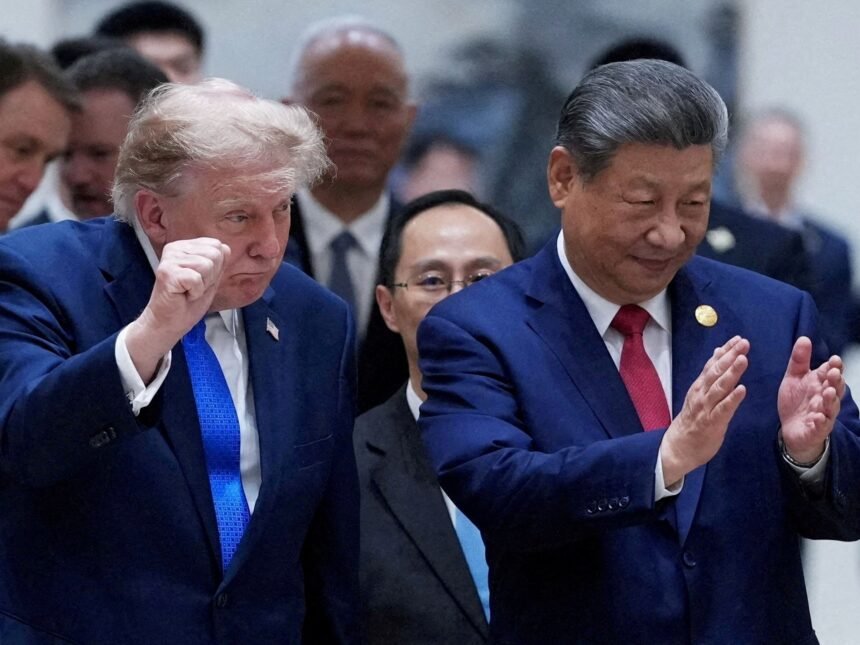
The Trump administration is preparing another round of import tariffs targeting China, the European Union and 14 other economies over concerns about government subsidies and excess industrial production. The proposed measures could reopen trade disputes, affect global supply chains and create fresh uncertainty for international businesses.
US Prepares New Tariffs on China and European Union
The United States is preparing to introduce additional tariffs on goods imported from China, the European Union and 14 other economies following a months-long investigation into foreign industrial policies.
According to reports published on November 24 and 25, the Office of the United States Trade Representative (USTR) is expected to release its findings shortly. The investigation examines whether government subsidies and other forms of state support have encouraged excessive manufacturing capacity in major trading partners.
The proposed duties form part of President Donald Trump’s wider effort to rebuild the US tariff framework after the Supreme Court struck down his earlier broad reciprocal tariffs in February 2026.
The administration is now pursuing a different legal route to impose import duties. However, the timing of the announcement could still change, and the final tariff structure has not been officially confirmed.
The development is being closely watched by global businesses because it could affect trade relations with several major manufacturing economies.
Why Trump Is Targeting Foreign Industrial Subsidies
The central issue behind the proposed tariffs is what Washington describes as excess industrial capacity.
The Trump administration argues that some governments provide financial assistance, subsidies, tax incentives and other forms of support to domestic manufacturers. According to US officials, these policies encourage companies to produce more goods than their domestic markets can absorb.
The additional production is then exported to international markets, potentially putting pressure on manufacturers in other countries.
US officials have raised concerns about industries such as steel, automobiles, solar panels, cement and other manufactured products.
China has received particular attention because of its large manufacturing base and expanding exports. Its trade surplus reached nearly $1.2 trillion in 2025, reflecting the scale of its position in global trade.
The administration argues that imports supported by government subsidies can make it difficult for American manufacturers to compete on price.
However, the issue is disputed internationally. Governments often defend industrial support as a legitimate part of economic development, infrastructure investment and domestic manufacturing policy.
The proposed tariffs could therefore become another point of disagreement between Washington and its trading partners.
Section 301 Investigation Provides Legal Basis for Tariffs
The latest investigation is being conducted under Section 301 of the Trade Act of 1974.
This provision gives the US government authority to investigate foreign trade practices that it considers unfair, discriminatory or harmful to American commerce. Following an investigation, the administration can take trade action, including imposing tariffs, if the legal requirements are satisfied.
The use of Section 301 is significant because it provides an alternative legal mechanism after the Supreme Court invalidated the administration’s earlier broad tariff programme.
The investigation into industrial subsidies was initiated in March 2026. USTR officials have since examined the policies and manufacturing practices of 16 trading partners.
The administration is expected to use the findings to determine which economies and industries should face additional import duties.
However, the final decision will require more detail about the products covered, the applicable tariff rates and the implementation schedule.
For international businesses, these details will determine whether the proposed measures affect existing supply contracts or require changes to sourcing and pricing strategies.
Which Countries Could Face Fresh US Tariffs?
The investigation covers China, the European Union and 14 other economies. India is among the countries identified in reports about the proposed measures.
Other economies covered include Japan, South Korea, Mexico, Vietnam, Taiwan, Thailand, Malaysia, Indonesia, Switzerland, Norway, Singapore, Bangladesh and Cambodia.
The potential impact will differ across countries because their trade relationships with the United States are not identical.
Some economies have already negotiated trade arrangements with the Trump administration. Reports indicate that the new duties are being structured with those agreements in mind.
For example, the United States and European Union previously agreed to a 15% tariff ceiling on most imports under their trade arrangement. Similar commitments exist in agreements involving Japan and South Korea.
China could face a different tariff structure because Washington has raised broader concerns about its industrial subsidies and manufacturing output.
India is also watching the development closely because additional US duties could affect the competitiveness of its manufactured exports.
The exact treatment of each economy will become clearer when the USTR releases its findings and the administration publishes its final decisions.
How the Supreme Court Ruling Changed Trump’s Tariff Strategy
The proposed tariffs follow a major legal setback for the Trump administration.
In February 2026, the US Supreme Court ruled against the broad reciprocal tariffs introduced under emergency economic powers in 2025.
The ruling forced the administration to reconsider its approach to import duties and identify alternative legal authorities for its trade agenda.
In July 2026, Washington announced another set of tariffs ranging from 10% to 12.5% on goods from approximately 60 trading partners. Those duties were linked to an investigation into alleged failures to enforce restrictions on imports produced using forced labour.
That separate action has also faced legal challenges.
The latest industrial subsidy investigation represents another attempt to establish a legal basis for additional tariffs. Unlike the earlier broad measures, the proposed duties are connected to specific findings about manufacturing capacity and government support.
The distinction matters because different legal authorities involve different investigative requirements and potential grounds for legal challenges.
What the New Tariffs Could Mean for China and Europe
China and the European Union are among the world’s largest trading partners of the United States. Additional tariffs could affect manufacturers, exporters, importers and consumers across both economies.
For China, higher duties could increase the cost of selling manufactured products in the American market. Industries such as automobiles, solar equipment, steel and other industrial goods could face additional pricing pressure if included in the final measures.
Chinese manufacturers may respond by adjusting export prices, redirecting shipments to other markets or reconsidering production locations.
European businesses could also face uncertainty, particularly in sectors that depend heavily on access to American consumers.
Automotive manufacturers, industrial equipment suppliers and companies exporting specialised manufactured products may need to reassess their pricing and supply-chain arrangements.
However, existing trade agreements could limit the overall tariff burden for some European products. The final effect will depend on how Washington applies the new duties alongside previously negotiated commitments.
The European Union may also seek diplomatic engagement to prevent the measures from undermining its trade arrangement with the United States.
Potential Impact on Global Supply Chains and Prices
The proposed tariffs could create fresh uncertainty for global supply chains.
Manufacturing businesses often depend on components and raw materials sourced from several countries. A product assembled in one economy may contain electronic components, metals, machinery and industrial inputs imported from multiple trading partners.
When tariffs increase, businesses must decide whether to absorb the additional cost, pass it on to customers or find alternative suppliers.
For example, an American manufacturer importing industrial components from China or Europe could face higher procurement expenses if those products are included in the tariff measures.
Companies may also consider shifting production to countries facing lower duties. However, changing suppliers and manufacturing locations requires time, investment and regulatory planning.
Consumers could eventually experience higher prices if businesses pass additional import costs through to retail products.
The impact will depend on the scale of the tariffs, the availability of alternative suppliers and the ability of manufacturers to absorb higher expenses.
This uncertainty is particularly relevant for businesses operating with narrow profit margins or relying on international sourcing.
Why Financial Markets Are Watching the Tariff Announcement
The possibility of fresh US tariffs has already influenced market sentiment.
Global investors are concerned that another round of trade restrictions could disrupt international commerce and increase uncertainty for companies with significant overseas operations.
On November 25, Asian equities recorded broad declines as investors awaited the findings of the US investigation. Reuters reported that the MSCI Asia-Pacific index fell 2.4%, while South Korea’s market declined 5.8%, Taiwan’s benchmark dropped 4.7% and Japan’s Nikkei lost 2.8%.
The market reaction reflects concerns about the possible consequences of renewed trade tensions, although other economic developments also influenced investor sentiment.
Businesses and investors will be watching for clarity on the tariff schedule, the products covered and the treatment of countries with existing trade agreements.
A more targeted tariff structure could limit the immediate impact on certain industries. However, uncertainty over future trade policy may still affect investment and business planning.
What Happens Next in US Trade Policy?
The next major development will be the publication of the USTR’s investigation findings.
The report is expected to provide further information about the administration’s concerns regarding industrial subsidies and excess manufacturing capacity among the economies under review.
The government will then need to clarify the tariff rates, affected products and implementation dates.
Trading partners could respond through diplomatic negotiations, requests for exemptions or other trade policy measures. Some countries may also challenge the measures through available legal channels.
For businesses, the immediate priority will be to assess their exposure to potential duties and understand whether their existing trade agreements provide any protection.
The proposed tariffs demonstrate that trade policy remains an important part of the Trump administration’s economic strategy. Their eventual impact will depend on the final decisions and how affected economies respond.
For now, the announcement remains in preparation, not a completed tariff rollout. The coming USTR findings will determine how the proposed measures translate into actual trade restrictions.
Key Takeaways
- The Trump administration is preparing fresh tariffs on China, the European Union and 14 other economies following an investigation into industrial subsidies.
- The investigation is being conducted under Section 301 of the Trade Act of 1974.
- The final tariff rates, product coverage and implementation dates have not yet been officially confirmed.
- The proposed duties could affect global manufacturing, supply chains, export competitiveness and international trade relations.
Frequently Asked Questions
1. Why is the Trump administration planning fresh tariffs on China and Europe?
Washington argues that government subsidies and other forms of industrial support in major trading economies have encouraged excess manufacturing capacity, creating unfair competition for American producers.
2. Which countries could face the new US tariffs?
The investigation covers China, the European Union, India, Japan, South Korea, Mexico, Vietnam, Taiwan, Thailand, Malaysia, Indonesia, Switzerland, Norway, Singapore, Bangladesh and Cambodia.
3. Have the new tariffs officially come into force?
No. As of November 25, 2026, the administration is preparing the measures and the USTR is expected to release its investigation findings. Final tariff rates and implementation dates remain unconfirmed.
4. How could the proposed tariffs affect global businesses?
Additional import duties could increase sourcing costs, disrupt supply chains, affect export competitiveness and potentially raise prices for consumers. The actual impact will depend on the products and countries covered.
(Internal keywords: Trump administration tariffs 2026, US tariffs on China, US EU trade tensions, fresh US import duties, Section 301 investigation, global trade restrictions, industrial subsidies investigation, China US trade relations, European exports to US)