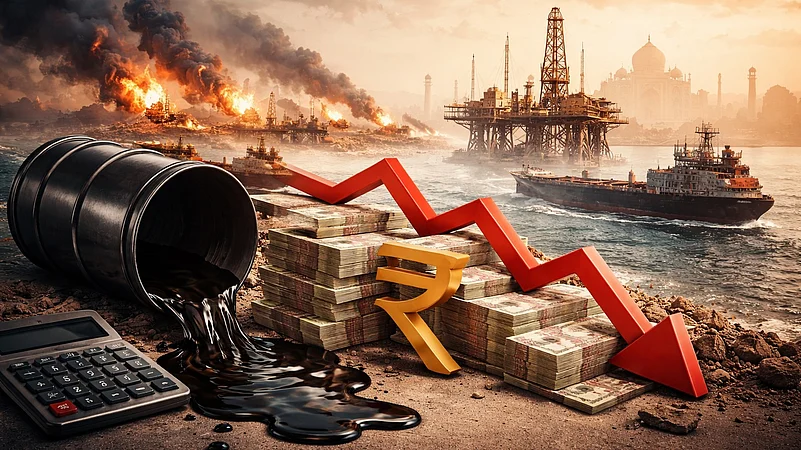
Crude oil prices moved back above $90 a barrel on Monday as renewed US-Iran tensions raised concerns over energy supplies. The oil spike put pressure on Indian equities and the rupee, reviving concerns over inflation, import costs and market volatility.
Brent crude crosses $90 as US-Iran tensions escalate
Brent crude came under fresh buying pressure on August 31 after renewed military action between the US and Iran increased concerns about disruption to energy supplies. Brent futures were reported around $90 a barrel in morning trade, while other market updates put the benchmark close to $89.20 earlier in the session.
The latest move follows weeks of volatility in crude prices as investors have repeatedly reassessed the possibility of a prolonged conflict in West Asia and the risks surrounding the Strait of Hormuz.
The waterway is particularly important for global energy markets because a significant share of crude oil and LNG shipments passes through the region. Any sustained disruption can therefore create a risk premium in international oil prices.
For India, the development matters immediately because the country depends heavily on imported crude oil. Higher international prices mean Indian refiners and oil companies need more dollars to pay for imports, potentially increasing pressure on the country’s external balances.
Indian stock market opens lower amid crude oil shock
The rise in crude prices was reflected in Indian equity markets at the start of Monday’s trading session.
The Sensex fell 226.60 points to 77,028.56 during early trade, while the Nifty 50 declined 120.40 points to 24,053.55. Investors were also reacting to weakness across Asian markets and renewed concerns about global interest rates.
At 9:40 am, the Sensex was down about 301 points at 76,963.74, while the Nifty was lower by 124.80 points at 24,050.85, according to Moneycontrol.
Several major stocks came under pressure. Infosys, Tata Steel, InterGlobe Aviation, Bajaj Finance, Tata Consultancy Services and Titan were among the early laggards. At the same time, some financial stocks including HDFC Bank and Kotak Mahindra Bank showed relative strength.
The market reaction shows why crude oil remains a key macroeconomic variable for Indian investors. A sharp increase in energy costs can affect corporate margins, inflation expectations and consumer spending.
Rupee slips as oil increases dollar demand
The Indian rupee also opened weaker on Monday. It traded at around ₹95.49 against the US dollar, compared with ₹95.38 in the previous session.
Higher crude prices can create additional demand for US dollars because oil importers need dollars to settle international payments. That creates a direct link between crude prices and the rupee, particularly when global investors are already favouring the dollar during periods of geopolitical uncertainty.
The rupee is also facing other external pressures. The US Federal Reserve has adopted a more hawkish tone on inflation, increasing market expectations around a possible rate hike in September. Moneycontrol reported that market-implied odds of a September hike had risen to around 60% after recent comments from Fed Chair Kevin Warsh, compared with 35% previously.
That combination of expensive oil and a potentially stronger US dollar makes the currency environment more challenging for India.
Why expensive oil matters for India’s economy
India’s exposure to crude oil is one of the biggest reasons investors watch every major move in international energy prices.
When crude becomes more expensive, India’s overall import bill can rise. If the increase persists, it can put pressure on the current account and the rupee. A weaker rupee can then make imported commodities and other dollar-priced goods more expensive.
The impact can eventually move beyond the energy sector.
Higher transportation and fuel-related costs can affect airlines, logistics companies, manufacturers and businesses that rely heavily on petroleum-based inputs. Companies may either absorb those costs, reducing margins, or pass them on to customers, potentially affecting demand.
Economists are already watching the duration of the oil shock rather than just the daily price movement. A sustained crude price above $90 could pose a bigger challenge to India’s growth and inflation outlook than a short-lived spike. Recent analysis has warned that India’s growth outlook could come under pressure if crude remains above that level for an extended period.
Fuel prices remain stable despite global crude rise
Despite the rise in international crude prices, petrol and diesel prices in major Indian cities remained unchanged on August 31.
According to Livemint, petrol was priced at ₹102.12 per litre in Delhi and ₹111.21 in Mumbai, while diesel stood at ₹95.20 in Delhi and ₹97.83 in Mumbai.
This means the immediate impact of the crude spike is not necessarily visible at petrol pumps.
However, domestic fuel prices can remain stable even when international oil markets are volatile. The broader economic impact can still emerge through refinery costs, imports, transportation expenses, corporate margins and government finances if higher crude prices persist.
For consumers and businesses, the bigger concern is therefore whether the current oil rally lasts.
Investors now watching oil, rupee and global rates
The oil shock is arriving at a sensitive time for Indian markets. August has already been marked by volatility, while investors are also tracking foreign fund flows, global bond yields, monetary policy expectations and corporate developments.
Foreign portfolio investors had remained net buyers through much of August, with Moneycontrol reporting purchases of around ₹23,544 crore during the month.
A sustained rise in crude could make the investment environment more difficult if it combines with a stronger dollar and higher global yields.
For now, Monday’s market decline reflects caution rather than evidence of a broader economic breakdown. The key question is whether tensions in West Asia ease or whether energy markets face another prolonged period of disruption.
If Brent crude remains above $90, investors are likely to keep a close watch on the rupee, inflation expectations, India’s import bill and sectors that are particularly sensitive to fuel costs.
What happens next could matter more than today’s oil price
The immediate market reaction is being driven by geopolitical headlines, but the economic consequences will depend heavily on how long crude remains elevated.
If tensions ease and supply concerns diminish, oil could retreat and some of the pressure on Indian markets and the rupee could reverse. A prolonged escalation, however, could keep the geopolitical premium embedded in crude prices.
That would put greater pressure on India’s inflation outlook and corporate profitability while potentially limiting the room available to policymakers.
For investors, the next few trading sessions will therefore be important. Oil prices, the rupee and global interest-rate expectations are likely to remain closely connected as markets assess whether Monday’s crude surge is another short-term shock or the beginning of a longer period of energy-market stress.
Key Takeaways
- Brent crude moved back towards and above the $90-a-barrel level amid renewed US-Iran tensions.
- Sensex and Nifty opened lower on August 31 as higher oil prices and geopolitical risks weakened investor sentiment.
- The rupee opened at around ₹95.49 per US dollar, facing pressure from crude prices and a stronger dollar environment.
- A prolonged period of crude above $90 could increase pressure on India’s import bill, inflation and economic growth.
FAQ
Why is crude oil above $90 a concern for India?
India imports a large share of its crude oil requirements. Higher international prices increase the country’s import costs and can put pressure on the rupee, inflation and the current account.
Why does higher crude oil affect the Indian rupee?
Oil imports are largely paid for in US dollars. When crude prices rise, Indian importers generally need more dollars, increasing demand for the US currency and potentially putting downward pressure on the rupee.
Why did Indian stocks fall on August 31?
Indian equities opened lower amid renewed US-Iran tensions, higher crude prices, weaker Asian markets and concerns about global interest rates.
Will petrol and diesel prices immediately rise because crude crossed $90?
Not necessarily. Petrol and diesel prices in major Indian cities remained unchanged on August 31 despite the increase in international crude prices.