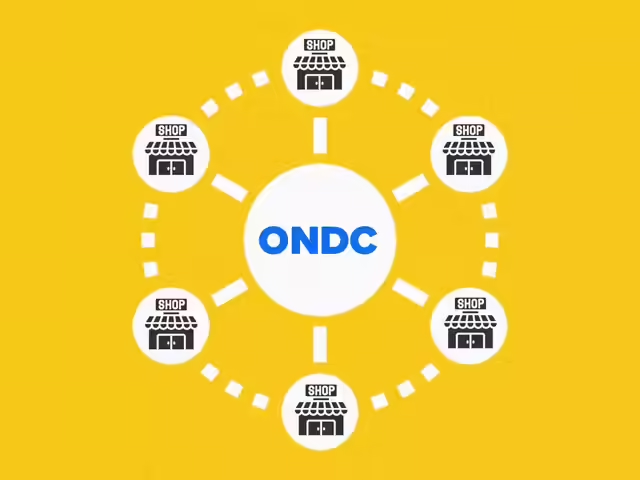
ONDC momentum is accelerating as more FMCG brands join the open network, reshaping how products are discovered and sold online in India. The shift signals growing industry confidence in decentralized digital commerce models.
ONDC Momentum Strengthens with FMCG Brand Participation
ONDC momentum has picked up pace as fast moving consumer goods companies increase their presence on the Open Network for Digital Commerce. The initiative, backed by the government, aims to create an open, interoperable digital commerce ecosystem that reduces dependency on dominant platforms.
The entry of FMCG brands is a significant development because these companies drive high-frequency purchases and large transaction volumes. Their participation indicates that ONDC is moving beyond pilot stages into a more scalable commercial phase.
For brands, the network offers a new distribution channel that provides access to a wider base of sellers, logistics providers, and digital storefronts without being tied to a single platform.
FMCG Brands on ONDC Signal Shift in E-commerce Strategy
FMCG brands ONDC participation reflects a broader shift in how companies approach e-commerce. Traditionally, brands relied heavily on large marketplaces to reach consumers. However, this often came with high commissions and limited control over customer relationships.
By joining ONDC, brands can diversify their digital presence and reduce reliance on any single platform. The network allows multiple buyer apps and seller platforms to interact seamlessly, creating a more competitive environment.
This model can potentially improve margins for brands while offering better pricing and availability for consumers. It also enables smaller sellers to compete alongside larger players, expanding market access.
Open Network Model Challenges Traditional Marketplaces
The open network e-commerce model introduced by ONDC is designed to decentralize digital commerce. Unlike conventional platforms that operate as closed ecosystems, ONDC enables interoperability between different participants.
This approach challenges the dominance of established e-commerce players by reducing entry barriers and increasing transparency. Sellers can list products across multiple platforms without duplicating efforts, while buyers gain access to a broader range of options.
However, scaling such a network comes with challenges. Ensuring consistent user experience, maintaining service quality, and building trust among participants are critical factors for long-term success.
Logistics and Digital Infrastructure Drive Adoption
A key factor behind ONDC’s growth is the integration of logistics and digital infrastructure providers. The network brings together delivery partners, payment systems, and seller interfaces to create a cohesive ecosystem.
This integration allows FMCG brands to manage supply chains more efficiently and reach customers in both urban and rural areas. Improved logistics capabilities are particularly important for FMCG products, which require timely delivery and high availability.
Digital tools such as inventory management and analytics are also helping brands optimize their operations on the network. These capabilities are essential for handling large volumes and maintaining service standards.
Consumer Impact and Market Competition
For consumers, the expansion of FMCG brands on ONDC could lead to increased choice and competitive pricing. The open network model encourages multiple sellers to offer similar products, which can drive price competition.
It also enhances accessibility, especially in regions where traditional e-commerce penetration is lower. By enabling local sellers to participate, ONDC can bring a wider range of products closer to consumers.
At the same time, established e-commerce platforms may respond by improving their offerings, leading to overall market innovation. This competitive dynamic could benefit both consumers and businesses.
What Lies Ahead for ONDC Growth
The next phase of ONDC’s growth will depend on its ability to scale operations while maintaining reliability. Continued participation from large FMCG brands will be crucial in building transaction volumes and consumer trust.
Regulatory support and industry collaboration will also play a role in shaping the network’s future. As more stakeholders join, the ecosystem is expected to become more robust and efficient.
If successful, ONDC could redefine digital commerce in India by creating a more inclusive and competitive marketplace. The involvement of FMCG brands is a strong indicator that this transformation is already underway.
Takeaways
- ONDC is gaining momentum with increasing FMCG brand participation
- The open network model reduces dependence on traditional marketplaces
- Logistics integration is supporting scalable growth
- Consumers may benefit from better pricing and wider choices
FAQ
What is ONDC and how does it work?
ONDC is an open digital commerce network that connects buyers, sellers, and service providers across platforms through interoperability.
Why are FMCG brands joining ONDC?
They are looking to diversify sales channels, reduce platform dependency, and improve margins.
How does ONDC impact traditional e-commerce platforms?
It introduces more competition by lowering entry barriers and enabling broader participation.
Will consumers see lower prices on ONDC?
Increased competition among sellers could lead to more competitive pricing over time.