
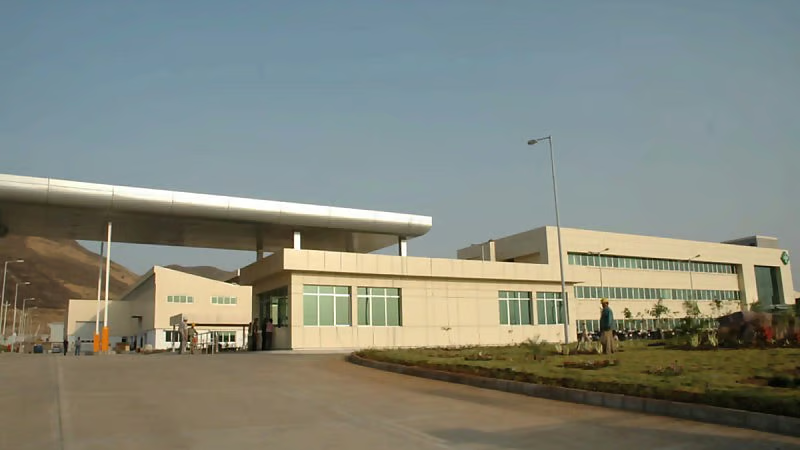
The Pune MIDC plant deaths case has drawn attention to industrial safety after Schaeffler India CEO and Managing Director Harsha Gopal Kadam was arrested in connection with a fatal carbon dioxide leak at the company’s Talegaon facility. Two workers died and three others were affected in the June 9, 2026, incident.
CEO Arrested in Pune Factory Accident Investigation
Schaeffler India CEO Harsha Gopal Kadam was taken into custody by Talegaon MIDC police on October 19, 2026, as part of the investigation into the fatal accident. The company disclosed the development in a regulatory filing on October 20.
According to reports, the police expanded the investigation to include Kadam because he was considered the occupier of the factory premises under applicable law. He was taken into custody under provisions of the Bharatiya Nyaya Sanhita (BNS), 2023.
The case concerns a sudden discharge of carbon dioxide during scheduled maintenance of a fire suppression system at the company’s manufacturing facility in Talegaon MIDC, in Pune district. Two workers employed by a service provider died, while three others were affected by the gas leak.
The arrest has brought renewed attention to the responsibilities of factory management, the safety of contract workers and the procedures followed during hazardous maintenance operations. However, the allegations remain subject to investigation and judicial proceedings. Arrest alone does not establish guilt.
What Happened at the Talegaon MIDC Plant on June 9?
The accident occurred during maintenance work on the factory’s carbon dioxide-based fire suppression system. Such systems use CO₂ to suppress fires by reducing the oxygen available for combustion. However, an uncontrolled release in an enclosed or poorly ventilated area can create a serious risk of asphyxiation.
The two deceased workers were identified as Vaibhav Bhausaheb Thorat, 24, and Gaurishankar Rameshbhai Sharma, 38. Three other people were also affected, according to reports published after the incident.
The maintenance work involved replacing cylinders used in the fire safety system. What should have been a scheduled maintenance operation ended in a fatal accident, prompting police to investigate whether the required permissions and safety procedures had been followed.
The investigation has since moved beyond the immediate circumstances of the gas release to examine possible lapses in workplace safety and the responsibilities of those overseeing the facility.
Industrial Safety Lapses Under Police Investigation
Reports published on October 21 said investigators were examining alleged violations of standard operating procedures, inadequate safety precautions and delays in rescue efforts.
According to details attributed to Pimpri-Chinchwad police and the Directorate of Industrial Safety and Health, the work was allegedly undertaken in a pit or basement without the required permission from the relevant industrial safety authority.
The reported concerns included inadequate ventilation, the absence of a suitable emergency exit, insufficient personal protective equipment and a lack of a prepared rescue team. Investigators also examined whether the appropriate personnel had been deployed and whether the plant’s operations had been managed safely during maintenance.
These are allegations and investigative findings, not a final judicial determination of responsibility. The investigation must establish which safety requirements applied, who was responsible for implementing them and whether any violations contributed to the deaths.
The case highlights the importance of documented risk assessments, work permits, trained personnel and emergency planning before maintenance involving hazardous gases begins.
Why Contract Worker Safety Matters in Industrial India
One significant aspect of the Pune MIDC plant deaths case is that the two deceased workers were employed by a service provider rather than directly by Schaeffler India.
Factories frequently hire specialist contractors for activities such as equipment maintenance, electrical repairs, cleaning and fire safety system servicing. These arrangements can provide technical expertise, but they also require clear coordination between the factory operator and the contractor.
Workers must know the hazards of the task, understand the emergency procedures and have access to suitable protective equipment. Contractors need to ensure that their personnel are trained and qualified for the work, while the facility must manage risks arising from activities conducted on its premises.
The use of contract labour does not make workplace safety a secondary concern. Responsibilities depend on the applicable legal framework, the nature of the work and the roles of the parties involved.
For industrial establishments in Maharashtra and other manufacturing centres across India, the case serves as a reminder that maintenance work requires the same attention to safety as routine production. A task lasting only a few minutes can carry serious risks if the hazards are not properly controlled.
What Schaeffler India Said After the CEO’s Arrest
Schaeffler India said in its regulatory filing that the company and its officers had cooperated with the investigation and would continue to do so. It also stated that it was evaluating the developments in consultation with legal advisers.
The company maintained that it had complied with applicable laws. It further said that senior management continued to oversee day-to-day operations and that business activities were proceeding in the ordinary course.
These statements represent the company’s position. The allegations being investigated must be assessed through the legal process, and the final outcome will depend on the evidence and proceedings before the competent authorities.
Key Takeaways
- Schaeffler India CEO Harsha Gopal Kadam was taken into custody on October 19 in connection with the June 9 factory accident.
- The carbon dioxide leak killed two workers employed by a service provider and affected three others.
- Police are investigating alleged safety procedure violations, permission-related issues and possible lapses during maintenance work.
- Schaeffler India has said it is cooperating with authorities and that its regular business operations continue.
Frequently Asked Questions
1. Why was Schaeffler India CEO Harsha Kadam arrested?
Kadam was taken into custody as part of the investigation into the fatal June 9 accident at the company’s Talegaon plant. Police expanded the investigation to include him on the basis that he was considered the occupier of the factory premises under applicable law. The allegations remain subject to legal proceedings.
2. How many workers died in the Pune MIDC factory accident?
Two workers died following the carbon dioxide leak on June 9, 2026. Three other people were affected by the incident.
3. What safety lapses are being investigated?
Police reports have highlighted alleged shortcomings involving maintenance permissions, standard operating procedures, ventilation, protective equipment and emergency preparedness. These matters remain part of the investigation.
4. Has Schaeffler India stopped its operations following the arrest?
No. In its regulatory filing, the company said senior management remained responsible for day-to-day operations and that business activities continued in the ordinary course.