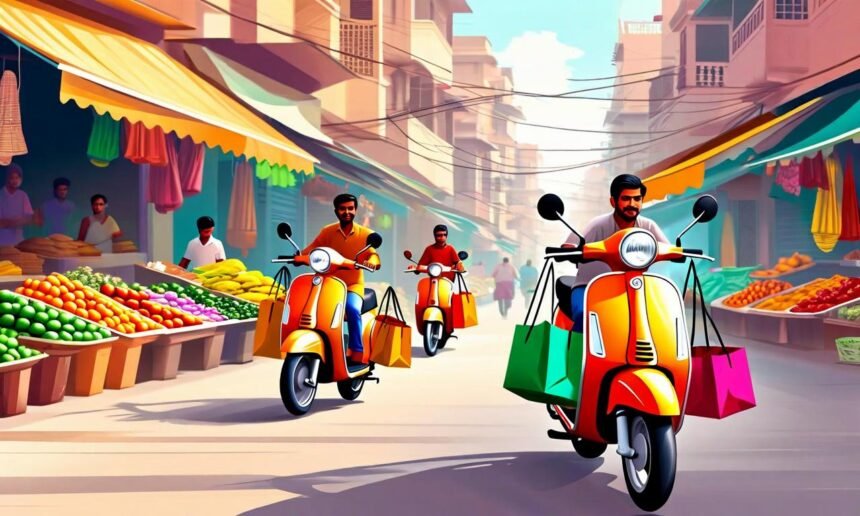
Reliance is accelerating its quick-commerce strategy by expanding into India’s tier-2 cities, aiming to capture the next wave of digital consumption. The move signals a deeper push into hyperlocal delivery as competition intensifies across India’s fast-growing retail market.
India’s retail giant Reliance Industries is sharpening its focus on quick-commerce expansion, particularly in tier-2 cities where digital adoption is rising but competition is still fragmented. This shift reflects a broader industry trend where growth is no longer limited to metros.
Reliance’s Quick Commerce Strategy Moves Beyond Metros
Reliance’s retail arm has already established a strong presence in urban centers through platforms like JioMart. Now, the company is replicating its quick delivery model in smaller cities, targeting consumers who are increasingly comfortable with online grocery and essentials shopping.
Tier-2 cities offer a unique advantage. Real estate costs are lower, customer acquisition is cheaper, and demand is growing rapidly due to rising disposable incomes. Reliance is leveraging its existing supply chain network, built through years of offline retail dominance, to enable faster deliveries in these regions.
This expansion also aligns with Reliance’s broader digital ecosystem strategy, integrating telecom, payments, and commerce into a single consumer funnel.
Rising Competition in India’s Quick Commerce Market
The quick-commerce segment in India is already crowded with players like Blinkit, Zepto, and Swiggy Instamart. However, most competitors are heavily concentrated in metro cities where customer density supports ultra-fast delivery models.
Reliance’s move into tier-2 markets changes the competitive landscape. Instead of fighting for saturated metro demand, the company is tapping into underserved regions where delivery expectations are evolving but not yet standardized.
This allows Reliance to define pricing, delivery speed, and service benchmarks early, giving it a potential first-mover advantage in these geographies.
Supply Chain and Logistics as Key Differentiators
Reliance’s biggest strength lies in its backend infrastructure. Unlike many startups that rely on dark stores alone, Reliance combines its physical retail stores with digital ordering systems. This hybrid model reduces last-mile costs and improves inventory efficiency.
In tier-2 cities, where logistics networks are less dense, this approach becomes even more critical. Reliance can use its existing warehouse and store network to fulfill orders faster without building entirely new infrastructure.
Additionally, the company is expected to optimize delivery timelines based on local demand patterns rather than promising aggressive 10-minute deliveries, which are often unsustainable outside metros.
Consumer Behavior Shift in Tier-2 Cities
Digital consumption patterns in smaller cities have evolved significantly over the past few years. Smartphone penetration, affordable data, and UPI adoption have created a strong foundation for e-commerce growth.
Consumers in these markets are now prioritizing convenience, especially for groceries and daily essentials. While price sensitivity remains high, reliability and product availability are becoming equally important.
Reliance’s brand trust and wide product assortment position it well to capture this demand. The company is likely to focus on value-driven offerings rather than deep discounting, ensuring long-term sustainability.
Strategic Timing Amid Funding Slowdown
The timing of this expansion is critical. The startup ecosystem is currently facing a funding slowdown, forcing many quick-commerce players to cut costs and rethink expansion plans.
Reliance, with its deep pockets, can continue investing while competitors become more cautious. This creates an opportunity to gain market share without engaging in aggressive cash burn strategies.
By entering tier-2 cities now, Reliance is effectively building a future growth engine while others consolidate their metro operations.
What This Means for India’s Retail Market
Reliance’s expansion signals a shift in how quick commerce will evolve in India. The focus is moving from speed alone to a balance of convenience, cost efficiency, and scalability.
If successful, this model could redefine quick commerce beyond metros and make it a mainstream retail channel across the country.
It also puts pressure on existing players to rethink their strategies, especially in terms of profitability and geographic expansion.
Takeaways
• Reliance is targeting tier-2 cities to unlock the next phase of quick-commerce growth in India
• The company is leveraging its offline retail network to reduce logistics costs and scale faster
• Competition may intensify as quick-commerce players expand beyond metro markets
• The move comes at a time when startups are slowing expansion due to funding constraints
FAQs
What is Reliance’s quick-commerce strategy?
Reliance is focusing on fast delivery of groceries and essentials through its retail and digital platforms, expanding into smaller cities to capture new demand.
Why are tier-2 cities important for quick commerce?
These cities offer growing digital adoption, lower competition, and increasing consumer demand, making them attractive for expansion.
How is Reliance different from other quick-commerce players?
Reliance uses a hybrid model combining physical stores and digital platforms, reducing reliance on standalone dark stores.
Will this impact existing players like Blinkit and Zepto?
Yes, Reliance’s entry into tier-2 markets could increase competition and force existing players to expand or adjust their strategies.