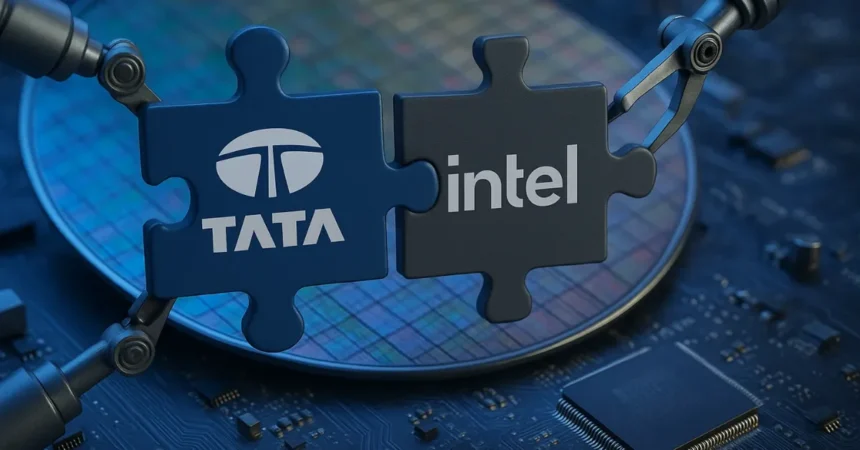
Tata Group is intensifying its semiconductor ambitions through fresh partnership discussions, signaling a major step in India’s chip manufacturing journey. The move aligns with national priorities to reduce import dependency and build a robust domestic electronics ecosystem.
The latest developments around Tata Group semiconductor ambitions position Tata Group as a central player in India’s push to establish a local chip manufacturing industry. The company has been actively exploring collaborations with global semiconductor firms to strengthen its technical and operational capabilities.
India’s Semiconductor Mission Gains Momentum With Tata’s Push
India’s semiconductor sector has gained urgency over the past few years, especially after global chip shortages disrupted industries from automotive to consumer electronics. Tata Group’s entry into this space is not incidental. It aligns with government-backed incentives under the semiconductor mission aimed at building fabrication and assembly capacity within the country.
Tata has already made strategic moves, including investments in semiconductor assembly and testing facilities. Partnership talks now indicate a deeper push toward fabrication capabilities, which require high capital, advanced technology, and global expertise.
This shift is critical because India currently imports the majority of its semiconductor requirements, making it vulnerable to global supply chain disruptions.
Strategic Partnerships Key to Semiconductor Manufacturing Scale
Semiconductor manufacturing is one of the most complex industrial processes, requiring precision engineering and billions in capital investment. Tata Group’s approach reflects this reality. Instead of building everything independently, it is actively seeking partnerships with established global players.
These collaborations typically bring access to advanced chip design technologies, fabrication expertise, and operational know-how. For Tata, partnerships reduce execution risk and accelerate time to market.
Global companies, on the other hand, see India as a strategic manufacturing destination due to its large domestic market and geopolitical positioning. This creates a mutually beneficial setup where both sides share risk and opportunity.
Tata Electronics Leading the Execution Front
A key driver behind this initiative is Tata Electronics, which has been spearheading the group’s semiconductor and electronics manufacturing strategy. The company is already working on building infrastructure for chip assembly and packaging, which is often the first step before moving into full-scale fabrication.
Tata Electronics has also been involved in discussions with multiple international partners to set up fabrication units. These talks are part of a broader roadmap that includes creating a complete semiconductor value chain within India.
The company’s phased approach indicates a long-term commitment rather than a short-term opportunity play.
Government Incentives Supporting Industry Expansion
India’s semiconductor ambitions are backed by significant policy support. The government has introduced incentive schemes worth billions of dollars to attract both domestic and international investments in chip manufacturing.
These incentives include financial subsidies, infrastructure support, and policy frameworks designed to make India competitive with established semiconductor hubs like Taiwan and South Korea.
Tata Group’s expansion plans are expected to benefit from these schemes, reducing initial capital burden and improving project viability.
This policy backing is crucial because semiconductor fabrication plants require massive upfront investment and long gestation periods before profitability.
Global Semiconductor Landscape and India’s Position
The global semiconductor industry is undergoing a structural shift. Countries are increasingly focusing on domestic production to secure supply chains and reduce geopolitical risks.
India’s entry into this space comes at a time when diversification away from traditional manufacturing hubs is accelerating. Tata Group’s partnership-driven approach positions India as a viable alternative destination for semiconductor manufacturing.
However, challenges remain. Building a competitive semiconductor ecosystem requires not just fabrication plants but also a skilled workforce, reliable supply chains, and continuous innovation.
Tata’s involvement signals confidence, but execution will determine long-term success.
What This Means for India’s Tech Ecosystem
Tata Group’s semiconductor push has broader implications beyond manufacturing. It could catalyze growth across electronics, automotive, telecommunications, and consumer technology sectors.
A domestic semiconductor industry can reduce costs, improve supply reliability, and encourage innovation across industries that depend heavily on chips.
It also opens up opportunities for startups and ancillary industries to participate in the semiconductor value chain, from design to testing and packaging.
If executed effectively, this initiative could mark a turning point in India’s journey toward becoming a global technology manufacturing hub.
Takeaways
• Tata Group is expanding its semiconductor ambitions through strategic global partnerships
• The move aligns with India’s goal to reduce reliance on imported chips
• Tata Electronics is leading the execution with a phased manufacturing strategy
• Government incentives are playing a key role in enabling large-scale investments
FAQs
Why is Tata Group investing in semiconductors?
Tata Group is entering the semiconductor space to capitalize on growing demand and support India’s goal of building a domestic chip manufacturing ecosystem.
What role does Tata Electronics play in this plan?
Tata Electronics is the primary entity responsible for executing semiconductor manufacturing and infrastructure development.
Why are partnerships important in semiconductor manufacturing?
Partnerships provide access to advanced technology, expertise, and reduce risks associated with high capital investments.
Will India become a major semiconductor hub soon?
India has strong potential, but achieving scale will take time due to the complexity and investment required in semiconductor manufacturing.