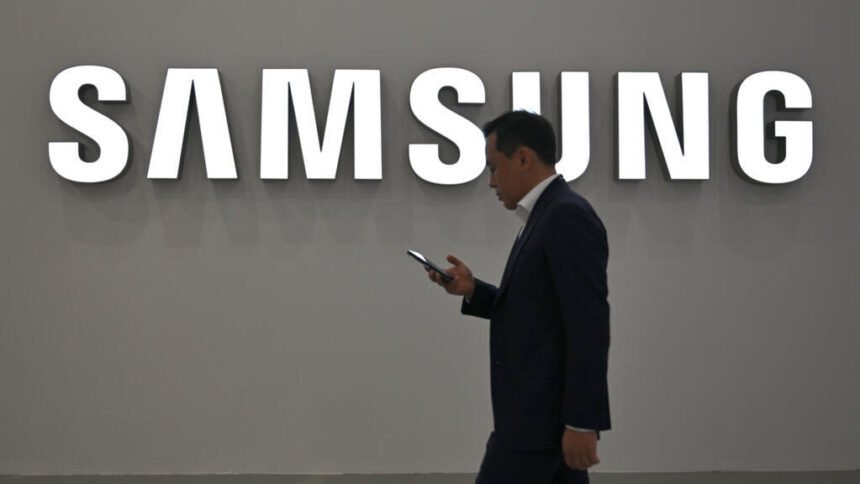
Samsung is facing renewed labour tensions in South Korea after workers intensified demands around wages and working conditions, prompting government officials to step in for mediation efforts. The dispute has again placed the spotlight on labour rights inside one of the world’s biggest technology companies.
Samsung Labour Dispute Returns To National Spotlight
Samsung labour issues are once again making headlines in South Korea as union-led tensions escalate across parts of the company’s domestic operations. Government labour authorities have now entered the discussions after negotiations between Samsung management and worker representatives reportedly stalled over wage increases, performance bonuses, and workplace conditions.
The latest friction primarily involves employees linked to Samsung Electronics, the company’s flagship technology division and one of the world’s largest semiconductor and electronics manufacturers. Labour unions have argued that employee compensation has not kept pace with the company’s profitability and rising living costs in South Korea.
The dispute is significant because Samsung has historically maintained one of the most influential corporate cultures in the country, often operating with limited union influence for decades. Recent years, however, have seen a noticeable rise in organised labour activity inside the conglomerate.
Government mediation efforts are aimed at preventing further disruption to manufacturing operations and preserving stability in South Korea’s crucial semiconductor sector.
South Korea’s Labour Ministry Steps Into Wage Negotiations
South Korea’s Ministry of Employment and Labor has reportedly begun facilitating talks between Samsung management and labour representatives after tensions escalated earlier this month. Local reports indicate that negotiations had reached a deadlock over wage structures and employee benefits.
The intervention reflects the growing economic importance of Samsung’s workforce disputes. Samsung Electronics plays a major role in South Korea’s exports, semiconductor production, and broader industrial output. Any prolonged disruption could potentially affect supply chains tied to memory chips, smartphones, displays, and advanced electronics manufacturing.
Labour representatives are pushing for higher salary adjustments, improved leave structures, and broader transparency around performance-linked bonuses. Workers have also raised concerns about long-term workload pressures tied to semiconductor manufacturing targets.
Samsung has stated that it remains committed to dialogue with unions while continuing normal business operations. The company has not publicly disclosed detailed negotiation terms but has emphasised that maintaining competitiveness in the global semiconductor market remains a key priority.
Samsung’s Changing Corporate Culture Fuels Union Momentum
The latest labour conflict highlights a deeper transformation taking place inside Samsung’s corporate culture. For decades, Samsung was known for its anti-union reputation, with labour organisation inside the conglomerate remaining relatively weak compared to other industrial sectors in South Korea.
That dynamic has shifted considerably over the last several years. Employee unions at Samsung Electronics have gained greater visibility and bargaining power, especially after public criticism surrounding labour practices and governance controversies involving senior executives.
The rise of younger workers in South Korea’s technology industry has also changed workplace expectations. Employees are increasingly demanding clearer career growth, better work-life balance, and compensation structures that reflect the profitability of large corporations.
Samsung’s unionisation trend mirrors broader labour shifts happening across global technology companies. Workers at firms in the United States, Europe, and Asia have become more vocal about wages, workplace surveillance, overtime demands, and management transparency.
Industry experts say Samsung’s handling of the current negotiations could influence labour relations across South Korea’s wider technology and manufacturing sectors.
Semiconductor Competition Adds Pressure On Samsung Management
The labour tensions arrive at a sensitive time for Samsung Electronics. The company is currently facing intense global competition in semiconductors, artificial intelligence chips, and advanced manufacturing.
Samsung has been investing aggressively to strengthen its position against rivals such as Taiwan Semiconductor Manufacturing Company and SK Hynix in memory chips and AI-related semiconductor production. At the same time, the company is managing slowing smartphone demand in some global markets.
Any labour instability during this period creates additional pressure on operational efficiency and investor confidence. Semiconductor manufacturing depends heavily on precision, continuity, and large-scale coordination, making workforce disruptions particularly sensitive.
South Korea’s government also has strategic reasons to prevent escalation. The country’s semiconductor sector is considered critical to national economic security and export performance. Samsung alone contributes a substantial share of South Korea’s technology exports and industrial output.
Analysts believe authorities will continue encouraging compromise between labour groups and Samsung management to avoid strikes or production slowdowns.
Labour Rights Debate Expands Beyond Samsung
The renewed Samsung labour dispute is also contributing to broader conversations around employee rights inside Asia’s major technology companies. Labour activists argue that rapid corporate growth in the tech sector has not always translated into improved workplace conditions.
South Korea has witnessed growing public debate around work culture, overtime expectations, and mental health issues tied to demanding corporate environments. Younger professionals are increasingly questioning older workplace norms that prioritised long hours and hierarchical management structures.
Samsung’s negotiations are therefore being watched not only by investors and employees but also by policymakers and labour organisations across the region.
While a full-scale production shutdown currently appears unlikely, the dispute remains closely monitored due to Samsung’s influence on global electronics supply chains.
The outcome of the negotiations may shape how labour relations evolve inside South Korea’s most powerful corporations over the coming years.
Key Takeaways
- Samsung is facing fresh labour tensions over wages and workplace conditions
- South Korea’s government has stepped in to mediate negotiations
- Labour unions are gaining stronger influence inside Samsung Electronics
- The dispute comes during a critical phase for global semiconductor competition
FAQ
Why is Samsung facing labour tensions in South Korea?
Workers and unions are demanding better wages, improved benefits, and more transparency around compensation and workplace conditions.
Which Samsung division is involved in the dispute?
The tensions are primarily linked to Samsung Electronics, especially employees connected to semiconductor and technology operations.
Why is the South Korean government involved?
The government is attempting to mediate negotiations because Samsung plays a critical role in South Korea’s economy and semiconductor exports.
Could the dispute affect global semiconductor supply chains?
Large-scale disruptions could potentially impact semiconductor production and technology supply chains, although no major shutdown has been announced so far.