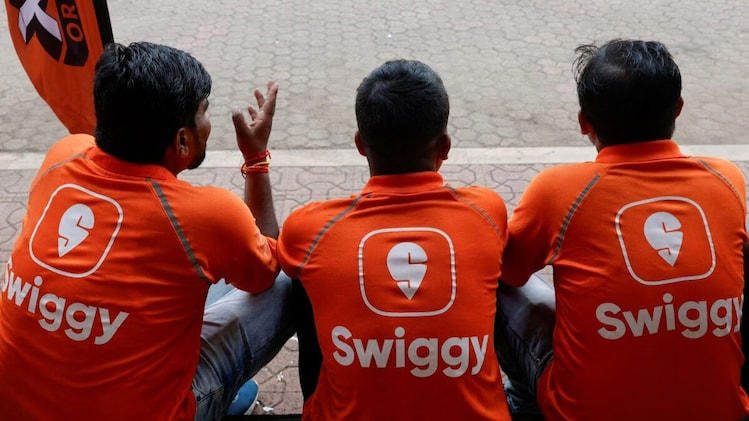
Swiggy shareholders rejecting a proposal linked to India-based control and governance structure has triggered fresh debate around startup ownership, voting influence, and board accountability. The development arrives as India’s food delivery and quick commerce sector enters a more competitive and regulation-sensitive phase.
Swiggy Shareholder Decision Draws Market Attention
The Swiggy governance discussion has gained momentum after reports emerged that shareholders rejected a proposal connected to strengthening India-based control mechanisms within the company’s corporate structure.
The issue has drawn attention because Swiggy remains one of India’s most closely watched consumer technology companies. Investors, regulators, and startup founders are increasingly focused on governance transparency, ownership concentration, and long-term strategic control as startups mature into large-scale businesses.
The rejected proposal reportedly involved governance restructuring ideas related to shareholder rights and operational control within India. While detailed voting patterns and internal deliberations remain limited in public disclosures, the outcome has fueled speculation about differing priorities among institutional investors, founders, and international stakeholders.
Swiggy has spent the past few years expanding aggressively across food delivery, grocery logistics, quick commerce, and digital convenience services. As the company scales further, governance decisions are becoming more important for investors evaluating long-term sustainability and future public market readiness.
The timing is significant because India’s startup ecosystem is entering a phase where board structures and shareholder influence are receiving much deeper scrutiny than during the earlier hypergrowth era.
Corporate Governance Becomes Central Startup Discussion
Corporate governance has become a major issue across India’s startup ecosystem following multiple high-profile disputes involving founders, investors, and boardrooms in recent years.
Earlier, venture capital investors often prioritized rapid expansion and market share growth over governance discipline. However, as startups matured into multi-billion-dollar enterprises, concerns emerged around internal controls, voting structures, financial transparency, and accountability mechanisms.
Swiggy’s latest shareholder development reflects this broader transition. Investors are no longer evaluating startups purely on revenue growth or customer acquisition. Governance quality is increasingly viewed as a key risk factor, especially for companies operating in highly competitive sectors with significant capital requirements.
Food delivery and quick commerce businesses typically involve thin margins, complex logistics operations, and continuous investor funding. In such sectors, board-level stability and strategic clarity become critical for sustaining long-term growth.
Industry analysts say shareholder disagreements do not necessarily indicate instability. In many cases, they reflect the growing institutional maturity of startups where investors actively debate strategic direction instead of passively supporting founder-led decisions.
Still, governance-related headlines can influence market perception, particularly when IPO discussions or future fundraising plans are involved.
Swiggy Faces Intensifying Competitive Pressures
The governance debate comes during an intense competitive period for India’s food delivery and quick commerce industry. Swiggy continues facing strong competition from Zomato-owned Blinkit, Zepto, and several regional delivery platforms.
Quick commerce has become one of the fastest-growing consumer internet categories in India. Companies are aggressively investing in dark stores, logistics infrastructure, warehouse technology, and faster delivery systems to capture urban demand.
At the same time, profitability remains a major concern across the sector. Companies continue balancing expansion ambitions with investor pressure to reduce losses and improve operational efficiency.
Swiggy has diversified beyond food delivery in recent years through Instamart and other convenience-led services. This expansion strategy has helped the company strengthen user engagement but has also increased operational complexity and capital intensity.
Governance stability becomes especially important during such expansion phases because investors want confidence that management decisions align with long-term shareholder interests.
Experts believe the startup sector’s next phase will require stronger institutional frameworks, independent oversight, and clearer decision-making accountability across rapidly scaling businesses.
India Startup Ecosystem Entering Accountability Phase
India’s technology ecosystem is increasingly moving away from the earlier culture of unchecked startup expansion. Investors today are demanding stronger compliance systems, governance discipline, and operational transparency before committing additional capital.
This shift has accelerated after several startup controversies globally highlighted risks associated with weak oversight structures and concentrated founder control.
Public market investors are also influencing private startup governance standards. Companies considering future listings are under pressure to demonstrate board independence, financial discipline, and governance maturity well before IPO preparation begins.
Swiggy’s shareholder vote is therefore being interpreted as part of a larger evolution within India’s startup environment rather than an isolated corporate event.
As startups become systemically important businesses employing thousands of workers and handling large consumer ecosystems, governance expectations naturally rise.
Institutional investors now view governance quality as directly connected to valuation sustainability, regulatory trust, and long-term operational resilience.
Governance Could Shape Future Startup Valuations
The latest developments around Swiggy underline how governance discussions are becoming central to India’s technology economy.
While growth metrics, customer expansion, and market leadership remain important, investors are increasingly evaluating how startups are structured internally and how strategic decisions are managed.
The rejection of a governance-related proposal may not immediately affect Swiggy’s operational trajectory, but it highlights the growing importance of shareholder influence in India’s startup sector.
As competition intensifies and public market ambitions increase, governance quality could become one of the defining factors separating sustainable technology companies from fragile high-growth businesses.
Takeaways
- Swiggy shareholders reportedly rejected a proposal tied to India-based control mechanisms
- The development has intensified governance discussions across India’s startup ecosystem
- Investors are increasingly prioritizing transparency and board accountability
- Governance standards are becoming crucial for startups approaching large-scale maturity
FAQ
Why is Swiggy’s shareholder vote important?
The vote has drawn attention because it reflects rising investor focus on governance, ownership structures, and board accountability in major Indian startups.
What is corporate governance in startups?
Corporate governance refers to how a company is managed through board oversight, shareholder rights, financial transparency, and internal accountability systems.
Does the proposal rejection affect Swiggy’s operations?
There is no indication of immediate operational disruption, but governance-related developments can influence investor sentiment and future strategic decisions.
Why are investors focusing more on startup governance now?
As startups grow larger and prepare for potential IPOs, investors want stronger oversight, better transparency, and more sustainable decision-making structures.