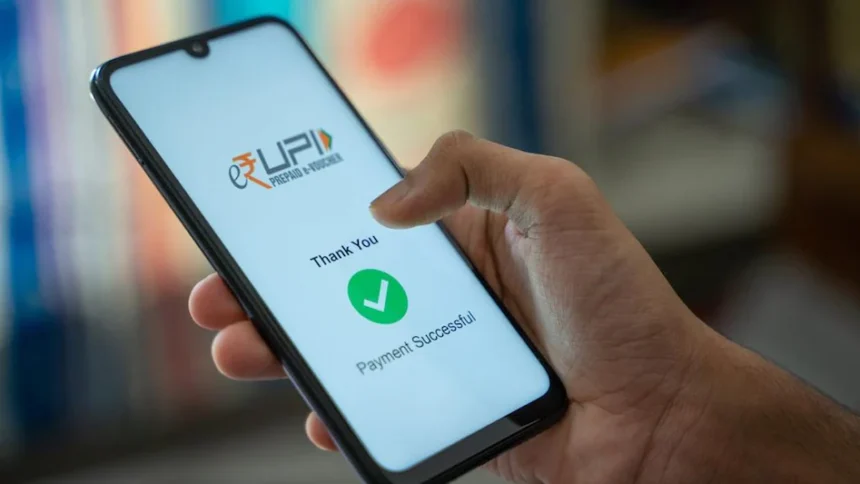
India’s Unified Payments Interface (UPI) continues to dominate the country’s digital payments ecosystem, but cash-on-delivery remains a significant operational challenge for e-commerce companies. Industry executives say that while digital payments improve efficiency and reduce costs, COD orders continue to impact profitability through higher logistics expenses and return rates.
The growth of UPI alongside the continued reliance on cash-on-delivery (COD) reflects the evolving nature of India’s e-commerce market. As millions of consumers embrace digital payments for online purchases, a substantial share of shoppers still prefer paying after receiving their orders. This dual payment ecosystem is helping online retail expand across the country, but it is also creating financial pressure for e-commerce businesses trying to improve operating margins.
UPI Continues to Transform India’s Digital Commerce
UPI has emerged as the preferred payment method for millions of Indian consumers due to its speed, convenience, and widespread acceptance. Developed by the National Payments Corporation of India (NPCI), the real-time payment system now powers transactions across online marketplaces, food delivery platforms, travel booking services, and direct-to-consumer brands.
For e-commerce companies, prepaid digital payments offer several operational advantages. Orders paid through UPI are confirmed instantly, reducing payment uncertainty and allowing merchants to process shipments more efficiently. Digital payments also simplify reconciliation, reduce cash handling costs, and lower the administrative burden associated with managing physical collections.
The rapid adoption of smartphones, affordable internet access, and QR code-based payment infrastructure has further accelerated UPI usage across urban and rural India. Seasonal sales and promotional events have also encouraged customers to shift toward instant digital payments through cashback offers and discounts.
Why Cash-on-Delivery Remains Popular
Despite UPI’s remarkable growth, cash-on-delivery continues to account for a meaningful share of online purchases, particularly in smaller cities and among first-time online shoppers.
Many consumers prefer COD because it offers greater confidence when purchasing from unfamiliar sellers or ordering higher-value products. Buyers can inspect deliveries before making payment, reducing concerns related to fraud, damaged products, or incorrect shipments.
In categories such as fashion, footwear, home products, and beauty, customers often choose COD because return rates tend to be higher. Some shoppers also remain hesitant to make digital payments due to security concerns or personal preference, especially in areas where digital literacy is still developing.
For online retailers seeking customer acquisition in emerging markets, eliminating COD entirely is rarely considered a practical option.
Cash-on-Delivery Creates Financial Pressure on Retailers
While COD helps attract customers, it significantly increases operating costs for e-commerce businesses. Delivery partners must collect cash from customers, deposit it into banking systems, and complete reconciliation processes, all of which require additional resources.
The biggest financial challenge comes from order cancellations and returns. Customers who choose COD are statistically more likely to refuse delivery or cancel purchases at the doorstep. Every failed delivery increases logistics costs because companies must pay for transportation in both directions without generating revenue.
Reverse logistics has become one of the largest expense categories for online retailers. Products returned through COD orders require inspection, repackaging, inventory management, and redistribution, adding further pressure to already competitive profit margins.
These factors explain why many e-commerce platforms continue encouraging prepaid digital payments through exclusive discounts, reward points, and loyalty programs.
E-commerce Companies Encourage Digital Payment Adoption
Leading online marketplaces and direct-to-consumer brands have gradually introduced initiatives aimed at increasing prepaid transactions. Special cashback offers, instant bank discounts, no-cost EMI options, and faster refund processing are commonly used to encourage customers to pay online instead of selecting COD.
Some companies have also introduced stricter policies for repeat customers who frequently reject COD deliveries. Others are using artificial intelligence and data analytics to identify high-risk orders and recommend prepaid payment options during checkout.
At the same time, businesses recognize that customer convenience remains essential. Rather than removing COD completely, most platforms are balancing payment flexibility with profitability by optimizing logistics and improving fraud detection systems.
Industry experts believe that payment innovation, improved customer trust, and stronger digital infrastructure will gradually reduce dependence on cash-based transactions over the coming years.
India’s Payment Ecosystem Continues to Evolve
India’s digital economy continues to expand rapidly as government initiatives, financial technology companies, banks, and payment service providers promote cashless transactions. UPI has become one of the world’s largest real-time payment systems, supporting consumers, merchants, and businesses across sectors.
However, India’s e-commerce landscape remains diverse. Urban consumers increasingly prefer digital payments, while many shoppers in Tier 2 and Tier 3 cities continue to rely on cash-on-delivery for convenience and confidence.
As online retail penetration increases, payment preferences are expected to evolve gradually rather than overnight. For e-commerce companies, success will depend on balancing customer choice with operational efficiency. UPI is clearly improving payment efficiency, but cash-on-delivery will likely remain an important part of India’s online shopping ecosystem until consumer behavior shifts further toward fully digital transactions.
Key Takeaways
- UPI continues to strengthen its position as India’s leading digital payment method for online shopping.
- Cash-on-delivery remains popular due to customer trust, especially in smaller cities and among first-time buyers.
- COD orders increase logistics costs, return rates, and operational expenses, affecting e-commerce profitability.
- Retailers are encouraging prepaid digital payments while retaining COD to serve a broader customer base.
Frequently Asked Questions
1. Why is UPI beneficial for e-commerce companies?
UPI enables instant payments, faster order confirmation, reduced cash handling, and lower operational costs compared to cash-on-delivery.
2. Why do many customers still choose cash-on-delivery?
Customers often prefer COD because it provides greater confidence, allows payment after delivery, and reduces perceived risks when buying online.
3. How does cash-on-delivery affect e-commerce margins?
COD increases delivery expenses, cash handling costs, return rates, and reverse logistics, all of which reduce overall profitability.
4. Will cash-on-delivery disappear in India?
Industry experts believe COD will continue to exist for the foreseeable future, although its share may gradually decline as digital payment adoption and consumer trust continue to grow.