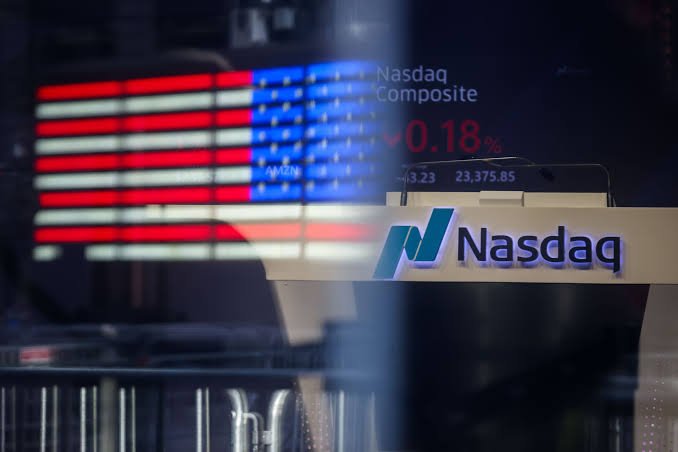
US markets rallied sharply on September 21, with the Nasdaq Composite closing at a record high as investors piled into artificial intelligence and semiconductor stocks. Falling oil prices and lower Treasury yields also helped improve market sentiment across Wall Street.
Nasdaq reaches record close as technology stocks surge
The Nasdaq Composite jumped 2.3% on Monday, September 21, to close at 27,122.09, setting a fresh record. The rally was led by technology and semiconductor stocks, with investors showing renewed confidence in companies linked to the artificial intelligence boom.
The broader US market also advanced. The S&P 500 gained 1.5% to 7,764.70, ending within 0.4% of its own record high, while the Dow Jones Industrial Average rose 0.7% to 52,048.83.
The latest move extended a strong run for technology shares after investors had recently become more cautious about elevated valuations and the sustainability of AI-related spending.
The rally was not driven by AI stocks alone. A decline in crude oil prices and a retreat in long-term Treasury yields helped support broader risk appetite, giving investors additional reasons to move back into equities.
AI stocks drive renewed investor optimism
Artificial intelligence remained at the centre of Monday’s market action.
Advanced Micro Devices was among the biggest winners, with its shares rising nearly 10% to a record $615.52. The move pushed AMD’s market capitalisation above $1 trillion for the first time.
Intel also surged 12.2%, while Arm Holdings gained 17.1%. The Philadelphia Semiconductor Index climbed 4.3%, highlighting the strength of the broader chip sector.
The gains reflect continued investor interest in the infrastructure required to support AI applications. Demand for processors, data-centre equipment and networking technology has become an important theme across the technology sector.
The latest rally also came as investors responded positively to developments around AI products and applications. Reuters reported that enthusiasm surrounding Meta’s new Muse AI assistant helped revive the AI trade and supported technology shares globally.
AMD crosses $1 trillion valuation milestone
AMD’s move into the $1 trillion market-capitalisation club became one of the most notable developments of the session.
The semiconductor company has benefited from growing expectations around demand for AI computing infrastructure. Its shares have risen sharply as investors assess its position in data-centre processors and accelerators used for artificial intelligence workloads.
The milestone also illustrates how quickly market valuations can change during periods of strong enthusiasm for AI-related technology.
AMD’s rise has been particularly notable because investors have increasingly looked beyond Nvidia when assessing companies positioned to benefit from AI infrastructure spending. Intel and Arm also recorded substantial gains during Monday’s session, showing that the rally extended across different parts of the semiconductor industry.
However, the record valuations also leave investors watching closely for evidence that earnings and demand can justify the market’s expectations.
Falling oil prices support Wall Street rally
Lower oil prices provided another important boost to US stocks.
US crude futures fell about 4.5% on Monday to around $95.78 a barrel, while Brent crude also declined sharply. The drop followed signs that diplomatic developments could reduce some of the immediate pressure on global energy supplies.
Oil prices had been a major concern for investors because higher energy costs can add to inflation pressures. That can make it more difficult for central banks to ease monetary policy and can increase costs for businesses and consumers.
The decline in crude prices therefore helped ease some of those concerns.
Market participants were also watching developments around the Middle East and the possibility of diplomatic discussions involving the United States and Iran. Reuters reported that hopes of a potential breakthrough contributed to the fall in oil prices.
Treasury yields retreat as equities gain support
The bond market also played a role in Monday’s rally.
The yield on the 10-year US Treasury note fell to around 4.95%, down from approximately 5.01% previously. The decline reduced some of the pressure that higher bond yields had placed on equity valuations.
Bond yields matter closely to technology stocks because investors use interest rates when valuing future corporate earnings. When yields rise, future profits can become less attractive relative to fixed-income investments and high-growth technology valuations can come under pressure.
Monday’s decline in yields therefore created a more supportive environment for growth stocks.
At the same time, markets remain sensitive to inflation and Federal Reserve policy. Investors are continuing to assess whether US interest rates could remain high or rise again later in the year.
Investors watch Fed policy and global developments
Despite Monday’s strong gains, the market backdrop remains complicated.
Reuters reported that futures markets were pricing a growing possibility of another Federal Reserve rate increase in October, while investors were also watching the Fed’s broader approach to inflation.
That creates a tension for equity markets. Strong economic conditions and rising corporate earnings can support stocks, but higher interest rates can weigh on valuations, particularly for technology companies whose prices reflect expectations for future growth.
Investors are also monitoring geopolitical developments, including US-Iran relations and a potential meeting between US President Donald Trump and Chinese President Xi Jinping.
The upcoming US-China discussions are particularly relevant for technology investors because trade policy, AI development and semiconductor supply chains remain closely connected to relations between the world’s two largest economies. Reuters reported that markets are watching the meeting for signals on trade and cooperation.
What the Nasdaq record means for the AI trade
The Nasdaq’s latest record shows that investor appetite for artificial intelligence remains strong despite earlier concerns about high valuations.
The rally has spread beyond a small group of major technology companies. Semiconductor manufacturers, chip designers and companies connected to data-centre infrastructure all participated in Monday’s advance.
That breadth is important because AI investment requires a large ecosystem. Computing power, chips, networking equipment, cloud infrastructure and software all form part of the supply chain supporting the expansion of AI applications.
At the same time, investors will continue looking for evidence that corporate earnings can keep pace with elevated expectations.
The market’s response to upcoming company results, AI product launches and capital spending plans will therefore remain important for technology stocks.
For now, Monday’s session showed that falling oil prices, lower bond yields and renewed enthusiasm for AI can reinforce one another and push major US indexes toward new highs.
Wall Street enters September 22 with markets near records
US markets enter Tuesday with the Nasdaq at a fresh record and the S&P 500 close to its own peak.
The immediate market focus is likely to remain on technology shares, semiconductor companies, oil prices, Treasury yields and developments around US monetary policy.
Asian markets followed Wall Street higher on Tuesday. South Korea’s Kospi and Taiwan’s benchmark index recorded strong gains, while other regional markets also benefited from the renewed technology rally.
The global response highlights how closely financial markets are now linked to the AI investment cycle.
For investors, the latest Nasdaq record represents another major milestone for the technology-led rally. Whether the momentum continues will depend on a combination of corporate earnings, AI demand, interest rates, energy prices and geopolitical developments.
Key Takeaways
- The Nasdaq Composite gained 2.3% on September 21 and closed at a record 27,122.09.
- AMD surged nearly 10% and crossed a $1 trillion market valuation for the first time.
- Intel, Arm and other semiconductor stocks also recorded sharp gains as AI optimism returned.
- Lower oil prices and retreating Treasury yields provided additional support to US equities.
FAQs
Why did the Nasdaq hit a record high?
The Nasdaq rallied as investors returned to technology and semiconductor stocks, particularly companies benefiting from continued artificial intelligence investment. Falling oil prices and lower Treasury yields also supported market sentiment.
Why did AMD shares rise sharply?
AMD shares gained nearly 10% on September 21, reaching a record $615.52. The move pushed the company’s market capitalisation above $1 trillion as investors continued to focus on its role in AI computing and data-centre infrastructure.
How did the other major US indexes perform?
The S&P 500 rose 1.5% to 7,764.70, while the Dow Jones Industrial Average gained 0.7% to 52,048.83. The Nasdaq led the three major indexes with a 2.3% increase.
What are investors watching after the Nasdaq record?
Investors are watching AI-sector earnings and spending, Federal Reserve policy, Treasury yields, oil prices and geopolitical developments involving the United States, Iran and China. These factors could influence market sentiment in the sessions ahead.