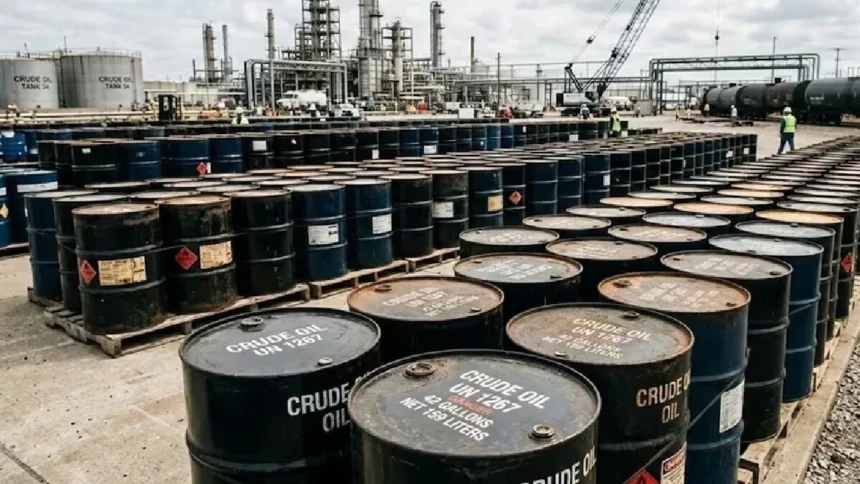
Renewed tensions around the Strait of Hormuz are increasing India’s crude oil import costs and putting energy stocks in focus. Rising crude prices, higher shipping charges and geopolitical uncertainty are creating fresh challenges for one of the world’s largest oil-importing nations, while investors closely monitor the impact on fuel companies and the broader economy.
The Hormuz tensions and India’s crude import costs have become a key concern after crude oil prices climbed to a one-month high amid escalating geopolitical developments in West Asia. Brent crude crossed the $85 per barrel mark as fears of supply disruptions and higher transportation costs spread across global energy markets. Since India imports nearly 90 percent of its crude oil requirements, any sustained increase in global oil prices has direct implications for inflation, the current account deficit and corporate profitability. The latest developments have also shifted investor attention toward energy stocks, oil marketing companies and upstream producers.
Strait of Hormuz Remains Critical for Global Energy Trade
The Strait of Hormuz is one of the world’s most important energy corridors. Roughly one-fifth of global crude oil shipments pass through this narrow waterway connecting the Persian Gulf with international markets.
Fresh military tensions involving the United States and Iran have raised concerns over the safety of commercial shipping in the region. Market participants fear that prolonged disruptions could reduce tanker movement, increase freight charges and elevate war-risk insurance premiums.
For India, the concern extends beyond crude prices. Higher insurance and shipping expenses can increase the landed cost of imported oil even if global benchmark prices stabilize. Industry estimates suggest that additional freight and insurance costs alone could add between $2 and $3 per barrel to India’s imported crude if tensions persist.
India’s Energy Imports Face Higher Cost Pressures
India has diversified its crude oil sourcing over the past few years by increasing purchases from countries such as Russia while continuing imports from the Middle East. This diversification has reduced some supply risks, but it has not eliminated India’s exposure to global oil prices.
Even if physical crude supplies remain uninterrupted, higher benchmark prices immediately increase the country’s import bill. Rising import costs can weaken the rupee, widen the trade deficit and put upward pressure on fuel prices.
Analysts note that India’s crude supply remains relatively secure at present because refiners have expanded their sourcing network. However, LPG, LNG supplies and shipping costs remain particularly vulnerable if instability around Hormuz continues for an extended period.
Energy Stocks Move Into Investor Spotlight
The latest developments have shifted investor focus toward companies operating across the energy value chain. Upstream oil producers generally benefit from higher crude prices because their revenues increase when benchmark prices rise.
However, oil marketing companies that sell petrol, diesel and LPG may face pressure if they cannot fully pass higher input costs to consumers. Refining margins may also fluctuate depending on product demand and government pricing decisions.
Investors are also watching companies involved in oil exploration, pipeline infrastructure, shipping and logistics. Any prolonged disruption to maritime trade routes could influence operating costs and earnings expectations across the sector.
Broader equity markets have reacted cautiously as rising crude prices increase inflation concerns. Higher oil prices often weigh on sectors such as automobiles, aviation and consumer goods because fuel represents a significant operating expense.
Inflation and Monetary Policy Could Be Affected
Higher crude oil prices have consequences beyond the energy sector. Fuel costs influence transportation expenses, manufacturing costs and the prices of several consumer goods.
If elevated oil prices persist, India’s retail inflation could remain under pressure, complicating the Reserve Bank of India’s monetary policy outlook. Businesses dependent on imported raw materials may also experience rising input costs, affecting profit margins.
The government continues to monitor developments closely because sustained increases in crude prices could influence fiscal planning, fuel taxation and subsidy management. Economists believe that while short-term volatility can be managed, a prolonged disruption would have a broader impact on economic growth and inflation expectations.
Markets Await Further Geopolitical Developments
Financial markets remain highly sensitive to every new development in West Asia. Oil traders, shipping companies and institutional investors are closely tracking military activity around the Strait of Hormuz because the region remains central to global energy supplies.
For India, the immediate challenge is balancing higher import costs while maintaining stable fuel supplies. Energy companies are expected to continue diversifying procurement strategies, while policymakers will monitor inflation and currency movements carefully.
If geopolitical tensions ease, crude prices could moderate quickly. However, any further escalation that disrupts commercial shipping could keep energy prices elevated and continue influencing both corporate earnings and investor sentiment in the weeks ahead.
Key Takeaways
- Rising tensions around the Strait of Hormuz have pushed Brent crude above $85 per barrel.
- Higher shipping, insurance and crude prices are increasing India’s oil import costs.
- Energy stocks remain in focus as investors assess the impact on oil producers and refiners.
- Persistent high oil prices could influence inflation, monetary policy and overall market sentiment.
Frequently Asked Questions
Q1. Why is the Strait of Hormuz important for India?
It is one of the world’s busiest oil shipping routes, and a significant share of India’s crude imports is influenced by energy flows through this corridor.
Q2. How do Hormuz tensions affect India’s economy?
They increase crude oil prices, shipping costs and import expenses, which can contribute to higher inflation and pressure on the trade deficit.
Q3. Which stocks could be affected by higher crude prices?
Upstream oil producers may benefit from higher prices, while oil marketing companies, airlines and automobile firms could face cost pressures.
Q4. Is India’s crude oil supply currently at risk?
India’s refiners have diversified crude sourcing, reducing immediate supply risks. However, prolonged geopolitical tensions could raise logistics costs and affect energy imports.
(Internal keyword suggestions: Hormuz tensions, India’s crude import costs, Brent crude price, Strait of Hormuz, Indian energy stocks, oil import bill, crude oil prices India, West Asia tensions, energy sector, inflation and crude oil)