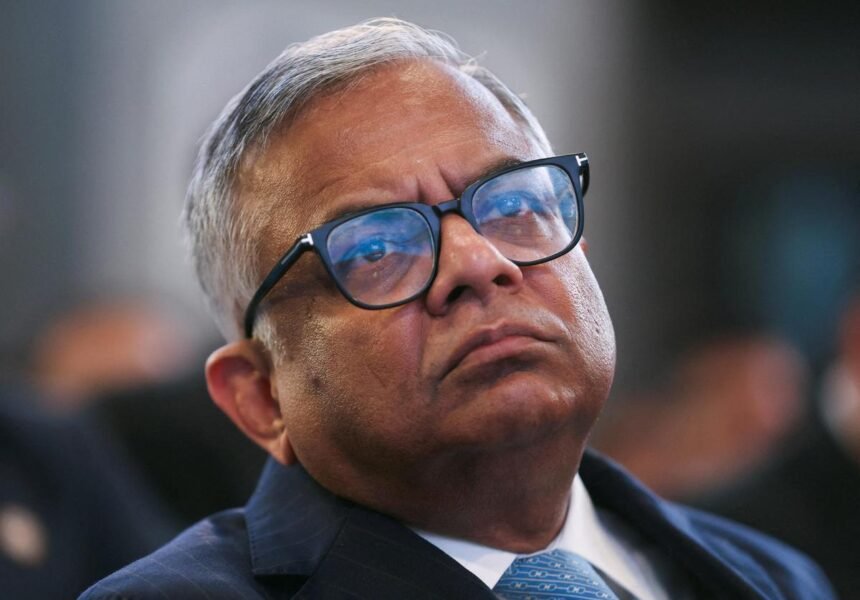
The announcement that Tata Sons Chairman N. Chandrasekaran will not seek another term has triggered one of the biggest leadership discussions in Indian corporate history. While operations across Tata Group companies continue as usual, investors and industry observers are closely watching how the conglomerate manages succession, governance and long-term strategy.
The topic is time-sensitive news, so this article follows a news reporting style.
The Tata Sons leadership transition has become one of the most closely watched developments in India’s corporate sector after Chairman N. Chandrasekaran confirmed that he will not seek reappointment when his current term ends in February 2027. The decision has renewed attention on succession planning at India’s largest business conglomerate and prompted questions about how the group will navigate its next phase of growth.
Chandrasekaran’s announcement comes after months of uncertainty surrounding his potential third term. Reports indicate that differences within the Tata Sons board regarding governance and long-term strategy contributed to the leadership transition, although the group continues to emphasize stability during the transition period.
Leadership Change Comes at a Critical Time for Tata Group
The timing of the transition is significant because Tata Group is executing several large-scale strategic projects across industries.
The conglomerate is expanding its semiconductor manufacturing ambitions, strengthening its electric vehicle ecosystem, modernising Air India, investing in digital technologies and navigating a rapidly changing global business environment. These initiatives require long-term leadership continuity and clear strategic direction.
Industry analysts believe the leadership transition itself does not immediately affect the operations of individual Tata companies because listed firms such as TCS, Tata Motors, Titan, Tata Steel and Tata Power have their own management teams and boards. However, Tata Sons plays a central role in shaping the group’s long-term capital allocation and strategic priorities.
Why Investors Are Paying Close Attention
Markets reacted immediately after the announcement.
Several Tata Group stocks witnessed selling pressure as investors assessed the implications of the leadership change. Analysts, however, described the market reaction as largely sentiment-driven rather than a reflection of any deterioration in business fundamentals.
Historically, Tata Group has navigated multiple leadership transitions while maintaining operational continuity. Market experts therefore expect near-term volatility to gradually stabilize once greater clarity emerges regarding succession planning.
For institutional investors, the key issue is not simply who becomes the next chairman but how the transition is managed. Large conglomerates depend heavily on governance consistency, predictable decision-making and leadership confidence.
Governance and Succession Become the Main Focus
Corporate governance has become the central theme of this transition.
Reports suggest that discussions around the future structure of Tata Sons, including differing views on long-term governance matters and strategic priorities, played an important role in delaying leadership decisions earlier this year. Those discussions have now intensified as the board begins the search for the next chairman.
One of the biggest expectations from the next leader will be balancing the interests of Tata Trusts, shareholders, employees and global investors while continuing the group’s tradition of ethical business practices.
The transition also highlights the importance of succession planning within large family-influenced business institutions, particularly those operating across multiple sectors and international markets.
What the Next Chairman Will Inherit
The incoming leadership will oversee one of the world’s most diversified business groups.
Key priorities include:
- Completing Air India’s long-term transformation.
- Accelerating semiconductor manufacturing investments.
- Expanding Tata’s digital and artificial intelligence capabilities.
- Managing capital allocation across dozens of operating companies.
- Strengthening global competitiveness amid changing economic conditions.
The next chairman will also inherit responsibility for maintaining investor confidence while ensuring that Tata Group continues to balance growth with its long-standing reputation for responsible corporate governance.
What This Means for Indian Business
The Tata Group has long been viewed as a benchmark for corporate governance in India.
Any leadership change within the organization naturally attracts attention because the group influences sectors ranging from information technology and automobiles to aviation, steel, retail and consumer products.
The coming months are expected to focus on identifying a successor who can provide continuity while preparing the conglomerate for emerging opportunities in manufacturing, technology, energy transition and global expansion.
For now, Chandrasekaran has urged employees to remain focused on business execution and avoid speculation surrounding the leadership process. The group continues to operate normally while the board works toward a structured succession plan.
Although uncertainty often accompanies major leadership changes, Tata Group’s history suggests that carefully managed transitions can reinforce long-term stability. Investors, employees and industry observers will therefore be watching not only who becomes the next chairman but also how effectively the transition preserves the group’s strategic momentum.
Key Takeaways
- N. Chandrasekaran has confirmed he will not seek another term as Tata Sons Chairman after his current tenure ends in February 2027.
- The leadership transition comes while Tata Group is executing major investments across aviation, semiconductors, electric vehicles and technology.
- Investors are closely monitoring succession planning and corporate governance developments.
- Tata Group companies continue normal operations despite the leadership announcement.
FAQ
Q1. Why is the Tata Sons leadership transition important?
Because Tata Sons is the holding company of India’s largest conglomerate, its leadership significantly influences long-term strategy, governance and capital allocation.
Q2. Has N. Chandrasekaran resigned immediately?
No. He has announced that he will not seek reappointment after his current term ends in February 2027.
Q3. Will this affect Tata Group companies?
Operations across Tata companies continue normally. The primary focus is on long-term leadership succession rather than day-to-day business performance.
Q4. What will investors watch next?
Markets will closely follow the appointment of a successor, governance decisions and the continuation of Tata Group’s major strategic projects.