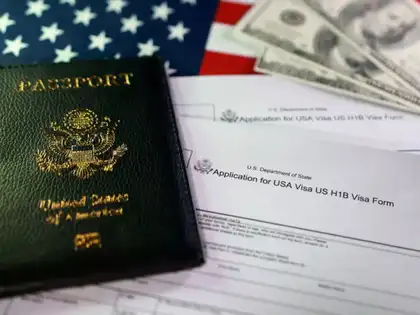
H-1B visa chaos escalates for Indian tech talent as new screening measures slow approvals and restrict mobility across the US technology sector. Tighter reviews, longer processing cycles, and policy uncertainty are reshaping hiring decisions for companies dependent on global engineering talent.
This topic is time sensitive. The tone below follows a news reporting style with factual analysis.
The H-1B visa chaos escalates for Indian tech talent as employers and workers face mounting uncertainty at the peak of hiring and transfer cycles. New screening protocols introduced during late 2025 have extended adjudication timelines, increased requests for evidence, and narrowed interpretation of specialty occupation criteria. For Indian engineers, who make up the largest share of H-1B holders, the impact has been immediate and disruptive.
New Screening Rules Trigger Delays Across Tech Hiring
The latest round of H-1B scrutiny focuses on deeper verification of job roles, employer business models, and wage alignment. Immigration officers are demanding granular documentation to prove that positions meet specialty occupation thresholds and that wages reflect market realities.
Processing times have lengthened significantly, even for routine extensions and employer transfers. Premium processing no longer guarantees swift outcomes in many cases, undermining workforce planning for technology firms. Indian professionals switching employers or relocating within the US report weeks of forced inactivity while petitions remain pending.
For companies operating on tight delivery timelines, these delays translate into missed milestones and stalled projects. Smaller startups and mid sized firms are particularly exposed because they lack redundancy in specialized skill sets.
Indian Tech Professionals Face Mobility Freeze
Indian tech talent is disproportionately affected due to scale and dependency. Indian nationals account for a dominant share of approved H-1B visas, especially in software engineering, data science, and enterprise technology roles.
The new screening environment has effectively frozen mobility. Engineers hesitate to change jobs, fearing denial or prolonged unemployment gaps. Internal transfers across states or teams are being postponed. International travel has become riskier, with reentry uncertainty discouraging professionals from leaving the US even for family emergencies.
This erosion of mobility undermines a core promise of the H-1B system, which historically allowed skilled workers to move where demand existed. The result is reduced bargaining power for employees and operational rigidity for employers.
Impact on US Tech Firms and Global Delivery Models
The tightening of H-1B screening is reshaping how US tech firms approach talent strategy. Companies with offshore development centers are accelerating the shift of roles outside the US to avoid visa dependency. Others are reclassifying positions, investing in automation, or prioritizing local hiring even when skill availability is limited.
Indian IT services firms, which rely on onsite client facing roles in the US, face margin pressure. Delayed deployments disrupt billing cycles and client relationships. Startups backed by venture capital face higher risk, as product roadmaps often depend on specialized immigrant talent.
Some firms are exploring alternative visa categories, but these options are limited in scale and applicability. The friction created by H-1B uncertainty is now a board level issue rather than an HR problem.
Policy Intent Versus Market Reality
The stated intent behind stricter screening is to protect domestic labor markets and prevent misuse of the visa program. However, labor market data continues to show shortages in advanced technology skills, particularly in artificial intelligence, cybersecurity, and cloud infrastructure.
By constraining legal pathways for skilled migration, the policy risks pushing innovation elsewhere. Competing technology hubs in Canada, Europe, and parts of Asia are actively courting the same talent with clearer immigration pathways and faster processing.
For Indian professionals, this recalibration is already visible. Career decisions increasingly factor immigration stability alongside compensation and role scope. The US remains attractive, but the risk premium has risen.
What Lies Ahead for H-1B and Indian Talent
In the near term, the H-1B visa environment is unlikely to ease quickly. Employers are adapting by front loading documentation, avoiding mid cycle transfers, and building contingency plans for delays.
For Indian tech workers, the focus has shifted to risk management. Many are securing backup offers, extending tenure at current employers, or exploring relocation options in parallel markets.
Longer term, sustained friction could weaken the US position as the default destination for global tech talent. Mobility, not just opportunity, defines competitiveness in the modern technology economy. If uncertainty persists, talent flows will adjust accordingly.
Takeaways
- New H-1B screening measures have significantly slowed approvals and transfers
- Indian tech professionals face reduced job mobility and higher personal risk
- US tech firms are rethinking hiring and offshore strategies
- Prolonged uncertainty could redirect global tech talent to alternative hubs
FAQs
Why has H-1B visa processing slowed recently?
New screening protocols require deeper verification of roles, wages, and employer eligibility, extending review timelines.
Are Indian nationals more affected than others?
Yes. Indian professionals form the largest share of H-1B holders, so policy tightening disproportionately impacts them.
Does premium processing still guarantee fast approval?
No. Premium processing now often results in faster review but not necessarily faster resolution.
Will companies move roles out of the US because of this?
Many firms are already shifting work offshore or diversifying hiring locations to reduce visa risk.