India has entered the weather derivatives market with the launch of its first rainfall-based futures contract tied to Mumbai’s monsoon season. The new exchange-traded product aims to help businesses hedge against weather-linked financial risks as climate uncertainty and monsoon volatility continue to impact the economy.
India’s first weather futures market is officially going live, marking a major shift in how the country manages climate-linked financial risk. The National Commodity and Derivatives Exchange, widely known as NCDEX, has announced the launch of “RAINMUMBAI”, a SEBI-approved rainfall derivatives contract linked to Mumbai’s monsoon data.
The move turns monsoon rainfall into a tradable financial asset for the first time in India. Businesses exposed to heavy rain disruption can now hedge their risks through regulated futures contracts instead of relying only on insurance or emergency relief measures.
Why Mumbai Monsoon Risk Is Becoming A Financial Market Product
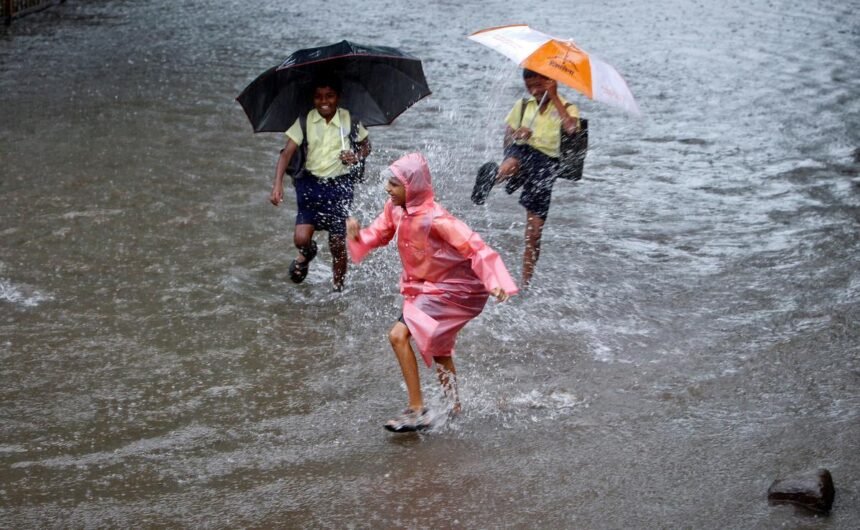
Mumbai’s monsoon season affects nearly every part of the city’s economy. Transport slowdowns, delivery disruptions, waterlogging, infrastructure delays, power interruptions and supply chain bottlenecks regularly create business losses during June to September.
The new weather derivatives contract will use rainfall deviation data collected by the India Meteorological Department. The contract is cash-settled, meaning traders will not exchange physical assets. Instead, payouts will depend on how actual rainfall compares with pre-defined rainfall benchmarks.
This is not entirely new globally. Weather derivatives already exist in parts of the United States and Europe, especially in energy and agriculture markets. However, India’s entry into this space is significant because of the country’s dependence on monsoon activity.
India receives nearly 70 percent of its annual rainfall during the monsoon season, making weather patterns deeply connected to food prices, economic growth and inflation.
How The RainMumbai Weather Futures Contract Will Work
According to exchange officials, the RainMumbai contract will initially focus on the four key monsoon months of June, July, August and September. The trading mechanism will track rainfall deviations from Mumbai’s long-period average rainfall levels.
Industries expected to use the product include agriculture, logistics, construction, banking, insurance and power utilities. For example, a logistics company expecting delivery disruption due to extreme rainfall can use the futures contract as a hedge against operational losses.
Similarly, infrastructure companies facing construction delays during excessive rain periods may also participate in the market. Banks with large agricultural loan exposure could use weather-linked derivatives to reduce financial uncertainty caused by poor rainfall patterns.
The launch also arrives at a sensitive time for India’s economy. Government forecasts released earlier this year projected below-average monsoon rainfall for 2026 after two years of relatively stronger rainfall seasons.
Climate Change Is Reshaping India’s Financial Markets
The introduction of weather futures reflects a larger global shift where climate volatility is increasingly treated as a financial risk rather than just an environmental issue.
Extreme weather events now directly affect stock markets, commodity prices, insurance premiums and agricultural output. In India, monsoon performance has historically influenced inflation, rural demand and GDP growth.
Financial markets worldwide have already seen the rise of carbon trading systems, catastrophe bonds and climate-linked investment products. Weather derivatives represent another layer of climate finance where market participants can price risk linked to unpredictable environmental conditions.
NCDEX had been working with the India Meteorological Department for months to develop the framework for India’s first weather derivatives platform. Earlier reports indicated that the exchange wanted to create a scientific and regulated structure capable of handling rainfall-linked contracts across sectors.
The concept could eventually expand beyond Mumbai rainfall. Analysts believe future contracts may include temperature-linked derivatives, drought indexes or rainfall benchmarks for agricultural states heavily dependent on monsoon activity.
Can Weather Futures Become A Big Market In India?
The success of India’s weather futures market will depend on liquidity, participation and trust in meteorological data systems.
Unlike traditional stock or commodity markets, weather derivatives require strong confidence in data transparency and settlement systems. Institutional investors, insurers and corporate hedgers are expected to drive early participation rather than retail traders.
Still, the product reflects a growing recognition that climate uncertainty is now a measurable business risk. As weather disruptions become more frequent, businesses may increasingly turn toward financial instruments designed to absorb those shocks.
The launch also positions India among a smaller group of countries experimenting with regulated climate-risk trading tools. If successful, the RainMumbai contract could open the door for broader weather-linked financial innovation across Asia’s third-largest economy.
Takeaways
• India has launched its first exchange-traded weather derivatives contract called RainMumbai
• The futures contract is linked to Mumbai monsoon rainfall deviations
• Businesses can use the product to hedge financial risks caused by heavy or weak rainfall
• The launch comes amid forecasts of below-average monsoon rainfall in 2026
FAQ
Q1. What is India’s first weather futures contract?
India’s first weather futures contract is a rainfall-based derivative launched by NCDEX called RainMumbai, linked to Mumbai monsoon rainfall data.
Q2. How do weather derivatives work?
Weather derivatives are financial contracts where payouts depend on weather-related data such as rainfall, temperature or snowfall deviations.
Q3. Why is Mumbai rainfall important for financial markets?
Mumbai’s economy faces major disruptions during monsoon season, affecting logistics, infrastructure, transport and business operations.
Q4. Which industries may use weather futures in India?
Agriculture, construction, logistics, insurance, banking and power companies are expected to use weather derivatives for risk management.