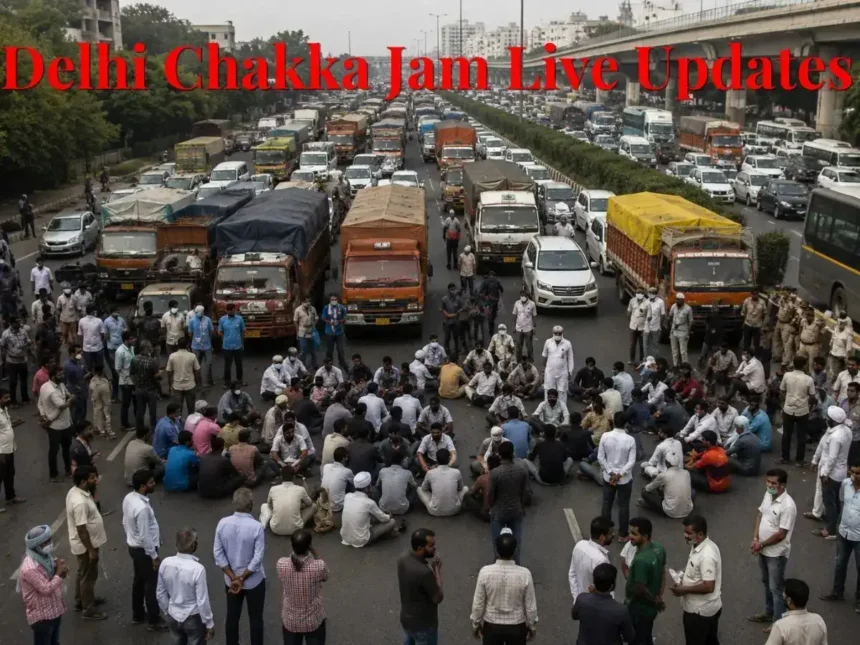
A possible transport strike in Delhi-NCR has triggered concerns across logistics, manufacturing and quick commerce sectors. Businesses dependent on truck movement, warehouse operations and last-mile delivery networks are now preparing contingency plans to avoid delays, inventory shortages and rising operational costs.
The Delhi transport strike threat has placed NCR supply chains under pressure as transport unions warn of possible service disruptions across the region. Companies involved in grocery delivery, factory operations, ecommerce logistics and wholesale distribution are closely monitoring the situation amid fears of delayed shipments and urban supply bottlenecks.
The National Capital Region acts as one of India’s largest logistics corridors, connecting northern industrial hubs with retail and consumption markets. Even short-term disruptions in truck movement can quickly affect warehouses, retail inventories and app-based delivery systems.
Why NCR Supply Chains Are Sensitive To Transport Disruptions
Delhi-NCR handles massive daily movement of goods ranging from food supplies and medicines to industrial raw materials and ecommerce shipments. The region also serves as a distribution center for nearby states including Haryana, Uttar Pradesh and Rajasthan.
Transport strikes have historically created immediate ripple effects because many businesses operate on lean inventory systems. Grocery delivery apps and quick commerce platforms usually depend on rapid warehouse replenishment cycles. If vehicle movement slows down, dark stores and local fulfillment centers may struggle to maintain stock levels.
Factories in industrial belts such as Noida, Gurugram, Faridabad and Ghaziabad are also vulnerable. Manufacturing plants dependent on just-in-time supply chains can face production delays if raw materials fail to arrive on schedule.
Industry bodies have already started reviewing backup transport arrangements, including alternative warehouse routes and rail cargo options. However, businesses admit that replacing NCR road transport capacity at short notice is difficult due to the scale of daily freight movement.
Quick Commerce And Grocery Delivery Apps Prepare Contingency Plans
The transport strike threat comes at a time when India’s quick commerce market is expanding rapidly. Platforms promising deliveries within 10 to 30 minutes rely heavily on uninterrupted logistics coordination.
Companies operating in Delhi-NCR have reportedly increased inventory stocking at selected warehouses to reduce the risk of empty shelves if transport services slow down. Some delivery firms are also adjusting delivery expectations and reviewing high-demand product categories such as milk, vegetables, packaged food and household essentials.
Executives in the logistics sector say the biggest challenge is not only interstate truck movement but also intra-city distribution. Even partial disruption involving loading hubs, wholesale mandis or local transport unions can affect delivery timelines across multiple neighborhoods.
The NCR region contributes significantly to India’s ecommerce and hyperlocal delivery volumes. Analysts say prolonged disruption could increase operational costs for platforms already competing aggressively on pricing and delivery speed.
Industrial Production And Manufacturing Sector Remain On Alert
Factories across NCR industrial zones are equally concerned about the possibility of transport disruptions affecting production schedules. Automobile suppliers, electronics manufacturers, garment exporters and FMCG companies are among the sectors monitoring the situation closely.
Many factories maintain limited storage capacity because continuous freight movement allows them to optimize operational costs. Delays in inbound shipments could force companies to slow production or temporarily pause certain assembly lines.
Export-oriented manufacturers are particularly sensitive because missed shipment deadlines may affect international buyers and contractual commitments. Logistics experts note that port-linked cargo movement from inland container depots around Delhi-NCR could also face delays if trucking activity declines sharply.
Fuel supply logistics, retail distribution and wholesale trade networks may experience additional pressure if uncertainty continues for several days. Businesses are therefore focusing on risk mitigation rather than waiting for formal strike announcements.
Transport Unions Cite Operational And Policy Concerns
Transport unions in Delhi and nearby regions have raised concerns over rising operating expenses, regulatory challenges and compliance-related issues affecting commercial vehicle operators. Industry representatives say diesel prices, toll charges and permit-related costs have increased pressure on transport businesses over the past year.
Several associations have demanded policy discussions with authorities regarding taxation, fitness rules, route restrictions and freight pricing structures. While negotiations are ongoing, businesses fear uncertainty itself may affect transport efficiency as operators reduce fleet deployment or delay long-distance movement.
Trade experts say the NCR logistics ecosystem is highly interconnected, meaning even partial disruptions can quickly spread across sectors. Retail chains, ecommerce platforms, pharmaceutical distributors and construction firms all depend on synchronized freight movement within the region.
Economists also point out that urban logistics disruptions increasingly affect inflation-sensitive sectors such as food delivery and essential commodities. Any sharp increase in transportation costs may eventually reflect in consumer prices if the disruption continues for an extended period.
Can Businesses Avoid Major Supply Chain Damage?
Large corporations typically maintain contingency planning systems for logistics disruptions, but smaller businesses often lack similar flexibility. Small retailers and local manufacturers may face the biggest operational stress if supply interruptions continue beyond a few days.
Experts believe digital supply chain tracking and decentralized warehousing could reduce future vulnerability. However, India’s urban logistics networks still depend heavily on road transport, especially in metro regions like Delhi-NCR.
For now, companies are focused on maintaining inventory flow, coordinating with transport partners and minimizing disruption to consumers. Much will depend on whether negotiations between transport unions and authorities result in a settlement before large-scale operational shutdowns begin.
Takeaways
• Delhi-NCR transport strike fears are affecting logistics and supply chain planning
• Grocery delivery apps and quick commerce firms are increasing warehouse inventory
• Manufacturing hubs in Noida, Gurugram and Faridabad may face production delays
• Businesses are preparing contingency logistics strategies to reduce disruption
FAQ
Q1. Why is the Delhi transport strike important for businesses?
Delhi-NCR is a major logistics and distribution hub, so transport disruption can affect supply chains, deliveries and factory operations across northern India.
Q2. Which sectors may be affected the most?
Quick commerce, ecommerce, manufacturing, FMCG, retail and industrial supply chains are expected to face the highest impact.
Q3. Why are grocery delivery apps concerned?
These platforms depend on fast warehouse replenishment and uninterrupted vehicle movement to maintain rapid delivery timelines.
Q4. What are transport unions demanding?
Transport operators have raised concerns related to rising operational costs, fuel prices, permits, tolls and regulatory compliance burdens.